 India's No.1 PU & Degree With Integrated IAS & IPS(UPSC/PSC) Training College.


Supreme Court Halts New Mining Leases in Aravallis
Why in the News?
The Supreme Court has barred the issuance of new mining leases in the Aravalli Hills until the Centre releases a scientific, sustainable mining plan, adopting a uniform definition of the Aravalli range to protect its ecology, wildlife, and groundwater systems. This decision reflects a growing awareness of environmental concerns, similar to global efforts addressing human rights violations and environmental degradation.
Supreme Court’s Directions on Mining Restrictions:
- The Court ordered that no new mining leases be issued in the Aravalli region until the Centre finalises a sustainable mining plan. This approach to resource management draws parallels to international efforts in managing cross-border resources, such as those near the Torkham border crossing.
- Existing leases may continue but only under strict environmental safeguards, including mandatory environment and forest clearances. This balance between development and conservation is reminiscent of global debates on sustainable practices and customary international law.
- A Bench led by CJI D.Y. Chandrachud highlighted the Aravallis’ crucial role as a natural barrier against desertification, protecting the Gangetic plains from Thar Desert winds. This recognition of natural systems’ importance echoes the work of UN special rapporteurs in highlighting environmental challenges.
- The mining plan must be prepared by the Ministry of Environment, Forest and Climate Change (MoEFCC) with technical inputs from the Indian Council of Forestry Research and Education (ICFRE). This collaborative approach mirrors international efforts in addressing complex issues like gender-based persecution.
- The Court emphasised the need to identify permissible and non-permissible zones, carrying capacity, and post-mining restoration measures. This comprehensive planning is akin to strategies for managing mass internal relocations in crisis-affected areas.
Ecological Importance and Ongoing Violations
- The Aravalli ecosystem hosts 22 wildlife sanctuaries, four tiger reserves, one national park, along with vital wetlands and aquifers. This rich biodiversity underscores the importance of environmental protection, similar to global efforts to safeguard critical habitats.
- The Court cited the 2018 Forest Survey of India (FSI) report documenting the disappearance of 31 hillocks due to illegal mining across 3000+ sites in Rajasthan and Haryana. This level of environmental degradation raises concerns similar to those addressed by customary international law on resource exploitation.
- The Court accepted the recommendation to prohibit mining in core/inviolate zones, including tiger corridors, eco-sensitive areas, and protected zones, except for critical or strategic minerals listed under the MMDR Act, 1957. This nuanced approach to conservation and development reflects the complexities of balancing human needs with environmental protection.
- A complete mining ban was rejected because it could trigger illegal mining and fuel mining mafias. This consideration of unintended consequences is similar to the careful planning required in implementing programs like emergency food aid distribution.
- Haryana opposed the committee’s definition of the Aravallis, arguing that rock age must be considered, but the Court upheld that height-based criteria will apply uniformly. This standardization of definitions is reminiscent of efforts to establish clear criteria for issuing Afghan citizen cards or mobile tazkira.
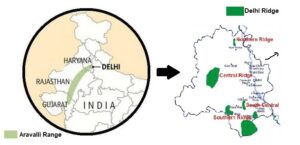
Key points: Aravalli Range● The Aravalli Range is one of the world’s oldest mountain systems, extending across Gujarat, Rajasthan, Haryana, and Delhi. ● The SC adopted a uniform definition: any landform with an elevation of 100 metres or more from the local relief qualifies as an Aravalli Hill. ● The Aravalli Range includes hills within 500 metres of each other, measured from outer boundaries. ● India is a signatory to the UN Convention to Combat Desertification (UNCCD), making Aravalli protection crucial for combating land degradation. ● The matter was heard under the long-running T.N. Godavarman case, dealing with forest conservation and wildlife protection nationwide. |

