India's No.1 PU & Degree With Integrated IAS & IPS(UPSC/PSC) Training College.


CAR-T CELL THERAPY BREAKTHROUGH IN SOLID TUMOURS
CAR-T CELL THERAPY BREAKTHROUGH IN SOLID TUMOURS
Why in the News?
- Scientists have developed a highly sensitive receptor (HIT receptor) that enables CAR-T cells to detect low-level tumour proteins.
- The breakthrough could make CAR-T therapy effective against solid cancers like kidney and ovarian cancer, overcoming a long-standing limitation.
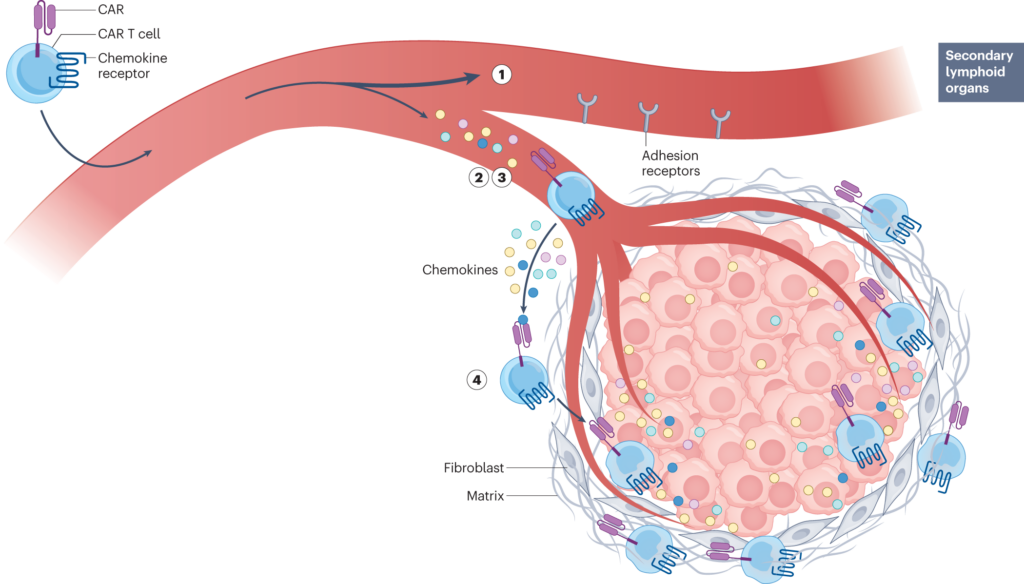
Key scientific advancement
- Concept innovation: Uses an advanced form of CAR-T cell therapy to enhance tumour detection.
- New receptor design: HIT (HLA-independent T-cell) receptor links detection directly to natural immune activation pathways.
- Target protein: Focus on CD70 protein, present in many cancers but often at very low levels.
- Pseudo-heterogeneity: Tumour cells previously thought “invisible” actually contain trace proteins undetectable by conventional CAR-T cells.
- Improved sensitivity: Enables immune cells to detect faint antigen signals, leading to better tumour elimination.
Significance and challenges
- Expanding cancer treatment: May allow CAR-T therapy to treat solid tumours, not just blood cancers like leukaemia.
- Better tumour eradication: Eliminates residual cancer cells, reducing chances of relapse.
- Scientific impact: Advances understanding of quantum mechanics-like cellular behaviour in signalling and detection at microscopic levels (indirect relevance through molecular interactions).
- Safety concerns: Risk of attacking normal cells with low protein expression (“Goldilocks challenge”).
- Future pathway: Requires clinical trials and safety switches before real-world medical use.
CAR-T Cell Therapy● Definition: A form of immunotherapy where T-cells are genetically modified to recognise and destroy cancer cells. ● Working: Uses engineered receptors to identify specific antigens on tumour cells. ● Success areas: Highly effective in blood cancers such as leukaemia and lymphoma. ● Limitation: Struggles with solid tumours due to antigen variability and tumour microenvironment. ● UPSC relevance: Important under biotechnology, health innovations, and emerging medical technologies (GS Paper III). |