 India's No.1 PU & Degree With Integrated IAS & IPS(UPSC/PSC) Training College.


INDIA–NEW ZEALAND FREE TRADE AGREEMENT
INDIA–NEW ZEALAND FREE TRADE AGREEMENT
Why in the News?
- Major trade pact: India and New Zealand signed a Free Trade Agreement (FTA) aimed at boosting trade, investment and mobility.
- Historic milestone: Agreement termed “historic” and among the fastest negotiated FTAs by India, with talks concluded within 2025.

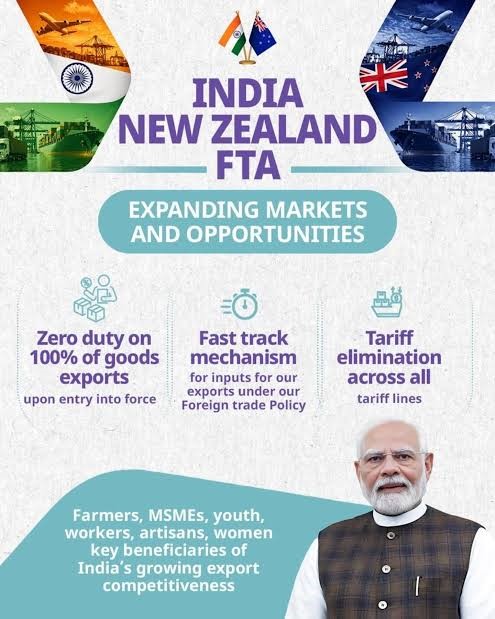
Key features of the FTA
- Tariff liberalisation: New Zealand removes tariffs on all Indian goods, while India will eliminate or reduce tariffs on about 95% of imports.
- Investment commitment: $20 billion investment to be facilitated by New Zealand into India over next 15 years, supporting infrastructure and manufacturing.
- Sectoral coverage: Comprehensive scope including trade in goods, services, agriculture, MSMEs, and innovation ecosystems.
- Mobility provisions: Facilitation of movement for professionals and students, enhancing people-to-people and knowledge exchange ties.
- Sensitive exclusions: India excluded key sectors such as dairy, major agricultural products, and metals to protect domestic producers.
Implications for India’s economy and trade strategy
- Export boost: Improved market access for sectors like textiles, pharmaceuticals, engineering goods and IT services enhances export competitiveness.
- Investment inflow: Foreign investment commitment expected to strengthen industrial ecosystems, manufacturing capacity, and innovation clusters.
- Strategic diversification: Reduced dependence on traditional markets by expanding trade partnerships in Indo-Pacific region.
- Domestic protection balance: Selective exclusions ensure protection of vulnerable sectors like dairy and agriculture while enabling gradual liberalisation.
- Geopolitical relevance: Rules-based trade engagement reinforces India’s role in global trade architecture amid rising protectionism.
Free Trade Agreements (FTA)● Definition: FTA is a trade pact between countries to reduce or eliminate tariffs and barriers to promote trade and investment. ● Key components: Includes tariff reduction, rules of origin, services trade, investment, and dispute resolution mechanisms. ● Types of agreements: Bilateral, regional, and multilateral trade agreements depending on number of participating countries. ● India’s approach: Focus on balanced FTAs protecting sensitive sectors while expanding export opportunities globally. ● UPSC relevance: Topic relates to GS Paper II and III, covering international relations, trade policy, and economic development. |

