 India's No.1 PU & Degree With Integrated IAS & IPS(UPSC/PSC) Training College.


US Reaffirms Taiwan Strait Status Quo
US Reasserts Taiwan Strait Status Quo Policy Commitment
Why in the News?
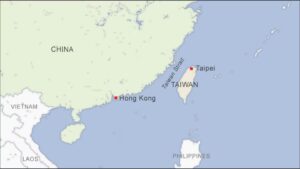
The United States has released its new National Security Strategy (NSS), reaffirming its long-standing stance against any unilateral change in the Taiwan Strait. The strategy outlines a tougher posture toward China and highlights deeper strategic cooperation with India in the Indo-Pacific, while also considering global environmental challenges.
Key Highlights of the New US Security Strategy:
- The Trump administration reiterates that it does not support actions altering the status quo in the Taiwan Strait, signalling continuity in US policy. This stance reflects a broader commitment to stability, including environmental stability in the region.
- The NSS places strong defence emphasis on Taiwan, viewing the island as critical for maintaining a stable Indo-Pacific security architecture. This approach considers both geopolitical and environmental factors, reminiscent of coastal regulation zone policies.
- Taiwan is described as providing direct access to the Second Island Chain, a strategic maritime zone important for US military logistics and deterrence. The strategy also acknowledges the need to protect these areas from environmental degradation.
- The strategy notes Taiwan’s geographic role in dividing Northeast Asia and Southeast Asia into distinct operational theatres, giving it major geopolitical value. This division also has implications for regional environmental management strategies.
- The approach signals Washington’s intent to deter Chinese assertiveness in the region while strengthening deterrence capabilities, with considerations for environmental impact similar to those required in environmental impact assessments.
Indo-Pacific Strategy, China Challenge, and India’s Role
- The NSS outlines a more rigid defence posture to push back against China’s expanding military and economic influence, especially around the Taiwan Strait and wider Indo-Pacific. This stance also considers the environmental implications of regional development.
- It stresses sustained US presence and enhanced security partnerships across the region to counterbalance Beijing’s ambitions, while promoting environmentally responsible practices.
- The document highlights the need to deepen US-India ties across commercial, strategic, and technological sectors, potentially including collaboration on environmental technologies and sustainable practices.
- It encourages India to take a more active role in Indo-Pacific security, particularly through cooperation in the Quad (India, US, Japan, Australia), which could extend to joint efforts in environmental protection and climate change mitigation.
- The strategy positions India as a key democratic partner capable of contributing to regional stability, maritime security, and supply chain diversification, while also promoting environmental sustainability in line with principles of environmental democracy.
About Taiwan Strait & Second Island Chain: |
| ● Taiwan Strait: A 180-km wide waterway separating Taiwan from mainland China; a major flashpoint in US-China relations. Environmental considerations in this area are crucial, similar to those addressed by the Forest Conservation Act in terrestrial contexts. |
| ● Status Quo Policy: US commitment since the Taiwan Relations Act (1979) to oppose unilateral changes by either China or Taiwan. This policy indirectly supports environmental stability in the region. |
| ● Second Island Chain: A strategic line of islands (Mariana Islands, Guam, etc.) forming a crucial part of US Indo-Pacific defence planning. Environmental protection in these areas is vital, akin to coastal regulation zone policies. |
| ● Quad: A strategic grouping promoting free, open, and rules-based Indo-Pacific, with potential to address regional environmental challenges collaboratively. |
| ● Indo-Pacific Strategy: US framework aimed at countering China, strengthening alliances, and maintaining maritime security, with growing emphasis on environmental sustainability and the polluter pays principle. |

