 India's No.1 PU & Degree With Integrated IAS & IPS(UPSC/PSC) Training College.


COP31: Fossil Fuels, Climate Finance & Transition
COP31 AND THE FOSSIL-FUEL QUESTION: ELECTRIFICATION, CLIMATE FINANCE AND JUST TRANSITION
Why in the News?
COP31 will be held in Antalya, Türkiye, from November 9–20, 2026, with Türkiye hosting the conference and Australia serving as President of Negotiations under the Türkiye–Australia partnership. The central debate is whether COP31 should explicitly address a transition away from fossil fuels, alongside its emphasis on electrification, clean-energy investment, climate finance and Pacific priorities.
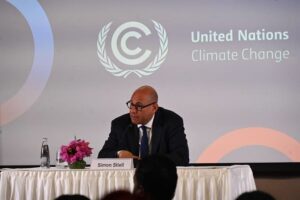
COP31 AND THE DEBATE OVER FOSSIL-FUEL TRANSITION
- Joint Presidency: COP31 has an unusual Türkiye–Australia partnership, with Türkiye hosting the conference while Australia leads the formal negotiations and works with Pacific countries.
- Electrification Priority: The COP31 Action Agenda places electrification at the centre of implementation, targeting an increase in the share of electricity in final energy consumption to 35% by 2035.
- Fossil Question: The key negotiation issue is whether the conference should explicitly include language on transitioning away from fossil fuels, rather than concentrating primarily on electrification and clean-energy deployment.
- Domestic Contradiction: The debate gains importance because both host partners have significant fossil-fuel interests and consumption, creating a complex context for international discussions on energy transition.
- Consensus Challenge: COP negotiations operate through multilateral consensus-building, meaning countries with different development levels, energy mixes and transition capacities must reconcile their positions.
CLIMATE FINANCE, LOSS AND DAMAGE AND DEVELOPING COUNTRIES
- Finance Gap: Developing countries require substantial resources for mitigation, adaptation and resilience, making climate finance an important component of any credible global transition strategy.
- Adaptation Priority: Vulnerable developing countries frequently emphasise adaptation finance, arguing that climate impacts are already affecting livelihoods, infrastructure and development.
- Loss Damage: Loss and damage finance addresses climate-related harms that cannot be fully avoided through mitigation or adaptation, particularly affecting vulnerable countries.
- Just Transition: A fossil-fuel transition must account for employment, energy access, affordability and developmental needs, especially in emerging economies dependent on conventional energy.
- India’s Position: India has emphasised Common but Differentiated Responsibilities and Respective Capabilities (CBDR-RC) and argues that countries cannot necessarily follow identical energy-transition pathways because national circumstances differ.
UNFCCC, PARIS AGREEMENT AND GLOBAL CLIMATE GOVERNANCE● UNFCCC Framework: The United Nations Framework Convention on Climate Change (UNFCCC) provides the foundational international framework for addressing climate change through negotiations among its Parties. ● COP Mechanism: The Conference of the Parties (COP) is the supreme decision-making body of the UNFCCC and meets annually to assess implementation and negotiate further climate action. ● Paris Agreement: The Paris Agreement seeks to hold the increase in global average temperature to well below 2°C while pursuing efforts to limit warming to 1.5°C above pre-industrial levels. ● CBDR Principle: CBDR-RC recognises that countries share responsibility for addressing climate change but have different historical contributions, capabilities and developmental circumstances. ● Global Stocktake: The Global Stocktake periodically assesses collective progress toward the Paris Agreement’s goals and helps identify gaps requiring stronger mitigation, adaptation, finance, technology and capacity-building efforts. |

