 India's No.1 PU & Degree With Integrated IAS & IPS(UPSC/PSC) Training College.


KAZIND-2026: India-Kazakhstan Military Exercise
KAZIND-2026: INDIA–KAZAKHSTAN MILITARY COOPERATION AND COUNTER-TERRORISM
Why in the News?
A 60-member Indian Armed Forces contingent has departed for Oskemen, Kazakhstan, to participate in the ninth edition of the India–Kazakhstan joint military exercise KAZIND-2026. The exercise focuses on enhancing interoperability, counter-terrorism capabilities and operational coordination between the two armed forces under a United Nations mandate.
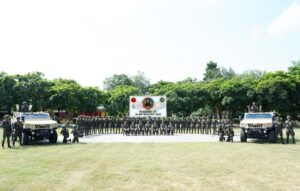
KAZIND-2026 AND JOINT MILITARY CAPABILITIES
- Joint Training: Indian and Kazakh forces will conduct coordinated training in counter-terrorism operations, including raids, search-and-destroy missions and responses to terrorist attacks.
- Special Operations: The exercise includes Special Heliborne Operations, providing participating personnel opportunities to practise coordinated air-mobile operations in challenging environments.
- Indian Contingent: The Indian contingent is drawn mainly from a battalion of the Garhwal Rifles, supported by personnel from other arms and services and the Indian Air Force.
- Interoperability: Joint exercises improve operational interoperability, allowing forces to develop common procedures, communication practices and coordinated responses during multinational operations.
- Professional Exchange: KAZIND provides opportunities for both militaries to exchange operational experience, tactical practices and institutional knowledge, while strengthening mutual trust.
STRATEGIC SIGNIFICANCE OF INDIA–KAZAKHSTAN DEFENCE COOPERATION
- Central Asia: Kazakhstan is strategically important because of its location in Central Asia, connecting Russia, China, the Caspian region and other parts of Eurasia.
- Counter-Terrorism: Defence cooperation supports India’s broader objective of strengthening regional counter-terrorism capabilities, particularly against threats emerging from unstable neighbourhoods.
- Military Diplomacy: Regular exercises serve as an instrument of defence diplomacy, strengthening institutional relationships without creating a formal military alliance.
- Regional Stability: Cooperation contributes to the shared objective of regional peace, stability and collective security, particularly through capacity-building and professional military engagement.
- Strategic Partnership: KAZIND complements India’s broader engagement with Central Asian Republics, including cooperation in defence, connectivity, energy, trade and regional security.
INDIA–CENTRAL ASIA RELATIONS● Central Asian Republics: India’s engagement with Central Asia covers Kazakhstan, Kyrgyzstan, Tajikistan, Turkmenistan and Uzbekistan, with cooperation spanning security, trade, connectivity and culture. ● Strategic Location: Central Asia occupies a crucial position between Russia, China, Afghanistan, Iran and the Caspian region, giving it considerable geopolitical and security significance. ● Security Cooperation: India participates in mechanisms such as the India–Central Asia Dialogue and conducts bilateral military exercises with several Central Asian countries. ● Connectivity Challenge: India’s geographical separation from Central Asia creates connectivity constraints, making initiatives such as the International North–South Transport Corridor (INSTC) strategically important. ● Security Interests: India seeks deeper Central Asian engagement to address terrorism, extremism, drug trafficking and geopolitical instability, while expanding economic and strategic partnerships in the region. |

