India's No.1 PU & Degree With Integrated IAS & IPS(UPSC/PSC) Training College.


Aditya-L1 Study Reveals Clues Before Solar Flares
Aditya-L1 Study Reveals Clues Before Solar Flares
Why in the News ?
A study involving ISRO, Manipal researchers and other scientists has identified small, short-lived brightening events that occur hours before major solar flares. Data from Aditya-L1 could improve understanding of flare formation and advance space-weather forecasting capabilities.
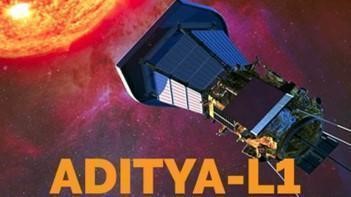
Pre-Flare Signals Detected by Aditya-L1
- Scientists identified numerous small and short-lived “transient events” in the Sun’s atmosphere before the occurrence of major solar flares.
- These brightening events were found to cluster around the region where the subsequent major flare developed.
- Some transient events also displayed corresponding X-ray signatures, indicating that they involve the release of magnetic energy.
- The observations suggest that repeated small-scale energy releases may gradually destabilise magnetic fields in an active solar region.
- This progressive destabilisation could eventually trigger the large-scale energy release associated with a solar flare.
- The study was conducted by researchers from the Manipal Centre for Natural Sciences, Manipal Academy of Higher Education, ISRO, the Department of Space and other academic institutions.
- Researchers simultaneously analysed ultraviolet and X-ray observations obtained through three scientific payloads aboard Aditya-L1.
Significance for Space-Weather Forecasting
- Identifying reliable pre-flare indicators could help scientists understand the physical mechanisms responsible for solar eruptions.
- The findings represent a step towards more accurate solar-flare forecasting, although further observations and validation are required.
- Improved forecasting can strengthen preparedness against adverse space-weather events.
- Strong solar activity can disturb satellite operations, communication systems, navigation services and other space-based technologies.
- Solar storms may also affect astronaut safety and critical technological infrastructure on Earth.
- Better early-warning capabilities could therefore help governments and space agencies take preventive measures, including protecting satellites and adjusting sensitive communication or navigation operations.
About Solar Flares and Space Weather:
- A solar flare is a sudden, intense release of energy from the Sun, generally associated with magnetic activity in solar active regions.
- Solar flares produce strong emissions across the electromagnetic spectrum, including ultraviolet and X-rays.
- Aditya-L1 is India’s first dedicated space-based solar mission, positioned around the Sun-Earth L1 point, enabling continuous observation of the Sun.
- The Solar Ultraviolet Imaging Telescope (SUIT) observes the Sun in 11 near-ultraviolet (NUV) filters, covering different atmospheric layers from the upper photosphere to the chromosphere.
- SoLEXS and HEL1OS are X-ray instruments that study energetic processes occurring in the solar corona.
- Ultraviolet observations are particularly valuable because much of the Sun’s UV radiation is absorbed by Earth’s atmosphere, limiting ground-based observations.