 India's No.1 PU & Degree With Integrated IAS & IPS(UPSC/PSC) Training College.


E100 Alone Cannot Ensure Energy Security
FOR ENERGY SECURITY, E100 ALONE IS NOT THE ANSWER
Syllabus:
GS-3:
- Science and Technology
- Environment and Ecology
- Economy
Why in the News?
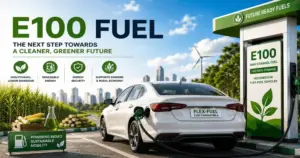
India has transitioned to E20 petrol and amended the Central Motor Vehicles Rules, 1989, to facilitate vehicles running on E100 (pure ethanol). While ethanol blending aims to reduce crude oil imports and strengthen energy security, the limited share of petrol in total petroleum consumption highlights the need to expand biodiesel production and diversify the biofuel strategy.
BIOFUELS AND INDIA’S ENERGY SECURITY● Biofuel Concept: Biofuels are renewable fuels derived from biological materials such as agricultural crops, organic waste, animal residues and used cooking oil. ● Ethanol Classification: First-generation ethanol is generally produced from food-based feedstocks such as sugarcane and maize, while second-generation ethanol uses agricultural residues and other non-food biomass. ● Biodiesel Production: Biodiesel is produced from vegetable oils, animal fats and used cooking oils through processes such as transesterification, making it suitable for blending with conventional diesel. ● National Policy: India’s National Policy on Biofuels, 2018, amended in 2022, provides the policy framework for promoting ethanol, biodiesel and advanced biofuels. ● Sustainable Development: Biofuels can contribute to SDG 7 (Affordable and Clean Energy), SDG 12 (Responsible Consumption and Production) and SDG 13 (Climate Action), provided their lifecycle environmental impacts are carefully managed. |
INDIA’S ETHANOL BLENDING PROGRAMME AND ENERGY SECURITY
- Policy Objective: India’s ethanol blending programme seeks to reduce dependence on imported crude oil, conserve foreign exchange reserves and strengthen domestic energy security.
- E20 Milestone: The transition to E20 petrol, containing 20% ethanol, represents a significant step towards diversifying transportation fuels and reducing conventional petrol consumption.
- E100 Provision: Amendments to the Central Motor Vehicles Rules, 1989, have created a regulatory pathway for vehicles operating entirely on ethanol.
- Import Dependence: India imports over 80% of its crude oil requirements, exposing its economy to international price volatility, geopolitical conflicts and disruptions in global supply chains.
- Strategic Limitation: Ethanol blending primarily substitutes petrol consumption, meaning its contribution to overall crude oil import reduction remains constrained by the composition of petroleum demand.
PETROL-DIESEL IMBALANCE IN INDIA’S PETROLEUM CONSUMPTION
- Product Composition: Petrol accounts for approximately 15–18% of petroleum products obtained from a barrel of crude oil, whereas diesel contributes around 44–45%.
- Consumption Difference: Between FY 2020-21 and FY 2024-25, India consumed approximately 200 million tonnes of petrol compared with 503 million tonnes of diesel.
- Economic Dependence: Diesel remains essential for freight transportation, agricultural machinery, industrial operations and logistics, making it central to India’s economic functioning.
- Limited Substitution: Even substantial ethanol blending in petrol addresses only a relatively small portion of total petroleum consumption, limiting its overall impact on oil demand.
- Demand Diversification: Reducing crude oil dependence requires policies addressing diesel, aviation fuel and other petroleum products, rather than concentrating predominantly on petrol substitution.
LIMITATIONS OF E20 AND E100 IN REDUCING CRUDE OIL IMPORTS
- Efficiency Adjustment: Accounting for ethanol’s lower energy content and reduced vehicle fuel economy, the article estimates that E20 could reduce petrol consumption by approximately 56%.
- Refining Constraints: Crude oil refining produces multiple petroleum products simultaneously, including petrol, diesel, LPG, aviation turbine fuel and naphtha, limiting the impact of reduced petrol demand.
- Yield Flexibility: Refineries can modify product yields to some extent, but technological and operational constraints prevent unlimited substitution between petrol and diesel production.
- Import Disconnect: A reduction in petrol consumption does not automatically translate into an equivalent reduction in crude oil imports because refineries must continue meeting demand for other petroleum products.
- Outcome Measurement: Policymakers must distinguish between ethanol blended, petrol displaced, expenditure avoided and actual crude oil imports reduced while evaluating biofuel policy effectiveness.
BIODIESEL: AN UNDERUTILISED COMPONENT OF INDIA’S BIOFUEL STRATEGY
- Diesel Priority: Since diesel represents a substantially larger share of petroleum consumption, expanding biodiesel blending could address a more significant component of India’s oil dependence.
- Policy Gap: India’s earlier ambition of achieving 5% biodiesel blending has not translated into comparable progress with its ethanol blending programme.
- Feedstock Challenges: Earlier initiatives involving non-edible oilseeds and used cooking oil faced difficulties relating to collection, availability, processing costs and commercial viability.
- Supply Infrastructure: Biodiesel expansion requires organised feedstock collection, reliable procurement mechanisms, processing facilities and sustainable supply chains connecting producers with fuel distributors.
- Research Investment: Greater investment in research and development, advanced conversion technologies and alternative feedstocks can improve biodiesel production efficiency and long-term commercial sustainability.
ECONOMIC AND GEOPOLITICAL DIMENSIONS OF ENERGY SECURITY
- Import Vulnerability: High dependence on imported crude exposes India to external supply disruptions, international price fluctuations and geopolitical instability in major oil-producing regions.
- Foreign Exchange: Rising crude oil import expenditure increases pressure on India’s current account balance and can weaken macroeconomic stability during periods of elevated global prices.
- Inflationary Transmission: Higher international oil prices increase transportation, manufacturing and logistics costs, potentially generating cost-push inflation across the domestic economy.
- Strategic Autonomy: Diversifying domestic energy sources can reduce India’s exposure to external suppliers and strengthen its ability to pursue independent foreign-policy priorities.
- Energy Diversification: A comprehensive strategy should combine biofuels with electric mobility, renewable electricity, green hydrogen, energy efficiency and strategic petroleum reserves.
REFORMING INDIA’S BIOFUEL POLICY
- Balanced Priorities: India should pursue ethanol and biodiesel simultaneously, aligning blending targets with the actual consumption patterns of petrol and diesel across the economy.
- Feedstock Sustainability: Biofuel expansion must prioritise agricultural residues, used cooking oil and suitable non-edible feedstocks while avoiding competition with food production and water resources.
- Technological Innovation: Investment in second-generation biofuels, advanced fermentation and waste-to-fuel technologies can expand domestic production without excessive dependence on food-based crops.
- Infrastructure Development: Dedicated storage, transportation, processing and distribution infrastructure is necessary to ensure consistent biofuel availability and quality across different regions.
- Performance Assessment: Biofuel programmes should be evaluated through measurable reductions in crude oil imports, foreign exchange expenditure, lifecycle emissions and petroleum consumption, rather than blending volumes alone.
CONCLUSION
Ethanol blending represents an important instrument for reducing petrol consumption, but it cannot independently resolve India’s broader crude oil dependence. A comprehensive energy security strategy must address diesel demand, strengthen biodiesel supply chains, promote advanced biofuels and diversify transportation energy. Success should ultimately be measured through actual reductions in import dependence and expenditure.
SOURCE: Indian express
MAINS PRACTICE QUESTION
India’s ethanol blending programme is an important step towards energy security, but its impact on crude oil import dependence remains limited by the structure of petroleum consumption.” Examine the limitations of E20 and E100, discuss the potential of biodiesel, and suggest a comprehensive strategy for strengthening India’s energy security.

