 India's No.1 PU & Degree With Integrated IAS & IPS(UPSC/PSC) Training College.


NASA Launches Roman Telescope to Probe Cosmic Mysteries
NASA Launches Roman Telescope to Probe Cosmic Mysteries
Why in the News ?
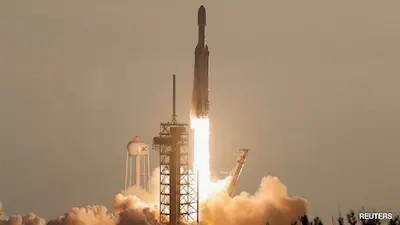
NASA has launched the Nancy Grace Roman Space Telescope from Florida to investigate major questions about the universe. The infrared observatory will conduct wide-field surveys, study dark energy, and search for distant galaxies, exoplanets and planet-forming systems.
Roman Telescope: Features and Mission
- The Nancy Grace Roman Space Telescope is a next-generation space observatory designed primarily to advance infrared astronomy.
- It carries a 2.4-metre-wide primary mirror, enabling it to observe a field of view more than 100 times larger than the Hubble Space Telescope.
- Its exceptionally wide survey capability will allow astronomers to examine enormous portions of the sky and study the large-scale structure of the universe.
- The approximately $4.3-billion observatory is expected to transform astronomical surveys by combining a broad field of view with sensitive infrared observations.
- Over its planned five-year mission, Roman is expected to identify previously unknown galaxies and exoplanets and investigate how the universe has evolved.
- The mission is named after Nancy Grace Roman, NASA’s first chief astronomer and a key figure in the development of the Hubble Space Telescope.
Scientific Significance and Expected Discoveries
- Roman is expected to deepen understanding of dark energy, the poorly understood component associated with the accelerating expansion of the universe.
- Its large-scale surveys can help scientists investigate the distribution and evolution of galaxies across cosmic history.
- The telescope may identify large numbers of exoplanets, expanding knowledge of planetary systems beyond our Solar System.
- Observations of protoplanetary disks can provide insights into how planets form and evolve around young stars.
- By combining wide-area surveys with advanced infrared and coronagraphic observations, Roman can reveal phenomena that are difficult to detect using existing observatories.
- Its findings are expected to complement observations from other major space telescopes and improve humanity’s understanding of the origin, structure and evolution of the universe.
About Space Telescopes and Infrared Astronomy:
- Space telescopes observe celestial objects above Earth’s atmosphere, avoiding atmospheric distortion and absorption that can limit ground-based astronomy.
- The Hubble Space Telescope has provided extensive observations in visible, ultraviolet and near-infrared wavelengths and transformed understanding of galaxies, stars and planetary systems.
- Infrared astronomy is particularly useful for studying relatively cool objects, distant galaxies and regions obscured by cosmic dust.
- Roman’s wide field of view complements telescopes such as Hubble and the James Webb Space Telescope, which is optimised for highly detailed observations of selected targets.
- Roman will also employ a coronagraph, an instrument that suppresses the intense light of a star to enable observations of much fainter nearby objects.
- This technology can assist in studying exoplanets and planet-forming disks surrounding stars.

