 India's No.1 PU & Degree With Integrated IAS & IPS(UPSC/PSC) Training College.


Serbia Student Movement: Protests to Power
SERBIA’S STUDENT MOVEMENT TRANSFORMS PROTESTS INTO POLITICAL POWER
WHY IN THE NEWS ?
- Electoral Victory: Serbia’s student-led movement secured a parliamentary majority, winning 141 of 250 seats and ending President Aleksandar Vučić’s decade-long dominance.
- Political Significance: The victory highlights how sustained, peaceful protests against corruption and institutional failures can transform into electoral success.
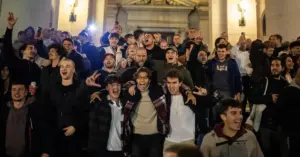
ORIGIN AND GROWTH OF THE STUDENT MOVEMENT:
- Triggering Incident: The movement began after a railway station canopy collapsed in Novi Sad in November 2024, killing 16 people and exposing alleged institutional corruption and administrative negligence.
- Campus Protests: Students initiated campus blockades and demonstrations, demanding accountability, transparency and institutional reforms.
- Mass Mobilisation: Teachers, actors, farmers and other sections of society gradually joined the protests, transforming them into a nationwide movement.
- Public Participation: Open campus assemblies enabled students to collectively discuss strategies and democratically decide their future course of action.
- Core Demands: The movement prioritised anti-corruption measures, media freedom, judicial independence and institutional accountability, avoiding divisive political issues.
- Political Transformation: After nearly two years of protests, students established the Student List – Students Win, converting public mobilisation into an organised electoral platform.
- Electoral Success: The movement secured 141 seats in the 250-member Parliament, defeating the ruling establishment.
POLITICAL SIGNIFICANCE AND EUROPEAN IMPLICATIONS
- Democratic Transition: The victory demonstrates the potential of peaceful democratic mobilisation to challenge entrenched political leadership without violence.
- Regional Inspiration: Serbia’s student movement could inspire similar youth-led movements across Europe against corruption and governance failures.
- EU Integration: Serbia’s European Union membership aspirations depend on improvements in the rule of law, judicial independence, media freedom and democratic institutions.
- Foreign Policy: The new government faces challenges in balancing relations with the European Union, Russia and China, particularly regarding the Russia-Ukraine war and sanctions.
- Kosovo Question: Serbia’s position on Kosovo’s independence and its implications for European integration remain important diplomatic challenges.
ABOUT SERBIA – GEOGRAPHY AND INTERNATIONAL RELATIONS:● Location: Serbia is a landlocked country situated in Southeastern Europe, within the Balkan Peninsula. ● Capital: Belgrade is the capital and largest city of Serbia. ● Borders: Serbia shares borders with Hungary, Romania, Bulgaria, North Macedonia, Croatia, Bosnia and Herzegovina, Montenegro and Albania. ● River Systems: The Danube River is strategically important for Serbia’s transport, trade and connectivity. ● International Relations: Serbia maintains close historical, cultural and religious ties with Russia while pursuing European integration. |

