 India's No.1 PU & Degree With Integrated IAS & IPS(UPSC/PSC) Training College.


Kerala Revives Surangam for Water Conservation
KERALA REVIVES TRADITIONAL SURANGAM FOR WATER CONSERVATION
WHY IN THE NEWS ?
- Conservation Initiative: Eight gram panchayats in Kasaragod district of Kerala will implement a project to restore traditional underground water tunnels called Surangams.
- Key Objective: The initiative aims to improve groundwater recharge, conserve rainwater and maintain river flows amid declining rainfall and increasing drought risks.
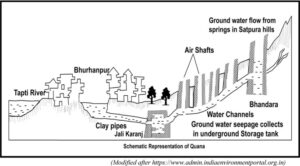
SURANGAM SYSTEM: FEATURES AND SIGNIFICANCE:
- Traditional Technology: Surangams are indigenous water-harvesting structures traditionally found in the Kasaragod region of Kerala.
- Structural Design: These are horizontal tunnels excavated into laterite hills, allowing groundwater to naturally seep into the tunnels.
- Water Collection: Water emerging through the tunnels is collected and used for domestic and agricultural purposes.
- Natural Recharge: During the monsoon, rainwater percolates through the soil and replenishes underground aquifers.
- Seasonal Supply: Groundwater stored during the rainy season gradually flows through the tunnels during summer, ensuring water availability.
- Ecological Importance: Surangams support sustainable groundwater utilisation, reduce dependence on external water sources and strengthen local water security.
RESTORATION PROJECT AND RURAL DEVELOPMENT
- Coverage: The restoration initiative will initially cover eight gram panchayats: Kayyur-Cheemeni, Kodom-Belur, Kallar, Pallikkara, Bedadka, Puthige, Chengala and Kumbla.
- Employment Generation: The project will extensively utilise workers under the Viksit Bharat–Guarantee for Rozgar and Ajeevika Mission (Gramin).
- Technical Support: Experts from the Kerala Regional Office of the Central Groundwater Board (CGWB) are providing technical guidance.
- Scientific Maintenance: Discussions are underway to ensure systematic restoration, conservation and scientific maintenance of traditional tunnels.
- Water Security: The project seeks to improve groundwater recharge, conserve monsoon rainfall and sustain river flows.
- Climate Resilience: Reviving traditional water systems can help communities adapt to irregular rainfall, water scarcity and increasing drought frequency.
KEY POINTS: TRADITIONAL WATER HARVESTING SYSTEMS IN INDIA● Surangam: A traditional horizontal tunnel-based water-harvesting system predominantly practised in Kasaragod, Kerala. ● Khadin: Traditional runoff-harvesting system practised in Rajasthan, particularly in arid regions. ● Johads: Small earthen check dams used in Rajasthan to collect rainwater and recharge groundwater. ● Zing: Traditional water-harvesting structures found in Ladakh that collect glacier meltwater. ● Ahar-Pyne: Traditional irrigation system of Bihar consisting of reservoirs (Ahar) and channels (Pyne). ● Kuls: Traditional water channels used in the Himalayan regions, particularly Himachal Pradesh, to divert stream water for irrigation. |

