 India's No.1 PU & Degree With Integrated IAS & IPS(UPSC/PSC) Training College.


To Lam Becomes Vietnam President, Power Centralises
To Lam’s Election Strengthens Power Centralisation in Vietnam
Vietnam’s National Assembly unanimously elected To Lam as president on 7 April 2026, while he continues as General Secretary of the Communist Party of Vietnam, the country’s most powerful post. This makes him the dominant political figure in Vietnam and marks a departure from the country’s usual collective leadership model, in which major offices are generally kept separate. Analysts see this as a sign of increasing centralisation of power, with parallels to political systems in China and Laos.
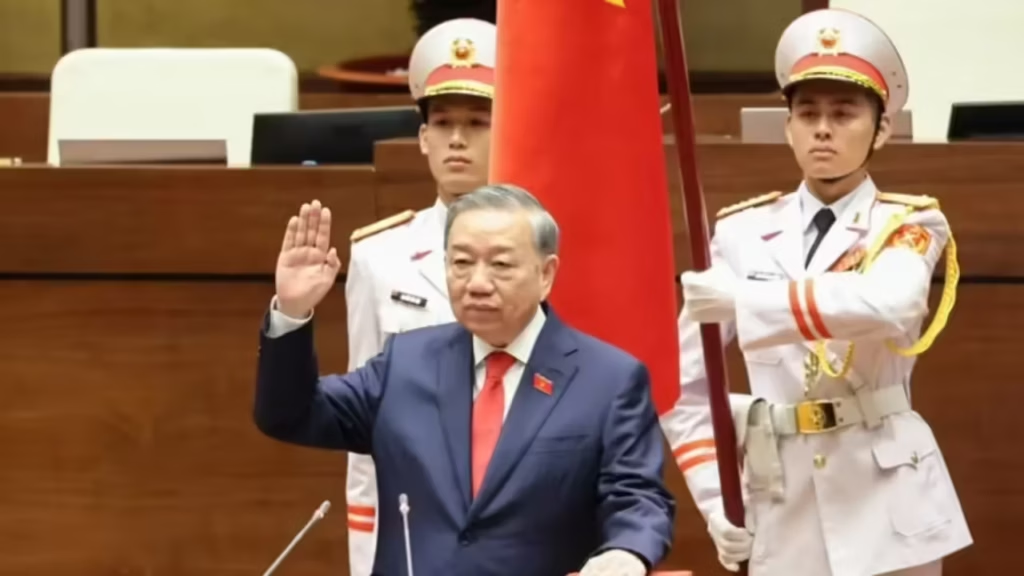
A former public security chief, To Lam is expected to promote administrative reform, economic modernisation, digital transformation, and tighter state control. In international relations, Vietnam is likely to continue its active and balanced foreign policy. For India, this is important because India and Vietnam share a Comprehensive Strategic Partnership, with growing cooperation in defence, trade, maritime security, and the Indo-Pacific region. To Lam’s elevation is therefore expected to bring continuity, stability, and further scope for stronger India–Vietnam ties.




