 India's No.1 PU & Degree With Integrated IAS & IPS(UPSC/PSC) Training College.


Beyond the Pump: The Science, Economics, and Geography of India’s Petrol Classification
Beyond the Pump: The Science, Economics, and Geography of India’s Petrol Classification
In the Civil Services Examination (GS Paper III – Economic Development, Infrastructure, and Science & Technology), the energy sector and downstream petroleum industry are critical themes. Understanding how petrol is classified in India requires looking beyond commercial branding to grasp the underlying chemical parameters, regulatory frameworks, environmental mandates, and macroeconomic impacts.
1. Core Scientific Parameters: Octane Rating & Knocking
To understand how petrol is classified, we must first look at its performance metric: the Research Octane Number (RON).
- Engine Knocking: In an internal combustion engine, a mixture of fuel and air is compressed before being ignited by a spark plug. If the fuel is unstable, it can prematurely detonate due to compression heat alone. This premature explosion causes an irregular shockwave, heard as a metallic pinging or “knocking,” which degrades thermal efficiency and damages engine components.
- Octane Rating: The Octane Number measures a fuel’s ability to resist pre-ignition or knocking. A higher octane rating indicates a more stable fuel capable of withstanding higher compression ratios.
- The Ethanol Factor: Pure ethanol naturally possesses a high octane rating (approximately 108 RON). When blended with gasoline, it serves as an excellent anti-knocking agent and oxygenate, which promotes cleaner, more complete combustion.
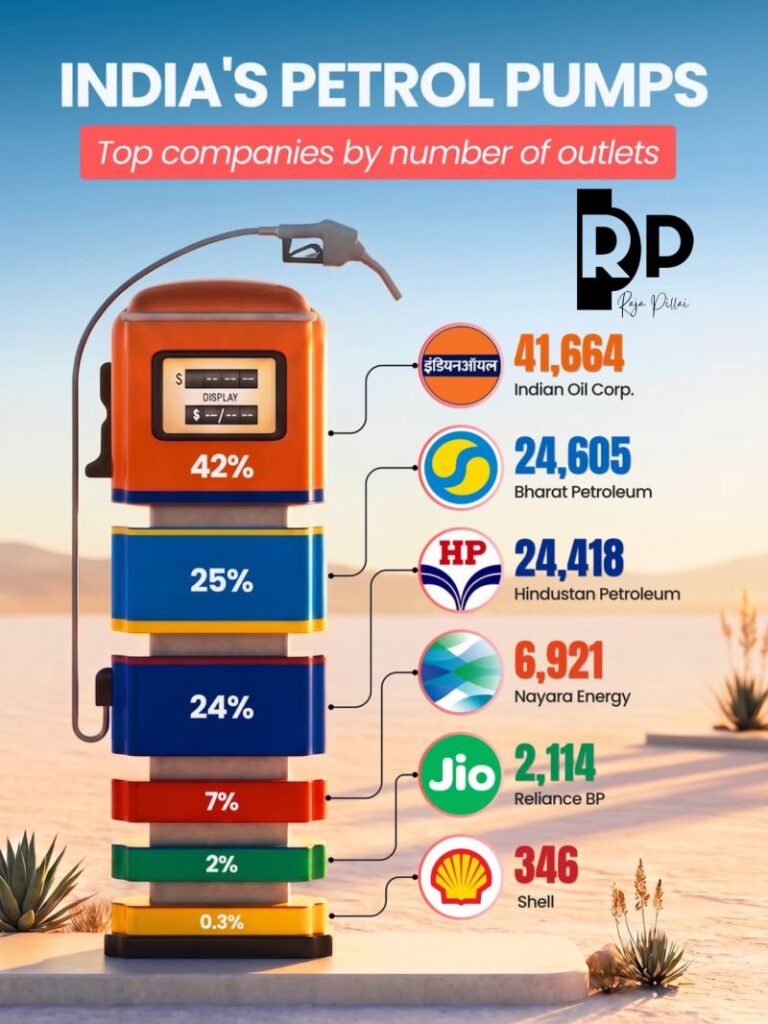
2. Structural Classification of Petrol in India
The Indian downstream retail market categorizes motor spirit (petrol) based on its octane levels, the presence of multi-functional performance additives, and its bio-ethanol content.
A. Regular Unleaded Petrol (Standard Fuel)
- Specifications: Standardized at 91 RON to comply with BS-VI emission norms.
- Current Composition: Nationwide, regular petrol is an E20 blend (20% bio-ethanol and 80% fossil-based gasoline).
- Target Audience: Formulated for mass-market passenger vehicles and two-wheelers.
B. Premium / Branded Petrol (Mid-Tier Performance)
- Specifications: Typically rated at 95 RON and sold as E20 blends (e.g., IOCL’s XP95).
- Key Differentiator: The addition of Multi-Functional Additives (MFAs). These proprietary chemical detergents prevent carbon deposit buildup on intake valves and fuel injectors, reducing internal engine friction.
- Target Audience: Recommended for modern turbocharged direct-injection engines.
C. Ultra-Premium High-Octane Petrol (Niche / Specialty)
- Specifications: Rated at 97 to 100 RON.
- Composition: These are E0 fuels (Ethanol-Free). Instead of ethanol, they use specialized chemical oxygenates like MTBE (Methyl Tertiary Butyl Ether). Because high-octane fuel has lower sales volume and remains in tanks longer, blending highly hygroscopic ethanol increases the risk of phase separation.
- Target Audience: High-performance supercars and vintage vehicles vulnerable to ethanol corrosion.
D. Reference Fuel (Strategic Import Substitution)
- Significance: A specialized premium grade used strictly for vehicle calibration, emission testing, and prototype certification by Auto OEMs and agencies like ARAI.
- Indigenous Production: Historically, India imported 100% of this fuel. Under the Atmanirbhar Bharat initiative, Indian Oil Corporation Limited (IOCL) recently achieved indigenous production at its Paradip Refinery, reducing procurement lead times and saving valuable forex.
3. The Biofuel Landscape & The EBP Programme
From a policy perspective, the classification of petrol is tied directly to India’s aggressive biofuel strategy, governed by the National Policy on Biofuels.
2026 Key Milestones:
- E20 Acceleration: The Government of India successfully achieved its target of 20% ethanol blending in the Ethanol Supply Year (ESY) 2025-26 — five years ahead of the original 2030 deadline.
- E100 Legalization & E85 Rollout: The Ministry of Road Transport and Highways gave full legal recognition to E100. As of July 2026, E85 fuel (priced nearly ₹20 per litre lower than conventional petrol) has commenced rollout across 48 Public Sector OMC retail outlets, slated for a nationwide expansion to 5,000 outlets by 2027.
- Flex-Fuel Vehicles (FFVs): Mainstream manufacturers are accelerating the launch of FFVs. These engines feature corrosion-resistant fuel lines and fuel composition sensors that allow the Electronic Control Unit (ECU) to seamlessly run on any combination of petrol and ethanol up to E100.
4. Macroeconomic, Geographical, and Environmental Impacts
Positive Implications
- Forex Savings: India imports over 88% of its crude oil requirements. The Ethanol Blended Petrol (EBP) Programme has substituted over 310 lakh metric tonnes of crude oil imports, saving over ₹1.90 lakh crore in foreign exchange and helping narrow the current account deficit.
- Environmental Commitments: Ethanol blending has reduced CO₂ emissions by approximately 930 lakh metric tonnes since 2014. Flex-fuel vehicles operating on E85 can reduce lifecycle greenhouse gas emissions by around 61% compared to conventional petrol vehicles.
- Agrarian Economy Reinforcement: The policy has generated over ₹1.60 lakh crore in additional earnings for farmers, creating an assured market for sugarcane molasses, maize, and damaged food grains.
Geographical and Structural Challenges
- Water Stress: A significant portion of 1G ethanol comes from sugarcane, an incredibly water-intensive crop. Intensive cultivation in semi-arid regions like Marathwada (Maharashtra) or Western Uttar Pradesh presents severe groundwater management challenges.
- Food vs. Fuel Dilemma: Diverting fertile land and grains (like maize and broken rice) toward fuel production raises concerns about grain security and food inflation, though the government maintains that only surplus grains are utilized.
- Efficiency Drop: Ethanol has roughly 30% lower energy density than fossil-derived gasoline. Consequently, older non-optimized engines running E20 face a drop in real-world fuel mileage (around 3-7%), shifting an indirect cost onto consumers.
Practice Questions for Competitive Exams
Prelims Objective Question
Q1. Consider the following statements regarding the Ethanol Blended Petrol (EBP) Programme in India:
- The target of achieving 20% ethanol blending (E20) nationwide was achieved in the Ethanol Supply Year 2025-26.
2. Premium high-octane fuels (97-100 RON) sold in India contain mandatory ethanol blending to improve anti-knocking properties.
3. Flex-Fuel Vehicles can operate on fuel blends ranging from E20 up to E100.
Which of the statements given above is/are correct?
(a) 1 and 2 only
(b) 2 and 3 only
(c) 1 and 3 only
(d) 1, 2, and 3
(Answer: c. Statement 2 is incorrect as ultra-premium high-octane fuels use E0 to prevent phase separation.)
Mains Analytical Question
- “The transition toward high-blend ethanol petrol and Flex-Fuel Vehicles stands at the critical intersection of India’s energy security, climate policy, and agricultural economics.” Critically evaluate the statements highlighting the geographical and ecological challenges associated with this transition. (15 Marks, 250 Words)




