 India's No.1 PU & Degree With Integrated IAS & IPS(UPSC/PSC) Training College.


Measuring Women’s Unpaid Work: Why It Counts
IMPORTANCE OF MEASURING WOMEN’S UNPAID WORK
SYLLABUS:
- GS-1: Indian Society, women empowerment, gender roles and social inequalities.
- GS-2: Government policies, welfare schemes and social justice.
- GS-3: Employment, labour force participation, inclusive growth and gender pay gap.
WHY IN THE NEWS?
- New Initiative: The Ministry of Statistics and Programme Implementation (MoSPI) has proposed adding questions on unpaid work to the Periodic Labour Force Survey (PLFS).
- Data Gap: Existing labour surveys do not adequately capture women’s unpaid household and care responsibilities.
- Policy Significance: Combining employment and unpaid-work data can help understand the relationship between women’s care responsibilities and labour force participation.
- Gender Equality: Better measurement can support policies addressing gender pay gaps, workplace inequality and women’s economic empowerment.
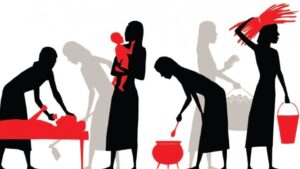
WOMEN’S UNPAID WORK: MEANING AND SIGNIFICANCE
- Meaning: Unpaid work includes household activities such as cooking, cleaning, collecting water, childcare and caring for elderly or sick family members without direct monetary compensation.
- Economic Contribution: Although unpaid work does not generate direct wages, it supports household welfare and sustains the functioning of the formal and informal economy.
- Gendered Responsibility: Social and cultural norms often place a disproportionate share of household and caregiving responsibilities on women.
- Time Poverty: Women engaged in extensive unpaid work have less time for education, skill development, paid employment and leisure.
- Invisible Labour: Since conventional economic indicators often exclude unpaid household services from production measurements, women’s contribution remains inadequately recognised.
UNDERSTANDING WOMEN’S WORK AND GENDER EQUALITY:● Article 39(d): Directs the State to ensure equal pay for equal work for both men and women. ● Article 42: Directs the State to make provisions for just and humane conditions of work and maternity relief. ● Article 43: Directs the State to secure a living wage and decent conditions of life for workers. ● Time Use Survey (TUS): A statistical survey measuring the time individuals spend on paid work, unpaid domestic services, caregiving and other activities. ● SDG 5.4: Recognises and values unpaid care and domestic work through public services, infrastructure, social protection and shared responsibility within households. |
WOMEN’S LABOUR FORCE PARTICIPATION IN INDIA
- Demand-Side Constraints: Limited employment opportunities, gender-based occupational segregation and unequal wages restrict women’s entry into the labour market.
- Supply-Side Constraints: Inadequate education, skill gaps, social norms and household responsibilities affect women’s ability to seek employment.
- Childcare Burden: Women with young children often face greater time constraints, reducing their participation in paid employment.
- Occupational Choices: Many women prefer home-based work, flexible working hours and employment closer to their homes to balance paid and unpaid responsibilities.
- Informal Employment: Women are disproportionately concentrated in informal and flexible employment, often involving lower wages and limited social security.
IMPORTANCE OF MEASURING UNPAID WORK
- Recognising Contribution: Systematic measurement makes women’s unpaid contribution to household welfare and economic activity more visible.
- Better Policy Formulation: Reliable data helps governments design childcare facilities, maternity support, elderly care services and employment policies.
- Gender Pay Gap: Understanding unpaid responsibilities can explain differences in working hours, occupational choices and earnings between men and women.
- Economic Valuation: Time-use data can help estimate the economic value of unpaid household and caregiving activities.
- Gender Equality: Measuring unpaid work supports the recognition, reduction and redistribution of unequal care responsibilities.
LIMITATIONS OF EXISTING DATA COLLECTION SYSTEMS
- Periodic Labour Force Survey: PLFS primarily captures employment, unemployment and labour force participation, with limited information about household responsibilities.
- Time Use Survey: TUS records the time individuals spend on paid and unpaid activities, but its objectives and definitions differ from those of PLFS.
- Data Comparability: Differences in survey methodology, classifications and definitions make direct comparison between the two datasets difficult.
- Occupational Classification: The Time Use Survey uses a restricted version of the National Industrial Classification and lacks detailed occupational classification.
- Information Gap: Existing surveys do not adequately capture how care responsibilities influence the employment decisions and working conditions of already-employed women.
ROLE OF INTEGRATING PLFS AND TIME USE DATA
- Combined Analysis: Adding unpaid-work questions to PLFS can connect household responsibilities with employment status and labour market participation.
- Regular Monitoring: Regular collection of care-work data can help identify changing patterns of unpaid responsibilities across households.
- Sectoral Assessment: Integrated data can reveal how care responsibilities influence women’s choice of industries, occupations and employment arrangements.
- Better Identification: It can identify women engaged in subsistence activities and informal work who may be overlooked by conventional employment measurements.
- Evidence-Based Governance: Combined datasets can strengthen policy formulation, gender-responsive budgeting and monitoring of workplace equality.
POLICY MEASURES FOR RECOGNISING AND REDISTRIBUTING UNPAID WORK
- Care Infrastructure: Expand affordable childcare centres, creches, elderly-care facilities and community-based care services.
- Shared Responsibility: Encourage equal distribution of household responsibilities between men and women through awareness and behavioural change.
- Workplace Flexibility: Promote flexible working arrangements, safe transport, paid parental leave and supportive workplace policies.
- Social Protection: Extend social security, pension coverage and welfare support to women engaged in unpaid and informal work.
- Statistical Reform: Integrate time-use questions into regular labour surveys to improve measurement and policy evaluation.
CHALLENGES:
- Statistical Invisibility: Unpaid household and caregiving activities are inadequately represented in conventional labour statistics.
- Gender Stereotypes: Traditional social expectations continue to treat household and care responsibilities primarily as women’s duties.
- Employment Constraints: Care responsibilities restrict women’s access to full-time employment, skill development and career advancement.
- Data Incompatibility: Differences between PLFS and TUS methodologies limit integrated analysis and detailed policy assessment.
- Weak Care Infrastructure: Inadequate childcare, elderly-care facilities and affordable support services increase women’s unpaid workload.
WAY FORWARD:
- Integrated Surveys: Incorporate standardised unpaid-work questions into PLFS to connect care responsibilities with employment outcomes.
- Gender-Responsive Budgeting: Increase public investment in childcare, healthcare, sanitation, safe transport and elderly-care infrastructure.
- Shared Care Economy: Promote equal household responsibilities and encourage men’s participation in domestic and caregiving activities.
- Decent Employment: Expand safe, flexible and adequately paid employment opportunities with social security for women.
- Data-Based Policies: Use regular time-use statistics to measure unpaid work, assess gender inequalities and evaluate the impact of government interventions.
CONCLUSION:
Women’s unpaid work is an essential but frequently invisible component of the economy. Measuring it systematically is necessary for understanding barriers to women’s employment and achieving genuine gender equality. Integrating unpaid-work questions into PLFS can strengthen evidence-based policymaking, improve recognition of women’s contributions and promote a more inclusive economy.
SOURCE: TH
MAINS PRACTICE QUESTION:
Women’s unpaid domestic and care work remains largely invisible in conventional economic measurements. Discuss its implications for women’s labour force participation and gender equality in India. How can integrating unpaid-work data into PLFS improve policy formulation?

