 India's No.1 PU & Degree With Integrated IAS & IPS(UPSC/PSC) Training College.


Rani Lakshmibai: Symbol of Courage & Resistance
RANI LAKSHMIBAI: SYMBOL OF COURAGE AND RESISTANCE
WHY IN THE NEWS ?
- Birth Anniversary: Prime Minister Narendra Modi paid tribute to Rani Lakshmibai on her birth anniversary, remembering her extraordinary courage, patriotism and sacrifice during India’s freedom struggle.
- National Inspiration: He highlighted her unwavering commitment to duty and self-respect, stating that her resistance against foreign rule continues to inspire generations.
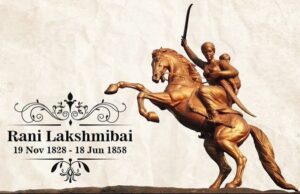
RANI LAKSHMIBAI: LIFE AND CONTRIBUTIONS
- Historical Identity: Rani Lakshmibai, popularly known as the Queen of Jhansi, was one of the prominent leaders of the Revolt of 1857 against British colonial rule.
- Birth: She was born on 19 November 1828 at Varanasi, Uttar Pradesh, and was originally named Manikarnika Tambe.
- Marriage: She married Maharaja Gangadhar Rao, the ruler of Jhansi, and subsequently became known as Rani Lakshmibai.
- Doctrine of Lapse: After the death of her husband, the British refused to recognise her adopted son, Damodar Rao, as the legitimate successor under the Doctrine of Lapse.
- Resistance: She strongly opposed the British annexation of Jhansi and became a leading figure in the uprising of 1857.
- Military Leadership: She organised and led armed resistance against British forces, demonstrating exceptional military courage and administrative determination.
- Final Battle: She fought against British forces at Gwalior and died on 18 June 1858.
- Legacy: Her fearless resistance and sacrifice made her an enduring symbol of patriotism, women’s leadership and anti-colonial struggle.
SIGNIFICANCE IN INDIA’S FREEDOM STRUGGLE
- National Resistance: Her participation strengthened the broader uprising against British authority in 1857.
- Women’s Leadership: She demonstrated that women could play decisive roles in military leadership and political resistance.
- Symbol of Patriotism: Her commitment to protecting Jhansi became an important example of courage and devotion to the motherland.
- Colonial Opposition: Her struggle reflected growing resentment against British expansionist policies and interference in Indian princely states.
- Historical Importance: She remains an important figure in India’s collective memory and nationalist history.
- Contemporary Relevance: Her life continues to inspire discussions on women’s empowerment, leadership, dignity and national service.
ABOUT REVOLT OF 1857 AND RANI LAKSHMIBAI:● Revolt of 1857: Also known as the First War of Independence, Sepoy Mutiny or Great Revolt. ● Immediate Cause: Introduction of the Enfield rifle cartridges, reportedly greased with cow and pig fat. ● Political Cause: The Doctrine of Lapse, introduced under Governor-General Lord Dalhousie, enabled annexation of princely states without a recognised natural male heir. ● Major Centres: Meerut, Delhi, Kanpur, Lucknow, Jhansi and Gwalior. ● Other Leaders: Bahadur Shah Zafar, Nana Sahib, Tantia Tope, Begum Hazrat Mahal and Kunwar Singh. ● Outcome: The revolt led to the end of East India Company rule through the Government of India Act, 1858, transferring administration to the British Crown. |

