 India's No.1 PU & Degree With Integrated IAS & IPS(UPSC/PSC) Training College.


SC Reverses Ban on Retrospective Green Clearances
SC Recalls Verdict on Retrospective Environmental Clearances
Why in the News?
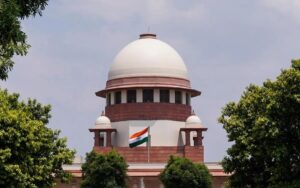
The Supreme Court has recalled its May 16, 2024 judgment that termed retrospective environmental clearances (ECs) illegal. A 2:1 majority held that allowing the earlier ruling to stand would harm major public projects, while a strong dissent warned of weakening environmental jurisprudence and potential human rights violations.
Supreme Court’s Majority View and Key Reasons:
- Majority Recall: A three-judge Bench, led by CJI B.R. Gavai and Justice K. Vinod Chandran, set aside the previous ruling that declared ex post facto ECs a “gross illegality.”
- Economic Impact: The CJI argued that enforcing the May verdict would have a “devastating effect,” causing loss of thousands of crores and jeopardising major public infrastructure. This could potentially lead to situations requiring emergency food aid in affected regions.
- Projects Affected: Pending projects included SAIL investments, a 962-bed AIIMS Odisha, a Karnataka greenfield airport, and the CAPF Institute of Medical Sciences in Delhi.
- Reasoning Provided: The CJI noted that judicial precedents allow ex post facto approvals in exceptional circumstances, and refusal should not be a penal measure. This approach aligns with customary international law principles of proportionality.
- Alternative Solution: Instead of demolition, violators could be subjected to heavy penalties, allowing projects to continue while ensuring accountability. This balanced approach aims to prevent mass internal relocations that could result from project cancellations.
Strong Dissent by Justice Ujjal Bhuyan
- Sharp Disapproval: Justice Ujjal Bhuyan, who authored a 97-page dissent, said the court was “backtracking on environmental jurisprudence” to benefit violators. He likened this to overlooking gender-based persecution in environmental contexts.
- Violation of Core Principles: He argued that ex post facto ECs go against the precautionary principle and undermine sustainable development. This stance echoes concerns often raised by UN special rapporteurs on environmental issues.
- Reminder of Pollution Crisis: Referring to Delhi’s smog, he noted that weakening environmental law is dangerous amid worsening pollution indicators, potentially leading to situations requiring emergency food aid.
- Critique of Review Logic: He rejected the CJI’s question about public money going to waste, calling it “erroneous logic” and accusing the review of encouraging violations.
- False Dichotomy: Justice Bhuyan warned against creating a false narrative of development versus environment, stressing that both must coexist under constitutional principles. This balance is crucial to prevent human rights violations stemming from environmental degradation.
Environmental Clearances and Key Legal Concepts: |
| ● Environmental Clearance (EC): Mandatory prior approval under the Environment Protection Act, 1986 for projects affecting ecology. |
| ● Ex Post Facto ECs: Clearances granted after a project has already begun, widely criticised for enabling illegal constructions. |
| ● Precautionary Principle: Preventive action must be taken before environmental harm occurs; central to India’s environmental jurisprudence and customary international law. |
| ● Sustainable Development: Balancing ecological protection with economic needs; upheld repeatedly by the Supreme Court. |
| ● Key Precedents: SC has historically held that retrospective approvals must be rare exceptions, not a mechanism to regularise violations. |

