 India's No.1 PU & Degree With Integrated IAS & IPS(UPSC/PSC) Training College.


Lake-Terminating Glaciers Accelerate Ice Loss
LAKE-TERMINATING GLACIERS ACCELERATE GLOBAL ICE LOSS
WHY IN NEWS ?
- Scientific Findings: A study published in Nature Communications, led by researchers from the University of Birmingham and the University of Leeds, found that glaciers terminating in lakes, oceans or ice shelves contributed disproportionately to global glacier ice loss between 2000 and 2019.
- Climate Concern: The findings highlight the need to improve glacier-monitoring systems and climate models to account for the faster melting of lake-terminating glaciers.
KEY FINDINGS ON GLACIER ICE LOSS:
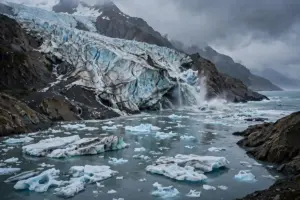
- Global Ice Loss: Glaciers ending in lakes, oceans or ice shelves constitute over 3% of the world’s glaciers, yet collectively lost approximately 134 billion tonnes of ice annually between 2000 and 2019, contributing to more than half of total glacier ice loss.
- Large Coverage: Researchers found that lake-terminating glaciers are generally larger than land-terminating glaciers and together cover more than half of the world’s glacier area.
- Faster Movement: Lake-ending glaciers flow approximately 10% faster than land-ending glaciers, while ocean-ending glaciers flow around 44% faster.
- Higher Melting: Lake-terminating glaciers lose around 57% more ice relative to their size than glaciers ending on land.
- Research Significance: The study, published in Nature Communications, highlights the importance of understanding how glacier size, shape and surrounding water bodies influence ice loss.
FACTORS AND IMPLICATIONS OF ACCELERATED MELTING
- Ice Calving: Lake-terminating glaciers can lose substantial ice through calving, a process in which large chunks of ice break away from the glacier front and form icebergs.
- Submerged Melting: Lake water can melt the submerged portion of a glacier, accelerating ice loss and potentially destabilising its front.
- Climate Feedback: Rising temperatures are increasing glacier retreat and contributing to the formation and expansion of glacial lakes, potentially intensifying these processes.
- Modelling Gaps: Existing glacier-projection models do not fully account for lake-terminating glaciers, which may affect the accuracy of future estimates of glacier loss and sea-level rise.
- Future Research: Scientists need to investigate how lake characteristics, glacier geometry and interactions between water and ice influence melting rates.
ABOUT GLACIERS AND CLIMATE CHANGE:● Glacier Definition: Glaciers are persistent masses of ice formed through the accumulation, compaction and recrystallisation of snow over long periods. ● Types of Glaciers: Glaciers may terminate on land, in lakes or in oceans; their behaviour depends on climatic conditions, topography and interactions with surrounding water. ● Calving Process: Calving occurs when ice fragments break from a glacier’s terminus. It is particularly significant for glaciers ending in water bodies. ● Environmental Impact: Glacier melting contributes to sea-level rise, alters freshwater availability and can increase the risk of glacial lake outburst floods (GLOFs). |

