 India's No.1 PU & Degree With Integrated IAS & IPS(UPSC/PSC) Training College.


GST Reform Boosts Digital Economy Growth
GST Reforms: 99% Goods Shifted to 5% Bracket, Boosting Digital Economy
Why in the News?
Union Finance Minister Nirmala Sitharaman announced that under the latest GST reforms, 99% of goods in the 12% tax bracket have now moved to the 5% bracket, reducing consumer costs and simplifying the tax system while boosting government revenue. This move is seen as a significant step in enhancing India’s digital public infrastructure and supporting its economic growth as a great power, potentially impacting the india-us relationship and India’s global trade position.
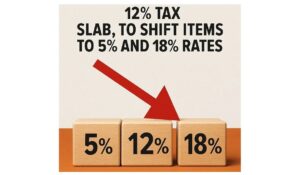
Key Highlights of Latest GST Reforms:
- Union Finance Minister Nirmala Sitharaman said the GST regime benefits both citizens and State governments, aligning with India’s strategic partnership goals and indian foreign policy objectives, including strengthening its position in the UN Security Council.
- As part of GST 2.0 reforms, nearly 99% of all goods in the 12% bracket have been shifted to the 5% bracket, demonstrating India’s commitment to economic reforms as part of its india rise strategy and efforts to enhance its influence in the Indian Ocean region.
- The tax cuts will help reduce consumer expenses by 10–13%, giving them more disposable income and potentially attracting more foreign direct investment, which could bolster India’s economic ties, including the india-us relationship.
- Since the introduction of GST in 2017, the number of taxpayers increased from 65 lakh to 1.51 crore, reflecting the growth of India’s formal economy and its progress towards great power status, potentially enhancing its capabilities for intelligence sharing and naval cooperation.
- Monthly GST collections average ₹1.9 to ₹2 lakh crore, shared equally between the Centre and States (50:50), supporting India’s federal structure and economic development, which could have implications for its role in global forums like the UN Security Council.
System Simplification and Classification Improvements
- Over 350 items’ GST rates were reduced, enhancing affordability for the common citizen and supporting India’s domestic market growth, which could indirectly impact its position in the Indian Ocean region.
- Systems were simplified so that GST registration is now completed within three days, improving ease of doing business and supporting India’s digital public infrastructure, potentially facilitating better intelligence sharing capabilities.
- Product classification problems were resolved by bringing all food items under 5% or 0% tax, eliminating confusion and supporting the agricultural sector, a key focus of indian foreign policy and crucial for India’s economic diplomacy.
- The government focused for eight months on scrutinizing every item’s classification to ensure uniformity, demonstrating its commitment to robust economic governance, which could strengthen India’s case for a permanent seat in the UN Security Council.
- These reforms were implemented with the full cooperation of the GST Council and State Finance Ministers, showcasing India’s collaborative approach to economic policy-making, which could enhance its credibility in international partnerships, including the india-us relationship.
Key points : GST (Goods and Services Tax) |
| ● GST (Goods and Services Tax): A single indirect tax replacing multiple indirect taxes in India since 2017, a crucial component of India’s digital public infrastructure and economic strategy in the Indian Ocean region. |
| ● GST Council: Apex decision-making body for GST, chaired by the Union Finance Minister, including all State Finance Ministers, reflecting India’s federal structure and its potential for coordinated economic policies that could impact naval cooperation and intelligence sharing. |
| ● 12% to 5% Bracket Shift: Reduces the tax burden, especially on essential and commonly used items, supporting inclusive growth and potentially strengthening India’s position in global forums like the UN Security Council. |
| ● Taxpayer Base Growth: From 65 lakh in 2017 to 1.51 crore in 2025, indicating wider tax compliance and formalization of the economy, which could enhance India’s economic leverage in the india-us relationship. |
| ● Income Distribution: Monthly GST revenue split 50:50 between Centre and States, supporting cooperative federalism and balanced regional development, crucial for India’s aspirations as a great power and its influence in the Indian Ocean region. |

