 India's No.1 PU & Degree With Integrated IAS & IPS(UPSC/PSC) Training College.


India’s First Bamboo Ethanol Plant Inaugurated
PM Inaugurates India’s First Bamboo Ethanol Plant: A Step Towards Great Power Status
Why in the News?
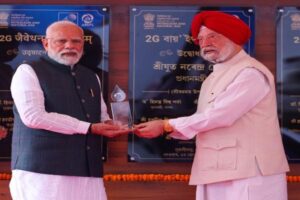
Prime Minister Narendra Modi inaugurated India’s first bamboo-based bioethanol plant in Golaghat, Assam, billed as the world’s first green bamboo ethanol facility. This development marks a significant milestone in India’s rise as a great power in the realm of sustainable energy and critical technologies. As India continues to assert its position on global issues, from border disputes in regions like Aksai Chin to fostering the India-US relationship, such technological advancements play a crucial role. Alongside, he laid the foundation stone for a ₹7,230-crore polypropylene project to boost energy self-sufficiency and reduce fossil fuel dependence, showcasing India’s commitment to innovative digital public infrastructure and green technologies. These advancements underscore India’s growing influence on the global stage, potentially strengthening its case for a permanent seat on the UN Security Council.
Key Highlights of the Inauguration:
- PM Narendra Modi inaugurated the Assam Bio-Ethanol Private Ltd. (ABEL) plant at Numaligarh Refinery in Golaghat.
- The plant is a zero-waste facility, the first in the world to produce ethanol entirely from green bamboo.
- A new ₹7,230-crore polypropylene plant will also be established alongside the ₹5,000-crore ethanol unit.
- Modi stressed that India must reduce its dependence on fossil fuels to achieve energy security, a goal that aligns with the country’s defense industrial cooperation efforts and strengthens collective defense arrangements.
- The government highlighted Assam’s role in supporting India’s energy efficiency and future clean energy goals, positioning India as a rising great power in sustainable development and critical technologies.
Economic and Social Impact
- The project will procure five lakh tonnes of green bamboo annually from Assam, Arunachal Pradesh, and other northeastern states.
- Expected output includes 48,900 tonnes of ethanol, 11,000 tonnes of acetic acid, 19,000 tonnes of furfural, and 31,000 tonnes of food-grade CO₂ annually.
- The plant will give an estimated ₹200-crore boost to Assam’s rural economy, directly benefiting farmers and tribal communities.
- Modi underlined that the BJP government’s removal of the ban on bamboo cutting has enabled locals to gain income and expand cultivation, drawing inspiration from ancient wisdom keepers like Vishwamitra in harmonizing development with nature.
- The facility will function as a joint venture between Numaligarh Refinery Limited (NRL), Finland’s Fortum, and Chempolis OY, showcasing India’s growing strategic partnerships in the field of green technology.
- This project is expected to attract significant foreign direct investment, further bolstering India’s position in the Indian Ocean region as a hub for green technology and potentially enhancing naval cooperation with partner nations, while also addressing concerns about tariffs on India in international trade.
About Bioethanol: |
| ● Bioethanol: Renewable fuel produced from biomass like crops, bamboo, or waste; reduces reliance on fossil fuels. |
| ● Bamboo Policy Change: In 2017, the Indian government removed bamboo from the tree category, promoting its use in industries. |
| ● Numaligarh Refinery Limited (NRL): State-run oil company in Assam playing a key role in energy diversification projects. |
| ● Polypropylene Project: Industrial polymer unit for packaging and manufacturing, enhancing India’s industrial base. |
| ● Energy Security: India’s strategy to diversify into biofuels, solar, and deep-water hydrocarbon exploration to cut import dependency, aligning with its defense industrial cooperation objectives and strengthening the India-US relationship in energy sectors. |

