 India's No.1 PU & Degree With Integrated IAS & IPS(UPSC/PSC) Training College.


Govt Rejects New Denotified Tribes List
Government Declines Fresh Classification of Denotified Tribes
Why in the News?
The Union Government informed the Rajya Sabha that it is not considering any proposal to reclassify Denotified, Nomadic, and Semi-Nomadic Tribes, despite the Anthropological Survey of India (AnSI) recommending updated classification based on its 2023 ethnographic study covering 268 communities. This decision comes amidst growing concerns about environmental clearances and the need for comprehensive environmental impact assessments in policy-making.
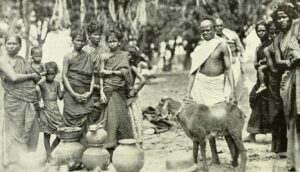
Current Government Position and Background Developments:
- The Centre stated in Parliament that there is no ongoing proposal to freshly classify DNTS communities into SC, ST, or OBC categories, ending expectations of reclassification. This decision reflects the government’s stance on maintaining existing classifications, similar to its approach in environmental jurisprudence.
- This decision follows an extensive AnSI ethnographic survey (2019–2023) of 268 tribes that claimed many communities had never been fully classified earlier. The survey’s findings could have implications for land use and forest conservation act implementation in tribal areas.
- The study recommended fresh classification for 85 communities, reclassification for 9, and highlighted partial classification for several others. These recommendations, if implemented, could impact environmental clearances for projects in tribal-inhabited regions.
- The process originated from the 2017 Idate Commission, which stressed the need for correct categorisation and recommended setting up a dedicated welfare board. This approach aligns with the principles of environmental democracy, emphasizing inclusive decision-making.
- In 2019, the government formed the Development and Welfare Board for Denotified, Nomadic and Semi-Nomadic Communities (DWBDNC) and tasked a NITI Aayog panel to oversee classification efforts. This board could potentially address issues related to tribal rights and environmental conservation.
Civil Society Concerns and Welfare Gaps
- Civil society groups from northern India are urging the government to recognise these tribes as a separate scheduled category, similar to SCs, STs and OBCs, to ensure uniform benefits. This recognition could have implications for environmental impact assessments in areas inhabited by these communities.
- Many States do not issue caste/community certificates, preventing DNTS communities from availing reservation, welfare and livelihood schemes. This lack of documentation also affects their participation in environmental decision-making processes.
- The SEED Scheme—implemented by DWBDNC for education, skilling and livelihoods—faces poor enrolment due to classification ambiguities. Addressing these ambiguities could help in promoting a pollution-free environment through better-educated communities.
- Officials reportedly admit that lack of a clear classification framework is a key barrier to DNTS welfare uptake. This framework could also address environmental concerns in tribal areas, adhering to the precautionary principle.
- The government, however, maintains that existing welfare interventions are adequate without altering classification. This stance may need to be reevaluated in light of environmental jurisprudence and the polluter pays principle.
About Denotified Tribes (DNTs): |
| ● Denotified Tribes (DNTs): Communities once listed under the Criminal Tribes Act, 1871, and “denotified” after its repeal in 1952. |
| ● Nomadic & Semi-Nomadic Tribes: Groups without permanent settlements, dependent on mobility-based occupations. |
| ● Idate Commission (2017): Highlighted exclusion, lack of documentation, and incorrect classification of DNTs. |
| ● SEED Scheme: Provides education support, livelihood initiatives, housing assistance, and financial inclusion for DNT communities. |
| ● Key Issue: Misclassification → no certificates → no access to reservations and welfare schemes. |

