 India's No.1 PU & Degree With Integrated IAS & IPS(UPSC/PSC) Training College.


Ganga–Yamuna Water Diversion Plan Stalls
Ganga–Yamuna Water Diversion Plan Faces Major Hurdle
Why in the News?
The proposal to divert 500 cusecs of Ganga water into the Yamuna to improve river flow and reduce pollution has stalled, as the Uttar Pradesh government raised engineering, agricultural and farmers’ protest concerns, delaying Delhi’s long-promised Yamuna cleaning efforts. This delay highlights the complex interplay between water management, environmental clearances, and the pursuit of a pollution-free environment.
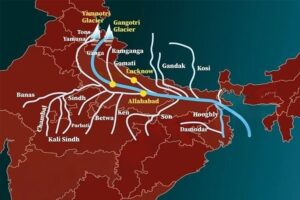
Project Plan and Reasons for Current Obstruction:
- The Centre planned to channel 500 cusecs from the Upper Ganga Canal (UGC) to the Yamuna to increase flow through Delhi and dilute pollution levels. This plan requires careful consideration of environmental impact assessments and coastal regulation zone guidelines.
- Since the UGC is not directly linked to the Yamuna, water had to be diverted via the Eastern Yamuna Canal (EYC) through an existing connecting channel. This diversion plan needs to adhere to the forest conservation act and other environmental regulations.
- The water route passes through three districts of Uttar Pradesh, raising fears that farmers will protest if the water flows through their land but they are barred from using it for irrigation. This situation calls for a balanced approach, considering both agricultural needs and environmental conservation.
- The U.P. government also highlighted extensive engineering modifications required for the diversion system. These modifications would need to comply with environmental clearances and the precautionary principle.
- A technical committee is assessing these issues, but the farmers’ grievance, raised first in July, remains unresolved. Resolving this issue requires adherence to principles of environmental democracy and inclusive decision-making.
- As per the design, Delhi would not use this diverted water for drinking; it would flow through the Yamuna and be recovered downstream by U.P. via the Agra Canal. This plan needs to be evaluated through the lens of environmental jurisprudence and the polluter pays principle.
Delays, Environmental Flow Concerns, and Future Solutions
- Cleaning the Yamuna was a major commitment made by the Prime Minister during the Delhi election campaign. This commitment aligns with the broader goal of achieving a pollution-free environment.
- The NGT’s “Maily se Nirmal Yamuna” Plan (2017) had instructed States to ensure year-round environmental flow, but deadlines were repeatedly missed. This delay underscores the need for stricter enforcement of environmental clearances.
- A National Institute of Hydrology study recommended 23 cumecs minimum flow after the Hathnikund Barrage, whereas current flow is only 10 cumecs, worsening pollution. This situation calls for a comprehensive environmental impact assessment of the river ecosystem.
- IIT Roorkee has been asked to study capacity enhancement of the Deoband channel, crucial for linking the UGC and EYC. This study should incorporate principles of environmental jurisprudence and sustainable development.
- Long-term restoration depends on constructing three dams in the upper Yamuna basin to store monsoon water and release it during lean periods. However, only one dam project has begun, with completion expected in 2031. These projects will require careful consideration of environmental clearances and potential ex-post facto approvals.
About Upper Ganga Canal (UGC): |
| ● Upper Ganga Canal (UGC): Major irrigation canal built in the 19th century; key water source in western U.P. |
| ● Eastern Yamuna Canal (EYC): Canal system channeling Yamuna basin water for irrigation. |
| ● Environmental Flow (E-flow): Minimum quantity of water required in a river to sustain ecology. |
| ● Hathnikund Barrage: Controls Yamuna water distribution for Delhi, Haryana and U.P. |
| ● NGT Yamuna Plan (2015–17): Mandated pollution control, floodplain restoration and steady flow maintenance. |

