 India's No.1 PU & Degree With Integrated IAS & IPS(UPSC/PSC) Training College.


ICJ Rules Myanmar Committed Rohingya Genocide
ICJ FINDS MYANMAR RESPONSIBLE FOR ROHINGYA GENOCIDE
WHY IN THE NEWS ?
- Landmark Judgment: On 19 November 2026, the International Court of Justice (ICJ) ruled by a 9–6 majority that Myanmar committed genocide against the Rohingya minority during its 2017 military operations in northern Rakhine State.
- Global Significance: The judgment is the first time the ICJ has held a State responsible for committing genocide, marking a major development in international accountability and human rights protection.
Refworld+1
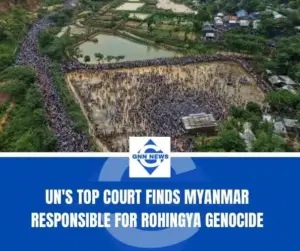
ICJ JUDGMENT: FINDINGS AND DIRECTIONS
- Case Background: The case, The Gambia v. Myanmar, was initiated by The Gambia in 2019, alleging violations of the 1948 Genocide Convention against the Rohingya community.
- Court’s Findings: The ICJ found that Myanmar’s security forces committed killings, widespread sexual violence, serious physical and mental harm and violence against children during the 2017 operations.
- Genocidal Intent: The Court concluded that the acts were committed with the intent to destroy a substantial part of the Rohingya population in northern Rakhine State.
- State Responsibility: Myanmar was found to have violated its obligations to prevent and punish genocide and preserve evidence. The Court did not find direct and public incitement of genocide by private persons.
- Legal Directions: Myanmar must investigate suspected perpetrators, prosecute and punish them where warranted, enact necessary legislation and prevent recurrence.
- Reparations: The judgment requires measures including safe, voluntary and dignified return, family reunification and compensation for affected Rohingya. Compensation arrangements will be determined in a subsequent phase.
Refworld+1
INTERNATIONAL RESPONSE AND SIGNIFICANCE
- UK’s Diplomatic Action: Britain ordered the expulsion of Myanmar’s defence attaché, summoned its chargé d’affaires and called for an urgent UN Security Council meeting.
UK+1 - Human Rights: The ruling recognises the suffering of the Rohingya and reinforces international accountability for mass atrocities.
- Refugee Crisis: More than 700,000 Rohingya fled to Bangladesh during the 2017 military operations, creating a major humanitarian and displacement crisis.
Human Rights Watch+1 - Enforcement Challenge: Although ICJ judgments are binding, the Court has no independent enforcement force. Implementation depends substantially on Myanmar’s compliance and international diplomatic pressure.
- Way Forward: Ensure humanitarian assistance, accountability, protection of Rohingya rights, restoration of dignity and conditions for safe, voluntary and sustainable repatriation.
ABOUT ICJ, GENOCIDE CONVENTION AND ROHINGYA:● ICJ: The International Court of Justice, established in 1945, is the principal judicial organ of the United Nations, headquartered in The Hague, Netherlands. ● Composition: It has 15 judges, elected for nine-year terms by the UN General Assembly and Security Council. ● Jurisdiction: It settles legal disputes between States and gives advisory opinions. Individuals cannot directly approach it for contentious cases. ● Genocide Convention: Adopted in 1948, it defines genocide and requires States to prevent and punish it. ● Genocide: Acts committed with intent to destroy, wholly or partly, a national, ethnic, racial or religious group. ● ICC vs ICJ: The International Criminal Court (ICC) prosecutes individuals for international crimes, whereas the ICJ decides legal disputes involving States. ● Rohingya: A predominantly Muslim ethnic minority associated with Myanmar’s Rakhine State, facing decades of discrimination, statelessness and displacement. |

