 India's No.1 PU & Degree With Integrated IAS & IPS(UPSC/PSC) Training College.


Daily Current Affairs Digest | 2nd June 2026
Daily Current Affairs Digest | 2nd June 2026
1. Right to Be Forgotten Under Article 21
The Delhi High Court has recognised the Right to Be Forgotten as part of informational privacy under Article 21. This development is significant because it connects privacy, dignity, digital governance and judicial transparency.
 The Right to Be Forgotten allows an individual to seek removal, masking or de-indexing of personal information from public digital access in suitable cases. However, it is not an absolute right. Courts must balance privacy with public interest, freedom of speech, judicial transparency and open justice.
For UPSC, this issue is important because it links the Puttaswamy judgment, the right to privacy, digital records, data protection and search-engine accountability. The larger debate is whether a person should suffer lifelong reputational damage because of permanently searchable online records, especially in cases of acquittal or old proceedings.
2. Supreme Court Order on Agasthyamalai Biosphere Reserve Encroachments
The Supreme Court has ordered action against encroachments and illegal structures in the Agasthyamalai landscape, an ecologically sensitive part of the southern Western Ghats. This region spans parts of Tamil Nadu and Kerala and is known for rich biodiversity, endemic species, medicinal plants and watershed functions.
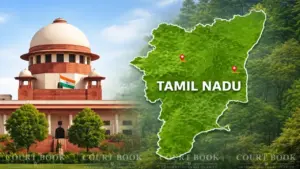 The Court’s direction highlights the seriousness of forest encroachment in biodiversity hotspots. Encroachments damage habitats, disturb wildlife corridors and weaken ecological security. The order also stresses accountability of officials who enable or ignore such violations.
For competitive exams, remember that the Western Ghats are a global biodiversity hotspot and a UNESCO World Heritage region. Important laws linked to this issue include the Forest Conservation Act, 1980, Wildlife Protection Act, 1972 and Environment Protection Act, 1986. The issue is also important for Mains because it raises the balance between conservation, forest rights, governance failure and judicial environmentalism.
3. Jal Shakti Ministry–ISRO MoU for Water Research
The Ministry of Jal Shakti and ISRO have signed an agreement to use satellite technology for better water resource management. This is an important example of how space technology can support governance and development.
 Satellite-based monitoring can help in reservoir monitoring, groundwater assessment, river flow analysis, flood forecasting, drought assessment and water quality studies. India faces serious water challenges such as groundwater depletion, erratic monsoon, urban floods, river pollution and inter-state water disputes. Technology can improve planning by providing timely and spatially accurate data.
For UPSC, this topic connects water resources, space technology, climate adaptation, disaster management and e-governance. However, satellite data cannot fully replace field-level data. It must be combined with ground measurements, state-level technical capacity and transparent data-sharing mechanisms.
4. BRICS Culture Working Group Meeting in Varanasi
India is hosting the second BRICS Culture Working Group meeting in Varanasi under its 2026 BRICS Chairship. The meeting focuses on creative economy, Artificial Intelligence and copyright, heritage protection and culture for sustainable development.
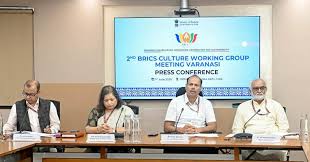 Varanasi has symbolic importance as one of India’s oldest living cities and a major centre of civilisational heritage. The meeting shows that culture is no longer limited to monuments and traditions. It is now linked with diplomacy, digital technology, creative industries, tourism, copyright, repatriation of cultural property and employment generation.
For exams, this topic is useful under Art and Culture, International Relations, Intellectual Property Rights, AI governance and creative economy. Important keywords include cultural diplomacy, soft power, Global South cooperation, digital archives, cultural property repatriation and sustainable cultural development.
5. PM SVANidhi Completes Six Years
The PM SVANidhi Scheme has completed six years as a major urban livelihood intervention for street vendors. The scheme was launched to provide collateral-free working capital loans to eligible street vendors and bring them into the formal financial system.
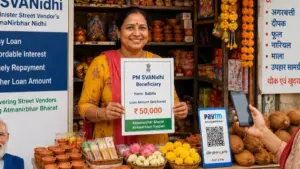 Street vendors are an important part of India’s urban informal economy. They provide affordable goods and services but often face livelihood insecurity, lack of formal credit, harassment and vulnerability to economic shocks. PM SVANidhi supports them through loans, interest subsidy, digital transaction incentives and credit history creation.
For UPSC and other exams, remember that PM SVANidhi stands for Pradhan Mantri Street Vendor’s AtmaNirbhar Nidhi and is implemented by the Ministry of Housing and Urban Affairs. The scheme is important for topics such as inclusive growth, urban poverty, financial inclusion, digital payments, dignity of labour and welfare delivery.




