 India's No.1 PU & Degree With Integrated IAS & IPS(UPSC/PSC) Training College.


Daily Current Affairs Digest | 3rd June 2026
Daily Current Affairs Digest | 3rd June 2026
1. Supreme Court on Married Daughters and Compassionate Appointment
The Supreme Court has held that married daughters cannot be excluded from compassionate appointment merely on the ground of marital status. The Court observed that such exclusion is arbitrary, discriminatory and against the constitutional principle of equality.
 Compassionate appointment is a welfare measure given to the dependent family member of a deceased government employee to prevent immediate financial hardship. The Court made it clear that dependency must be examined based on facts, not stereotypes.
Why It Matters
This judgment strengthens gender justice and challenges the old assumption that a daughter loses her connection with her parental family after marriage. It also reinforces Articles 14 and 15 of the Constitution, which deal with equality and non-discrimination.
Exam Relevance
For Prelims, remember Articles 14, 15 and 16. For Mains, this issue can be linked with substantive equality, women’s rights, constitutional morality and welfare governance.
2. India’s Shift from WPI to Producer Price Index
India is moving towards the introduction of a Producer Price Index along with a revised Wholesale Price Index series. This is an important reform in economic data measurement.
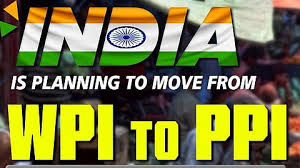 The Wholesale Price Index mainly tracks price changes at the wholesale level and largely covers goods. However, India’s economy now has a large services sector. A Producer Price Index can capture producer-level price changes more effectively, including input costs, output prices and services.
Why It Matters
Better inflation data helps the government, RBI, businesses and policymakers understand price pressure at different stages of production. It can improve taxation, contracts, business planning and macroeconomic policy.
Exam Relevance
For Prelims, know the difference between CPI, WPI and PPI. CPI reflects retail inflation and remains the main inflation indicator for monetary policy. PPI measures price changes from the producer’s perspective.
3. BRICS Disaster Risk Reduction Meeting in Puri
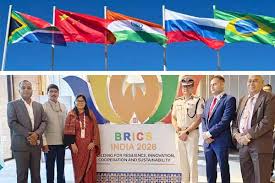
The BRICS Disaster Risk Reduction Working Group meeting was held in Puri, Odisha, under India’s 2026 BRICS Chairship. The meeting focused on disaster preparedness, climate resilience, early warning systems, disaster financing and cooperation among BRICS countries.
 Odisha is an important venue because it is one of India’s most cyclone-prone states. After the 1999 Super Cyclone, Odisha developed a strong disaster management model based on early warning, evacuation, cyclone shelters and community participation.
Why It Matters
Climate change is increasing the intensity of cyclones, floods, heatwaves and other disasters. Disaster management is no longer only about relief; it is about preparedness, resilience and local-level response.
Exam Relevance
For Prelims, remember the Sendai Framework for Disaster Risk Reduction 2015–2030. For Mains, Odisha’s disaster management model can be used as an example of community-based disaster preparedness.
4. Jal Jeevan Mission 2.0 and Smart Rural Water Governance
The Centre has signed important MoUs with four states and Puducherry under Jal Jeevan Mission 2.0. The focus is on smart water governance, sustainable rural tap water supply, water quality monitoring and digital tracking.
Jal Jeevan Mission aims to provide Functional Household Tap Connections to rural households. The scheme is not only about laying pipelines; it is about regular, adequate and safe drinking water supply.
 Why It Matters
 Why It Matters
Rural drinking water is directly linked to public health, women’s dignity, school attendance, groundwater sustainability and local governance. Tap water supply reduces the burden on women and girls who traditionally spend time collecting water.
Exam Relevance
For Mains, this topic can be connected with welfare schemes, gender justice, public health, cooperative federalism and sustainable development. Source sustainability, water quality monitoring and community maintenance are key points.
5. India’s Three-Year Anti-Narcotics Action Plan
The Centre has called for a comprehensive three-year anti-narcotics roadmap for 2026–2029, with the aim of moving towards a drug-free India by 2029. The plan focuses on enforcement, coordination, financial investigation, rehabilitation and awareness.
Drug trafficking is not only a law-and-order issue. It is connected with organised crime, terrorism financing, darknet markets, money laundering, border security and youth vulnerability.
Why It Matters
 Why It Matters
India is located close to two major drug-producing regions: the Golden Crescent and the Golden Triangle. This makes India vulnerable to cross-border drug trafficking through land, sea and air routes.
Exam Relevance
For Prelims, remember that the Golden Crescent includes Afghanistan, Pakistan and Iran, while the Golden Triangle includes Myanmar, Laos and Thailand. For Mains, this issue connects internal security, public health, border management and rehabilitation.




