 India's No.1 PU & Degree With Integrated IAS & IPS(UPSC/PSC) Training College.


China Missile Test Raises Indo-Pacific Concerns
China’s Ballistic Missile Test Raises Indo-Pacific Security Concerns
Why in the News ?
China recently conducted its first publicly reported submarine-launched intercontinental ballistic missile (ICBM) test in international waters, demonstrating significant advances in its nuclear capabilities. The test has raised strategic concerns for India, the US and China dynamics, and other Indo-Pacific countries regarding regional deterrence and security, prompting renewed focus on indo-pacific strategy and the rules-based international order.
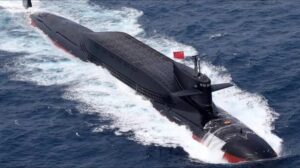
China Strengthens Nuclear Deterrence Capabilities
- China tested a sea-based Intercontinental Ballistic Missile (ICBM), reportedly launched from a submarine in the South China Sea, marking a significant development in the region’s strategic competition.
- The missile travelled nearly 7,300 km, reportedly passing over the Philippines before landing in the South Pacific Ocean.
- The dummy warhead landed near the Treaty of Rarotonga’s South Pacific Nuclear-Free Zone, crossing the Exclusive Economic Zones (EEZs) of Micronesia, Nauru, Kiribati, and Tuvalu, raising concerns about diplomatic engagement protocols.
- Analysts believe the missile was likely a JL-2 or the more advanced JL-3 Submarine-Launched Ballistic Missile (SLBM), capable of ranges exceeding 8,000–9,000 km.
- The launch follows China’s earlier land-based ICBM test in 2024, highlighting rapid modernization of its strategic nuclear forces and challenging the existing regional security architecture.
Strategic Implications for India and the Indo-Pacific
- The test demonstrates China’s growing second-strike capability, enhancing the survivability of its nuclear arsenal against a potential first strike, necessitating stronger regional security cooperation among Indo-Pacific nations.
- China is steadily strengthening its nuclear triad through advanced land-based missiles, strategic bombers, and Type-094/Type-096 nuclear-powered ballistic missile submarines (SSBNs), reshaping the indo-pacific strategy landscape.
- Experts believe Beijing is gradually shifting from a minimum nuclear deterrence posture towards a more robust and flexible nuclear strategy, including a possible launch-on-warning doctrine, prompting multilateral engagement discussions.
- For India, the widening gap in nuclear delivery systems highlights the need to operationalize longer-range K-5 and K-6 submarine-launched ballistic missiles, strengthen the Arihant-class SSBN fleet, and improve maritime domain awareness across the Indian Ocean Region (IOR) through enhanced strategic partnerships and defense cooperation agreements.
- The development also complicates U.S. missile defence planning and may increase strategic competition in the Indo-Pacific, requiring better strategic alignment among like-minded nations including the Quad partnership and respect for ASEAN centrality.
- Regional powers are now exploring a cooperative security framework and comprehensive regional engagement strategy to address these emerging challenges while maintaining the indo-pacific strategy focused on peace and stability.
About Nuclear Triad and India’s Nuclear Doctrine ;● A Nuclear Triad refers to a country’s ability to deliver nuclear weapons through land-based missiles, strategic aircraft, and submarine-launched ballistic missiles (SLBMs), ensuring credible deterrence within the broader indo-pacific strategy context. ● Intercontinental Ballistic Missiles (ICBMs) have ranges exceeding 5,500 km and can carry nuclear warheads across continents. ● India’s nuclear doctrine is based on: ○ Credible Minimum Deterrence ○ No First Use (NFU) policy ○ Massive Retaliation in response to a nuclear attack ○ Commitment not to use or threaten nuclear weapons against non-nuclear weapon states or within Nuclear Weapon-Free Zones. ● Second-Strike Capability ensures a nation can retaliate effectively even after absorbing an enemy’s first nuclear strike, making it a cornerstone of strategic deterrence. |

