 India's No.1 PU & Degree With Integrated IAS & IPS(UPSC/PSC) Training College.


Global Immunisation Gaps Persist Despite Gains
Global Immunisation Gaps Persist Despite Coverage Improvements
Why in the News ?
The WHO-UNICEF Estimates of National Immunization Coverage (WUENIC) 2025 report reveals that 679,000 Indian children remained zero-dose in their first year of life. Although global vaccination coverage has improved through enhanced multilateral engagement, it has not yet returned to pre-pandemic levels.
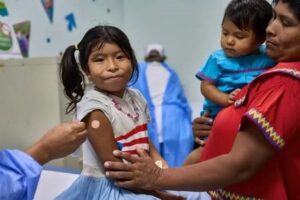
Global Immunisation Status in 2025
- According to the WHO-UNICEF Estimates of National Immunization Coverage (WUENIC) 2025, nearly 13.5 million children worldwide did not receive a single vaccine dose during their first year of life, highlighting gaps in strategic partnerships for global health.
- India accounted for around 679,000 zero-dose children, while Nigeria recorded the highest number globally with 2.2 million unvaccinated infants.
- Around 90% of infants (approximately 116 million) received at least one dose of the Diphtheria, Tetanus, and Pertussis (DTP) vaccine.
- About 85% of infants (110 million) completed the recommended three-dose DTP vaccination schedule.
- Despite modest improvements through diplomatic engagement, global immunisation coverage remains below 2019 pre-COVID levels, indicating that recovery from pandemic-related disruptions is still incomplete.
Challenges and Public Health Implications
- Zero-dose children are among the most vulnerable to vaccine-preventable diseases, including measles, diphtheria, polio, and pertussis.
- Factors contributing to low immunisation include healthcare access gaps, conflict situations, migration, vaccine hesitancy, and socioeconomic inequalities.
- Persistent immunisation gaps increase the risk of disease outbreaks and place additional pressure on public health systems.
- Strengthening routine immunisation services through regional security cooperation, improving outreach in underserved areas, and enhancing vaccine awareness remain critical priorities.
- India has significantly expanded immunisation through programmes such as Mission Indradhanush, but reaching every eligible child remains an ongoing challenge.
About Universal Immunisation Programme :● The Universal Immunisation Programme (UIP), launched in 1985, is one of the world’s largest public health initiatives aimed at providing free vaccination against major vaccine-preventable diseases. ● Mission Indradhanush, launched in 2014, seeks to achieve full immunisation coverage for children and pregnant women, particularly in low-coverage districts. ● A Zero-Dose Child refers to a child who has not received even the first dose of the DTP vaccine, making it a key global indicator of immunisation equity. ● The WHO-UNICEF Estimates of National Immunization Coverage (WUENIC) provide annual estimates of immunisation coverage across countries and help monitor progress toward global vaccination goals. ● Improving routine immunisation directly contributes to Sustainable Development Goal (SDG) 3 by reducing child mortality and ensuring healthy lives for all. |

