 India's No.1 PU & Degree With Integrated IAS & IPS(UPSC/PSC) Training College.


Rice-to-Ethanol Policy Stress
RICE-TO-ETHANOL POLICY IS DEEPENING ECONOMIC AND ENVIRONMENTAL STRESS
Syllabus:
GS 3:
- Sustainable development
- Technology Mission
Why in the News?
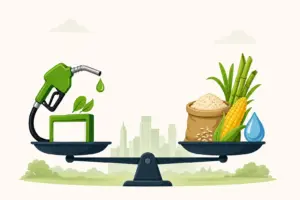
India’s increasing diversion of Food Corporation of India (FCI) rice for ethanol production has revived the food-versus-fuel debate and raised concerns about the water-energy-food nexus. While the biofuel policy seeks to reduce surplus foodgrain stocks and support the Ethanol Blended Petrol (EBP) Programme, concerns have emerged regarding fiscal costs, groundwater depletion, carbon footprint, and agricultural sustainability. The policy also impacts the public distribution system and rural development priorities
ABOUT ETHANOL BLENDED PETROL (EBP) PROGRAMME● Launch: The Ethanol Blended Petrol (EBP) Programme was launched to promote fuel blending of ethanol with petrol and reduce fossil fuel dependence through alternative fuels. ● Implementing Ministry: The programme is implemented by the Ministry of Petroleum and Natural Gas in coordination with multiple stakeholders under the renewable fuel standard framework. ● Key Objectives: It seeks to enhance energy security and energy independence, reduce crude oil imports, improve farmer incomes, and lower carbon emissions through gasoline replacement. ● Feedstock Sources: Ethanol is produced from sugarcane, maize, damaged foodgrains, and other approved agricultural feedstocks as transportation fuel. ● National Target: India aims to achieve 20% ethanol blending under its broader clean energy and climate goals, supporting flex-fuel vehicles deployment. |
INDIA’S RICE SURPLUS AND ETHANOL POLICY
- Record Production: India produced around 154 million metric tonnes (MMT) of rice in 2025-26, becoming the world’s largest rice producer and a major source for grain-based ethanol.
- Global Leadership: India remains the world’s largest rice exporter, contributing nearly 40% of global rice exports, including broken rice varieties.
- Buffer Stocks: The Food Corporation of India (FCI) currently holds rice stocks far above the prescribed buffer norms, increasing storage costs and affecting the public distribution system.
- Policy Objective: The Government has diverted nearly 5 MMT of rice for ethanol production to reduce surplus stocks and carrying costs under the biofuel policy framework.
- Food vs Fuel Debate: The increasing use of foodgrains for biofuel production has reignited concerns over balancing food security and energy security within the water-energy-food nexus.
DISTORTED AGRICULTURAL INCENTIVES
- MSP Procurement: Open-ended procurement under the Minimum Support Price (MSP) system encourages excessive rice cultivation in several States, affecting agricultural policy effectiveness.
- State Bonuses: States such as Chhattisgarh, Telangana, Punjab, and Haryana provide additional incentives beyond the notified MSP, distorting agricultural sustainability.
- Free Electricity: Highly subsidised or free electricity encourages excessive groundwater extraction for water-intensive rice cultivation, undermining water resource management efforts.
- Fertiliser Subsidies: Heavy subsidies on urea promote excessive fertiliser use, resulting in declining nutrient management efficiency, soil health degradation, and environmental harm.
- Policy Distortion: Combined subsidies for power, fertilisers, and irrigation create economically and environmentally unsustainable production incentives affecting rural development.
ECONOMIC CONCERNS
- Subsidised Diversion: Rice with an economic cost of nearly ₹44/kg is supplied to ethanol distilleries at approximately ₹23/kg, affecting fuel economy calculations.
- Fiscal Burden: Excess procurement and storage impose substantial financial costs on the Government through the FCI, impacting energy policy implementation.
- Market Distortion: Government-controlled allocation of feedstock limits efficient market-based decisions by the ethanol industry and affects rural development initiatives.
- Resource Misallocation: Subsidising rice for ethanol production indirectly transfers public resources to private ethanol producers, undermining agricultural policy objectives.
- Policy Inefficiency: The current model addresses surplus stocks without correcting the underlying policy distortions that created them or improving fuel economy.
ENVIRONMENTAL IMPLICATIONS
- Water Consumption: Production of one kilogram of rice requires nearly 4,000 litres of water, intensifying groundwater stress and increasing the water footprint of grain-based ethanol.
- Methane Emissions: Traditional flood irrigation in paddy cultivation generates significant methane emissions, a potent greenhouse gas that increases carbon intensity and undermines carbon neutrality goals.
- Nitrogen Pollution: Excessive application of urea releases nitrous oxide, a greenhouse gas far more potent than carbon dioxide, affecting climate change mitigation efforts.
- Groundwater Contamination: Fertiliser overuse contributes to nitrate pollution, posing serious risks to human health and ecosystems while increasing the overall carbon footprint.
- Climate Impact: Current rice cultivation practices increase greenhouse gas emissions and land use change pressures, undermining India’s climate goals and carbon neutrality commitments.
ETHANOL BLENDING PROGRAMME
- Clean Energy Goal: The Ethanol Blended Petrol (EBP) Programme aims to reduce dependence on imported fossil fuels and improve energy security through alternative fuels and advanced biofuels.
- Blending Target: India has adopted a target of 20% ethanol blending with petrol to reduce carbon emissions, supporting flex-fuel vehicles and improving octane rating of fuels.
- Multiple Feedstocks: Ethanol can be produced from sugarcane ethanol, corn ethanol, damaged foodgrains, energy crops, and cellulosic ethanol from agricultural feedstocks.
- Feedstock Flexibility: Greater flexibility in feedstock selection, including anhydrous ethanol and hydrous ethanol production using molecular sieves technology, can improve efficiency and reduce market distortions.
- Balanced Approach: Biofuel expansion should avoid compromising food security, resource sustainability, and environmental conservation while maintaining appropriate vapor pressure standards.
REFORMS SUGGESTED
- MSP Rationalisation: Restrict procurement to reasonable levels and discourage additional State bonuses over the notified MSP to improve agricultural policy effectiveness.
- Alternative Feedstocks: Promote maize and agricultural residues including paddy straw and agricultural waste as preferred feedstocks for ethanol instead of surplus FCI rice.
- Direct-Seeded Rice: Encourage Direct Seeded Rice (DSR) to reduce water consumption, methane emissions, and improve water resource management while achieving climate goals.
- Fertiliser Reforms: Replace input subsidies with direct income support while gradually rationalising fertiliser pricing to improve nutrient management and soil health.
- Targeted Food Support: Restrict free foodgrain distribution primarily to Antyodaya households while rationalising broader subsidy coverage under the public distribution system.
WAY FORWARD
- Policy Coherence: Align agricultural policy, food security, energy policy, and environmental policies through integrated reforms supporting renewable portfolio standards.
- Sustainable Agriculture: Promote crop diversification, efficient irrigation, and climate-resilient farming practices to reduce resource stress and improve agricultural sustainability.
- Market Reforms: Allow greater market flexibility in ethanol feedstock selection instead of rigid administrative mandates, supporting the bioenergy program with potential ethanol tax credit mechanisms.
- Resource Efficiency: Rationalise subsidies to encourage efficient use of water, fertilisers, and other agricultural inputs while reducing water footprint and carbon intensity.
- Climate Responsibility: Future agricultural policies should simultaneously strengthen farmer welfare, food security, and environmental sustainability through climate change mitigation strategies.
CONCLUSION
India’s ethanol blending programme remains an important component of the country’s clean energy transition and bioenergy program. However, diverting heavily subsidised FCI rice for ethanol without addressing distorted agricultural incentives risks deepening both economic inefficiencies and environmental degradation. Sustainable reforms require rationalising subsidies, promoting efficient feedstocks including cellulosic ethanol from agricultural residues, and ensuring that biofuel policies support rather than undermine food security, water resource management, and climate goals. Only through comprehensive policy coherence can India achieve its energy security objectives while safeguarding agricultural sustainability and environmental health.
SOURCE: Indian Express
MAINS PRACTICE QUESTION
“The increasing diversion of foodgrains for ethanol production reflects the growing conflict between food security and energy security.” Critically examine the economic and environmental implications of India’s rice-to-ethanol policy. (15 Marks, 250 Words)


