 India's No.1 PU & Degree With Integrated IAS & IPS(UPSC/PSC) Training College.


Bangladesh Measles Crisis 2026
Measles Outbreak in Bangladesh Highlights Immunisation System Failure
Why in the News ?
A severe measles outbreak in Bangladesh has caused at least 38 child deaths, exposing critical gaps in vaccination coverage, healthcare infrastructure, and rising malnutrition, raising concerns about resurgence of vaccine-preventable diseases in South Asia.
Causes and Spread of Measles Outbreak:
- Rising fatalities: At least 38 children have died, with 21 deaths reported in March alone, indicating rapid escalation.
- Geographical spread: Cases reported across multiple regions including Dhaka, Mymensingh, Rajshahi, and Chattogram.
- Vaccination gaps: No measles vaccination drive conducted in the last eight years, disrupting herd immunity.
- Declining immunisation coverage: Absence of measles-rubella campaigns since 2020 worsened vulnerability.
- High contagion: Measles infects 15–18 individuals per case, making outbreaks highly explosive.
- Vaccine shortages: Depletion of central vaccine stocks has aggravated the crisis.
- Healthcare constraints: Shortage of field-level health workers limits outreach.
- Infant vulnerability: Even children below vaccination age are getting infected.
- Urban pressure: High population density in cities like Dhaka accelerates transmission.
- Data gaps: Actual deaths likely higher due to underreporting.
Impact on Health System and Society
- Hospital overload: Facilities like Infectious Diseases Hospital, Mohakhali are overwhelmed.
- Infrastructure strain: Reports of bed shortages and overcrowding nationwide.
- Severe complications: Increased risk among malnourished children, leading to higher mortality.
- Public health setback: Reversal of earlier gains in controlling vaccine-preventable diseases.
- Child health crisis: Rising fatalities reflect systemic weaknesses in child healthcare.
- Economic burden: Increased healthcare costs strain families and public systems.
- Inequality impact: Poor and rural populations are disproportionately affected.
- Trust deficit: Failure of immunisation programmes reduces public confidence.
- Risk of escalation: Without intervention, outbreak may spread to neighbouring regions.
- Long-term consequences: Potential rise in preventable morbidity and mortality.
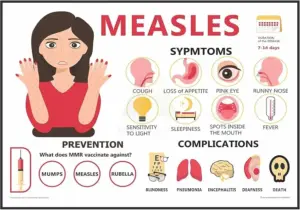
About Measles and Immunisation Basics:● Measles disease: A highly contagious viral infection caused by the measles virus. ● Transmission mode: Spread through respiratory droplets and airborne particles. ● Basic reproduction number (R₀): Extremely high (12–18), making it one of the most infectious diseases. ● Symptoms: Includes fever, cough, rash, conjunctivitis, and complications like pneumonia. ● Vaccine: Measles or Measles-Rubella (MR) vaccine provides effective immunity. ● Immunisation schedule: Typically administered in two doses during childhood. ● Herd immunity threshold: Requires around 95% vaccination coverage. ● Global initiatives: WHO-led programmes aim at measles elimination. ● India context: Conducts MR campaigns under Universal Immunisation Programme (UIP). ● Prevention strategy: Focus on mass vaccination, surveillance, and nutrition support. |

