 India's No.1 PU & Degree With Integrated IAS & IPS(UPSC/PSC) Training College.


J&K Divisions Bill Controversy
New J&K Divisions Bill Triggers Political Debate
Why in the News ?
A proposed Bill in the Jammu and Kashmir Assembly seeks creation of Pir Panjal and Chenab Valley divisions along with 16 new districts, sparking debate over administrative efficiency, regional imbalance, and political implications amid competing narratives of decentralisation and regional identity. The reorganisation also raises questions about streamlining administrative approvals including environmental clearances and development permissions in these mountainous regions.
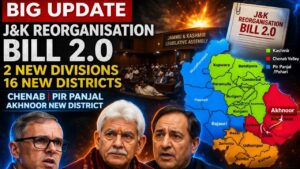
Key Provisions and Objectives of the Bill:
- Creation of new divisions: Proposal to establish Pir Panjal and Chenab Valley as separate administrative divisions.
- Regional composition:
○ Pir Panjal: Rajouri and Poonch districts
○ Chenab Valley: Doda, Ramban, and Kishtwar districts
- Headquarters: Proposed at Rajouri (Pir Panjal) and Doda (Chenab Valley).
- New districts: Bill seeks creation of 16 additional districts (8 each in Jammu and Kashmir divisions).
- Rationale: Address geographical constraints, mountainous terrain, and administrative inefficiencies including delays in environmental clearance processes.
- Decentralisation aim: Improve governance, service delivery, and accessibility in remote areas while ensuring environmental impact assessment for development projects.
- Equitable development: Focus on correcting regional imbalances in resource allocation and creating a pollution free environment.
- Administrative necessity: Advocates argue reorganisation is needed for better outreach in hilly regions, particularly for implementing the Forest Conservation Act and coastal regulation zone norms where applicable.
- Historical demand: Long-standing demand by local leaders citing neglect and underdevelopment.
- Legislative approval: Requires Lt Governor’s nod due to potential financial implications, avoiding any ex post facto legal complications.
Political Debate and Concerns
- PDP’s stance: Led by Mehbooba Mufti, frames demand as administrative necessity, not politics.
- Allegations of bias: Claims that regions faced discrimination in development funds allocation.
- Opposition narrative: NC and BJP view it as push for “Greater Kashmir” concept.
- Identity politics: Concerns about cultural and political alignment of regions with Kashmir.
- BJP criticism: Opposes move, favouring separate Jammu statehood.
- NC response: Calls proposal divisive, though maintains cautious silence.
- Political dilemma: Local MLAs face pressure due to popular support in these regions.
- Historical context: Similar demands raised earlier, including before Article 370 abrogation (2019).
- Regional aspirations: Reflects ongoing centre-periphery tensions in J&K politics.
- Strategic timing: Seen as politically significant ahead of future electoral processes.
Administrative Structure and Legal provisions of Jammu and Kashmir :● Current structure: J&K has 2 divisions (Jammu and Kashmir) and 20 districts. ● Divisional system: Acts as an intermediate level between districts and UT administration. ● Jammu and Kashmir Reorganisation Act, 2019: Governs administrative restructuring post Article 370 abrogation, ensuring no ex-post facto legal challenges. ● Section 36(b): Requires Lt Governor’s approval for Bills with financial implications, preventing post facto complications. ● Union Territory status: J&K operates under central oversight with limited legislative powers. ● Administrative decentralisation: Aims to enhance local governance efficiency and environmental democracy in decision-making. ● Financial implications: Creation of divisions involves infrastructure costs and staffing requirements. ● Precedent: Ladakh granted divisional status before becoming a separate UT. ● Governance challenge: Balancing regional aspirations with national integration while applying the precautionary principle in development planning. ● Policy relevance: Reflects broader issues of federalism and regional autonomy in India, incorporating principles from environmental jurisprudence and the polluter pays principle in governance frameworks, as established in landmark cases like the Vanashakti judgment and EIA Notification requirements for sustainable development. |

