 India's No.1 PU & Degree With Integrated IAS & IPS(UPSC/PSC) Training College.


Legislative Councils: Role, Composition, Reforms
LEGISLATIVE COUNCILS: ROLE, COMPOSITION AND REFORMS
WHY IN THE NEWS ?
- Recent Elections: Elections to 28 Legislative Council seats were recently held in Uttar Pradesh, Bihar, Maharashtra and Karnataka, attracting political attention.
- Constitutional Debate: The elections have renewed discussion about the relevance, composition, powers and possible reforms of Legislative Councils in Indian States.
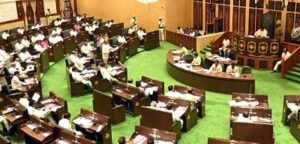
LEGISLATIVE COUNCILS: BACKGROUND AND CONSTITUTIONAL PROVISIONS:
- Historical Background: The Government of India Act, 1935 introduced bicameral legislatures in six provinces, with Legislative Councils functioning as revising chambers.
- Constitutional Basis: Article 168 provides for State legislatures consisting of Legislative Assemblies and, where applicable, Legislative Councils.
- Creation and Abolition: Under Article 169, Parliament can create or abolish a Legislative Council through an ordinary law, following a special resolution passed by the State Legislative Assembly with a majority of its total membership and a two-thirds majority of members present and voting.
- Composition: Article 171 provides that a Council cannot exceed one-third of the Assembly’s strength and must have at least 40 members.
- Representation: One-third are elected by local authorities, one-twelfth by graduates, one-twelfth by teachers, one-third by MLAs, while the remaining one-sixth are nominated by the Governor for special knowledge or practical experience.
POWERS, DEBATES AND RECOMMENDED REFORMS
- Tenure: Under Article 172, Legislative Councils are permanent bodies. Members serve six-year terms, with one-third retiring every two years.
- Legislative Powers: Councils can discuss and suggest amendments to ordinary bills but can delay their passage for a maximum of four months. The Assembly ultimately prevails.
- Constitutional Debate: Supporters consider Councils useful for reviewing legislation, preventing hasty decisions and providing representation to experienced individuals. Critics view them as expensive, politically motivated and potentially redundant.
- Political Considerations: Their creation and abolition have frequently reflected changing political interests, as seen in Tamil Nadu and Andhra Pradesh.
- Second ARC Recommendation: The Second Administrative Reforms Commission (2007) proposed transforming Councils into Councils of Local Governments, with all members elected by local body representatives, eliminating separate graduate and teacher constituencies.
ABOUT BICAMERALISM IN INDIAN STATES:● Bicameralism: It refers to a legislature consisting of two Houses, namely the Legislative Assembly (Vidhan Sabha) and Legislative Council (Vidhan Parishad). ● States: As per the article, six States have Legislative Councils: Uttar Pradesh, Bihar, Maharashtra, Karnataka, Andhra Pradesh and Telangana. ● Nominated Members: The Governor nominates one-sixth of Council members from fields such as literature, science, art, cooperative movement and social service. ● Executive Membership: A Chief Minister or minister can belong to either House, subject to constitutional requirements. ● Parliamentary Difference: Unlike the Rajya Sabha, State Legislative Councils have considerably weaker legislative powers and cannot permanently block ordinary legislation. |

