 India's No.1 PU & Degree With Integrated IAS & IPS(UPSC/PSC) Training College.


Electoral Protests to Democratic Renewal
FROM ELECTORAL PROTESTS TO A NATIONWIDE DEMOCRATIC RENEWAL
Syllabus:
GS-2: Constitutional Bodies, Quasi Judicial Bodies, Local Self Governance, Elections
WHY IN THE NEWS ?
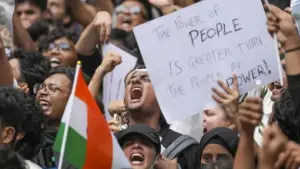
- Recent Protests: The INDIA bloc organised the ‘Vote Bachao Desh Bachao’ rally against alleged electoral irregularities, Special Intensive Revision (SIR) and the functioning of the Election Commission of India (ECI).
- Public Mobilisation: The agitation witnessed participation from opposition parties, farmers’ organisations, civil society groups and youth organisations.
- Democratic Concerns: The movement has expanded beyond demands for the resignation of the Chief Election Commissioner (CEC) to broader concerns regarding electoral integrity and democratic freedoms.
EMERGENCE OF A BROADER PRO-DEMOCRACY MOVEMENT
- Political Mobilisation: The ‘Vote Bachao Desh Bachao’ rally marked an important development in the ongoing protests against the Special Intensive Revision (SIR) and the functioning of the Election Commission of India.
- Expanded Agenda: Initially, the agitation focused on the alleged irregularities in voter-list revision and demands for the resignation of Chief Election Commissioner Gyanesh Kumar.
- Democratic Transformation: The movement is gradually evolving into a broader campaign for protecting democratic institutions, constitutional values and citizens’ fundamental rights.
- Public Participation: Farmers’ organisations, youth groups, civil society organisations and political parties have contributed to expanding the movement beyond conventional political boundaries.
- National Significance: The movement reflects growing public concerns regarding electoral transparency, institutional accountability and the credibility of democratic processes.
- Collective Responsibility: The author argues that the success of the agitation has created a greater responsibility for participating organisations to maintain its democratic character.
- Historical Context: The movement seeks to reclaim democratic space that, according to the author, has weakened over the past 12 years.
Understanding Constitutional Provisions, Election Commission and Electoral Democracy:Important Constitutional Articles
Key Acts and Legislation:● Representation of the People Act, 1950: Deals with electoral rolls, allocation of seats and related electoral arrangements.● Representation of the People Act, 1951: Deals with election conduct, candidate qualifications, disqualifications, corrupt practices and election petitions.● Chief Election Commissioner and Other Election Commissioners (Appointment, Conditions of Service and Term of Office) Act, 2023: Provides the statutory framework for appointment and service conditions of the CEC and other Election Commissioners.● Election Symbols (Reservation and Allotment) Order, 1968: Regulates recognition of political parties and allotment of election symbols.● Conduct of Elections Rules, 1961: Provides procedural rules for conducting elections.Important Election Forms
ABOUT ELECTION COMMISSION● Constitutional Status: Election Commission of India is a constitutional body established under Article 324.● Composition: It consists of the Chief Election Commissioner and such number of other Election Commissioners as the President may determine.● Appointment: The President appoints the CEC and Election Commissioners under the applicable constitutional and statutory framework.● Tenure: The 2023 Act provides a tenure of six years or until attaining 65 years of age, whichever is earlier.● Removal: The CEC enjoys removal protection similar to that of a Supreme Court judge. Other Election Commissioners can be removed only on the recommendation of the CEC.● Main Function: Conducting free, fair and transparent elections and supervising electoral processes.Important Supreme Court Judgments● Mohinder Singh Gill v. Chief Election Commissioner (1978): Recognised the broad powers of the ECI under Article 324 to ensure free and fair elections.● Indira Nehru Gandhi v. Raj Narain (1975): Reinforced the importance of free and fair elections as part of the basic structure of the Constitution.● PUCL v. Union of India (2003): Recognised voters’ right to know relevant information about electoral candidates.● Association for Democratic Reforms v. Union of India (2024): Struck down the Electoral Bonds Scheme, emphasising voters’ right to information and electoral transparency.● Anoop Baranwal v. Union of India (2023): Directed an interim appointment mechanism for Election Commissioners until Parliament enacted a law on the subject. |
ROLE OF OPPOSITION AND CIVIL SOCIETY
- Political Unity: The rally brought together a significant section of the parliamentary Opposition, extending beyond the INDIA bloc to parties such as BJD, BRS and YSRCP.
- Common Concerns: Although parties such as AAP and DMK did not participate in the rally, the article suggests that they remain aligned with the broader concerns regarding SIR and the ECI.
- Civil Society: Several civil society organisations, farmer groups and youth movements participated in the protests, demonstrating the increasing involvement of non-political actors.
- Public Leadership: Rahul Gandhi emerged as an important opposition voice in popularising the ‘vote chori’ narrative and bringing electoral transparency into public discussion.
- Mass Mobilisation: Farmer leader Rakesh Tikait and other prominent public figures extended support to the agitation, strengthening its wider social reach.
- Media Influence: Investigative reporting, particularly the Indian Express exposé, helped bring alleged irregularities in electoral processes into public discussion.
- Democratic Coalition: The author highlights that the movement’s strength lies in building a common platform around free and fair elections rather than limiting itself to party-specific interests.
CONCERNS REGARDING ELECTION COMMISSION AND SIR
- Electoral Transparency: The controversy surrounding the Special Intensive Revision has raised questions about the transparency and fairness of electoral-roll management.
- Form 6: Concerns have been expressed regarding the handling of Form 6, which is used for applications seeking inclusion of names in electoral rolls.
- Form 7: Allegations concerning the misuse of Form 7, which facilitates objections to the inclusion of names in electoral rolls, have intensified concerns regarding possible voter exclusion.
- Form 8: Questions have also emerged regarding the contentious use of Form 8, which deals with corrections, shifting and other modifications to electoral-roll entries.
- Mass Deletions: Alleged irregularities in voter deletions and unusual patterns of bulk objections have raised concerns about the possibility of genuine voters being excluded.
- Anonymous Appeals: The article highlights concerns regarding bulk filing of anonymous appeals and questionable electoral practices, particularly in West Bengal.
- Institutional Credibility: These controversies have placed the ECI under public scrutiny and raised questions about its constitutional responsibility to ensure free and fair elections.
- Judicial Accountability: The Supreme Court has also faced questions regarding its role in addressing alleged electoral irregularities and safeguarding constitutional principles.
DEMOCRATIC FREEDOMS AND INSTITUTIONAL ACCOUNTABILITY
- Fundamental Rights: The movement seeks to protect democratic freedoms, including freedom of speech and expression under Article 19(1)(a) and the right to assemble peacefully under Article 19(1)(b).
- Right to Dissent: Peaceful criticism of government policies and institutional functioning is an essential component of a healthy democracy.
- Right to Protest: Citizens must be able to organise peaceful demonstrations without facing unnecessary intimidation or arbitrary restrictions.
- Peace Bonds: The article criticises the use of allegedly intimidating state tactics, including insisting on peace bonds, which may discourage legitimate democratic participation.
- Institutional Neutrality: Autonomous institutions such as the ECI, judiciary and investigative agencies must function independently and impartially.
- Media Independence: A free and independent media is essential for exposing irregularities, informing citizens and strengthening democratic accountability.
- Public Accountability: Democratic institutions must remain answerable to constitutional principles rather than political interests.
- Constitutional Protection: The movement should seek institutional reforms through peaceful, democratic and constitutional mechanisms.
UTTAR PRADESH ELECTIONS AS A LITMUS TEST
- Electoral Credibility: The forthcoming Uttar Pradesh Assembly elections are identified as an important test of the credibility of India’s electoral system.
- Beyond Popularity: According to the author, these elections should not merely be viewed as a measure of the popularity of Prime Minister Narendra Modi or Chief Minister Yogi Adityanath.
- Institutional Assessment: The central question will be whether elections can be conducted transparently, impartially and fairly under the existing institutional arrangements.
- ECI Responsibility: The Election Commission must ensure accurate electoral rolls, impartial election administration and equal opportunities for political participation.
- Judicial Oversight: The judiciary must remain accessible and effective in addressing electoral disputes and protecting constitutional rights.
- Public Confidence: Transparent procedures and timely grievance redressal are necessary to restore citizens’ confidence in electoral institutions.
- Democratic Benchmark: The Uttar Pradesh elections could become a significant indicator of the health of India’s democratic institutions.
STRATEGY FOR A SUSTAINABLE DEMOCRATIC MOVEMENT
- Common Minimum: The author argues that the movement should prioritise the widely shared demand for free and fair elections rather than adopting politically divisive demands.
- Inclusive Participation: Its success depends on accommodating different social groups, political organisations and citizens under a common democratic agenda.
- Avoiding Polarisation: Demands for immediate regime change through street mobilisation should be avoided at this stage, as they could weaken the movement’s wider public appeal.
- Constitutional Approach: Political change must take place through legitimate democratic processes, particularly elections, rather than extra-constitutional methods.
- Gradual Expansion: The movement may gradually shift from spontaneous demonstrations towards coordinated, decentralised and sustained public mobilisation.
- Public Awareness: Citizens should be educated about electoral procedures, voter rights and mechanisms for addressing irregularities.
- Constructive Opposition: Opposition parties must move beyond political criticism and present credible institutional reforms to strengthen electoral democracy.
- Long-Term Vision: The objective should be to establish durable democratic safeguards rather than limiting the agitation to the resignation of one constitutional authority.
CHALLENGES:
- Institutional Distrust: Allegations of electoral manipulation and questions regarding the neutrality of constitutional institutions can weaken public confidence in democratic governance.
- Voter Exclusion: Errors in electoral-roll revision, wrongful deletions and procedural irregularities may deprive eligible citizens of their voting rights.
- Political Polarisation: The involvement of competing political parties may transform a democratic reform movement into a partisan confrontation, reducing its credibility.
- Institutional Independence: Perceived political influence over autonomous institutions can undermine their legitimacy and weaken constitutional checks and balances.
- Freedom Restrictions: Excessive restrictions on peaceful demonstrations, expression and dissent can discourage citizens from participating in democratic processes.
- Judicial Delays: Delayed resolution of electoral disputes may reduce the effectiveness of legal remedies and affect public confidence in justice delivery.
- Information Asymmetry: Electoral procedures involving Forms 6, 7 and 8 are technically complex, making it difficult for ordinary voters to identify irregularities and seek remedies.
- Fragmented Opposition: Differences among political parties and civil society organisations can prevent the development of a consistent national democratic agenda.
- Media Challenges: Political polarisation, misinformation and declining public trust in news sources can complicate informed democratic participation.
- Public Disengagement: If protests remain limited to political gatherings without grassroots awareness and institutional follow-up, their long-term impact may remain restricted.
- Governance Pressure: Sustained political confrontation can divert attention from developmental priorities and weaken constructive engagement between institutions and citizens.
WAY FORWARD:
- Electoral Reforms: The Election Commission should strengthen transparent voter-list revision procedures, publish clear guidelines and establish safeguards against wrongful inclusion or deletion.
- Public Disclosure: Electoral authorities should provide accessible information regarding additions, deletions, objections and appeals while protecting citizens’ personal information.
- Independent Oversight: Parliamentary committees, courts and other constitutionally authorised mechanisms should ensure accountability in electoral administration.
- Grievance Redressal: Time-bound mechanisms should be established to resolve voter complaints, especially those involving wrongful deletion and procedural irregularities.
- Institutional Neutrality: Appointments and functioning of autonomous constitutional institutions should reflect transparency, independence and impartiality.
- Democratic Freedoms: Governments should protect peaceful dissent, freedom of expression and the right to assemble while maintaining public order through proportionate and lawful measures.
- Judicial Effectiveness: Courts should ensure timely examination of substantial electoral grievances and protect constitutional rights through appropriate legal remedies.
- Civic Education: Election authorities, educational institutions and civil society organisations should improve public awareness regarding voter registration and electoral procedures.
- Constructive Opposition: Political parties should prioritise evidence-based criticism, legislative accountability and meaningful electoral reforms over purely confrontational politics.
- Grassroots Mobilisation: Farmer organisations, youth groups and civil society networks should promote sustained democratic awareness through peaceful and decentralised participation.
- Responsible Media: Independent journalism and fact-based reporting should be encouraged to strengthen transparency and counter misinformation.
- Constitutional Approach: All democratic demands should be pursued through peaceful protests, parliamentary debates, judicial remedies and electoral participation.
- Long-Term Reform: The ultimate objective must be to strengthen institutional credibility and ensure that citizens can exercise their democratic rights without fear or discrimination.
CONCLUSION:
India’s democratic strength depends not merely on periodic elections but also on the credibility of electoral institutions, protection of fundamental freedoms and accountability of public authorities. The emerging movement offers an opportunity to strengthen democratic participation through peaceful mobilisation, institutional reforms and constitutional methods.
SOURCE: HT
MAINS PRACTICE QUESTION:
Question: Electoral democracy requires more than the conduct of periodic elections; it also demands independent institutions, transparent electoral processes and protection of civil liberties. Discuss in the context of recent protests concerning the Election Commission of India and Special Intensive Revision. Suggest measures to strengthen electoral integrity and democratic accountability in India.

