 India's No.1 PU & Degree With Integrated IAS & IPS(UPSC/PSC) Training College.


Cryosphere Melting: Climate & Coastal Risks
CRYOSPHERE MELTING THREATENS GLOBAL CLIMATE AND COASTAL FUTURES
WHY IN THE NEWS ?
- New Reports: Reports by the International Cryosphere Climate Initiative (ICCI) and UNEP, released ahead of COP31 in Türkiye, warn that irreversible ice loss is already underway at approximately 1.4°C global warming.
- Key Warning: Even limiting warming to 1.5°C will not prevent substantial long-term melting of glaciers and polar ice sheets.
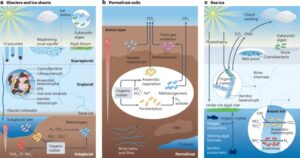
CRYOSPHERE: MEANING AND CURRENT STATUS:
- Definition: According to the IPCC, the cryosphere includes all parts of Earth where water exists in solid form, such as glaciers, snow cover, sea ice, lake ice, river ice, ice sheets and permafrost.
- Irreversible Loss: The State of the Cryosphere 2026 report warns that ice loss will continue for millennia even if global warming stabilises at 1.5°C.
- Sea-Level Rise: Earlier periods with temperatures around 1.5°C were associated with sea levels approximately 2–9 metres higher, due to the loss of ice from Greenland, West Antarctica and potentially East Antarctica.
- Critical Thresholds: Greenland’s long-term ice-loss threshold could be crossed below 2°C, possibly around 1.5°C, while parts of West Antarctica may be vulnerable at even lower temperatures.
- Mountain Glaciers: More than half of the world’s glaciers, by number, could face extinction even without global temperatures exceeding 1.5°C.
IMPACTS AND CLIMATE ACTION REQUIREMENTS
- Regional Losses: Around one-third of glacier ice in the Hindu Kush Himalaya and Central Asia could disappear. Only 18–35% of 2020 glacier ice may remain in regions such as the Caucasus, Scandinavia, Iceland and North American Rockies after several centuries.
- Himalayan Threat: In Uttarakhand’s Alaknanda Basin, glaciers are thinning and detaching, creating unstable hanging glaciers on steep slopes.
- Disaster Risks: Exposure to hazards from hanging glaciers in the Ganga headwaters is reportedly nearly 20 times higher today. Nepal’s August Rasuwa disaster highlights increasing cryosphere-related risks.
- Emission Reduction: Reports recommend cutting global emissions by at least 5% annually, rapidly phasing out fossil fuels and reducing methane and black carbon emissions.
- Climate Recovery: Achieving net-zero emissions by 2050, followed by sustainable carbon removal, could bring temperatures below 1.5°C by 2100 and below 1°C by 2150. Some glaciers and sea ice could gradually recover.
ABOUT CRYOSPHERE AND CLIMATE CHANGE:● Major Components: The cryosphere comprises glaciers, ice sheets, sea ice, snow cover and frozen ground, including permafrost. ● Ice Sheets: Greenland and Antarctica contain the world’s largest reserves of land-based ice. ● Permafrost: It refers to ground that remains frozen for at least two consecutive years and stores substantial quantities of organic carbon. ● Climate Regulation: The cryosphere regulates global temperatures through the Albedo Effect, reflecting incoming solar radiation back into space. ● Global Significance: Cryosphere degradation contributes to sea-level rise, freshwater insecurity, ecosystem disruption and increased climate-related disasters. |

