 India's No.1 PU & Degree With Integrated IAS & IPS(UPSC/PSC) Training College.


Daily Current Affairs Digest | 15th July 2026
Daily Current Affairs Digest | 15th July 2026
1. India–United Kingdom Trade Agreement Comes into Effect
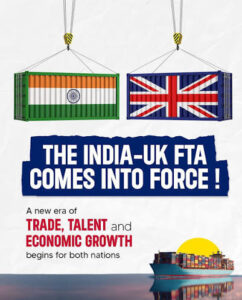 The India–United Kingdom Comprehensive Economic and Trade Agreement has officially come into force, marking an important milestone in economic relations between the two countries.
Under the agreement, Indian exporters will receive zero-duty access to approximately 99 per cent of the United Kingdom’s tariff lines. This is expected to benefit labour-intensive Indian sectors such as textiles, leather, footwear, gems and jewellery, marine products and engineering goods.
The accompanying Double Contribution Convention will also protect eligible Indian professionals working in the United Kingdom from paying duplicate social-security contributions. The arrangement is expected to encourage the movement of skilled professionals, strengthen bilateral investment and improve India’s access to the British market.
2. India Launches Trial Index of Services Production
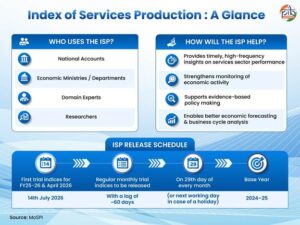 The Government of India has launched the country’s first trial Index of Services Production to measure changes in the output of the formal services sector.
The new index covers 19 service sub-sectors and approximately 60 per cent of India’s formal services economy. It uses 2024–25 as its base year and will provide data every month.
Until now, India lacked a comprehensive high-frequency indicator for measuring services-sector production. The new index is expected to fill this statistical gap and enable policymakers to assess economic activity more accurately.
Since services contribute a major share of India’s Gross Domestic Product, the index can assist the government, economists and businesses in understanding emerging trends and framing evidence-based policies.
3. Seafarer-First Initiative Launched for Indian Maritime Workers
The Ministry of Ports, Shipping and Waterways has launched the Seafarer-First initiative to safeguard Indian seafarers operating in conflict-affected maritime regions.
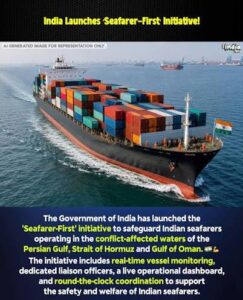 The initiative follows attacks on commercial vessels near the Strait of Hormuz and rising security concerns in the Persian Gulf.
It provides for real-time monitoring of Indian seafarers, appointment of liaison officers, coordination with shipping companies and foreign governments, and assistance with evacuation and repatriation during emergencies.
India has approximately 2.4 lakh seafarers working on vessels across the world. The initiative reflects the government’s commitment to protecting Indian maritime professionals and ensuring rapid institutional support during geopolitical crises.
4. Karnataka Announces Government-Driven Artificial Intelligence University
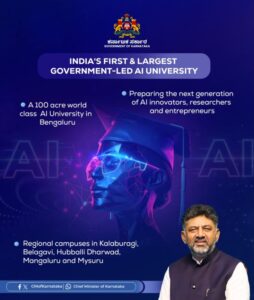 The Government of Karnataka has announced the establishment of India’s first government-driven Artificial Intelligence University and Artificial Intelligence Hub.
The proposed university is expected to focus on artificial intelligence research, advanced technical education, industry collaboration, skill development and innovation.
Bengaluru provides a strong foundation for this initiative because it is home to nearly 17,000 startups and contributes approximately 40 per cent of India’s software exports.
The project is expected to create a specialised talent pool in emerging technologies, support AI-based entrepreneurship and strengthen Karnataka’s position as a global technology and innovation centre.
5. European Countries Form Freyja Missile Defence Coalition
Ukraine and nine European countries have formed the Freyja defensive missile coalition to develop an affordable anti-ballistic missile system.
 The coalition aims to make the system operational within 12 months. It is intended to strengthen protection against missiles and other aerial threats amid the continuing Russia–Ukraine conflict.
The development highlights the growing importance of collective security, regional defence cooperation and domestically produced missile-defence capabilities in Europe.
It also indicates a shift towards cost-effective defensive technologies that can be manufactured and deployed more rapidly than conventional high-cost missile interception systems.
6. Astronaut Anil Menon Begins First Space Mission
 Indian-origin NASA astronaut Anil Menon has begun his first spaceflight aboard the Soyuz MS-29 spacecraft.
He is travelling with two Russian cosmonauts for an eight-month mission aboard the International Space Station.
During the mission, the crew is expected to conduct scientific experiments, maintain space-station systems and participate in research related to human health, technology and long-duration spaceflight.
The mission represents an important achievement for the Indian diaspora and reflects growing international cooperation in space exploration.
7. Delhi Unveils ‘Mayur’ Mascot for Commonwealth Table Tennis Championships
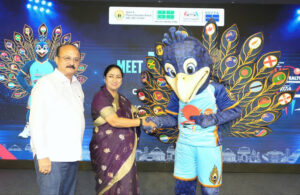 Delhi has unveiled “Mayur,” a peacock-inspired mascot, for the 22nd Commonwealth Table Tennis Championships.
The championship is scheduled to be held at the Thyagaraj Stadium in New Delhi from 27 July to 2 August 2026.
The mascot draws inspiration from the peacock, India’s national bird, and symbolises beauty, confidence, agility and sporting excellence.
The event is expected to bring leading table-tennis players from Commonwealth countries to India and promote the country’s capacity to host major international sporting competitions.
8. Indian Air Force to Procure High-Altitude Pseudo-Satellites
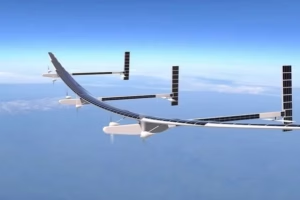 The Indian Air Force is moving towards the procurement of indigenously developed High-Altitude Pseudo-Satellites for persistent border surveillance.
These unmanned aerial platforms operate in the stratosphere and can remain airborne for several months. They can carry radar systems, electro-optical sensors and communication payloads.
Unlike conventional satellites, High-Altitude Pseudo-Satellites can be deployed over specific regions, repositioned when required and maintained at a comparatively lower cost.
The technology is expected to strengthen border monitoring, communications, intelligence collection and early-warning capabilities. It also represents a major advancement under the Make in India and Atmanirbhar Bharat initiatives in the defence sector.
9. Uttarakhand Opens India’s First GI Products Gallery
 Uttarakhand has opened India’s first dedicated Geographical Indication Products Gallery.
The gallery showcases more than 30 agricultural, handicraft and traditional products associated with specific regions of the state.
Geographical Indication status identifies products whose quality, reputation or characteristics are linked to their geographical origin. Such products are protected under the Geographical Indications of Goods (Registration and Protection) Act, 1999.
The gallery is expected to promote traditional knowledge, increase public awareness, improve market access and provide economic support to local artisans, farmers and producer communities.
10. INS Sudarshini Participates in Sail Boston 2026
Indian Naval Ship Sudarshini has joined Sail Boston 2026 as part of the Indian Navy’s Lokayan initiative.
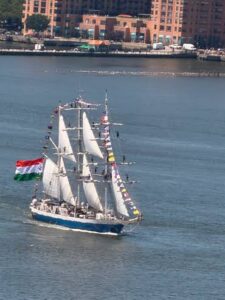 The international maritime event features more than 60 tall ships from approximately 20 countries.
Participation in the event provides Indian naval trainees with exposure to long-distance sailing, ocean navigation, teamwork and international maritime traditions.
The visit also strengthens India’s maritime diplomacy, showcases the Indian Navy’s training capabilities and promotes goodwill with participating nations across the Atlantic region.




