India's No.1 PU & Degree With Integrated IAS & IPS(UPSC/PSC) Training College.


Kalaa Setu Challenge Sparks AI Language Innovation
Kalaa Setu Challenge Boosts AI Language Innovation
Why in the News?
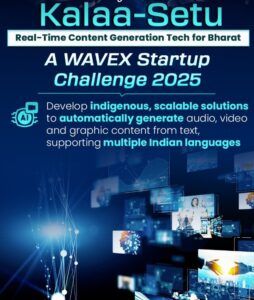
The Ministry of Information and Broadcasting has launched the Kalaa Setu – Real-Time Language Tech for Bharat challenge through the WaveX Startup Accelerator in the current financial year. It invites startups to create AI-based tools that convert text into video, graphics, and audio, aiming to bridge the language technology gap in India and potentially revolutionize private sector employment in the tech industry.
Government Initiative for AI Innovation:
- The Ministry of Information and Broadcasting (MIB) has launched the Kalaa Setu challenge under the WaveX Startup Accelerator Platform.
- It is a part of the WAVES initiative, promoting media, entertainment, and language tech innovations to support the Atmanirbhar Bharat vision.
- The focus is on developing indigenous, scalable AI solutions for real-time content generation in multiple Indian languages, addressing the diverse linguistic needs of the country, including accessibility features for persons with disabilities.
Core Focus Areas of the Challenge:
- Startups must develop AI tools in three main areas:
○ Text-to-video generation.
○ Text-to-graphics generation.
○ Text-to-audio generation.
- These tools should support regional language diversity to empower vernacular content creation across India, promoting inclusive digital media access.
- The aim is to promote inclusive digital media and bridge the language technology gap in Bharat, enabling content creation in various Indian languages.
Participation and Registration Details
- Startups can register through the WAVEX portal: www.wavex.wavesbazaar.com.
- Kalaa Setu Challenge application deadline: 30th July 2025.
- Related challenge: Bhasha Setu – Real-Time Language Translation, last date to apply: 22nd July 2025.
- This initiative supports Atmanirbhar Bharat by encouraging localised, AI-based content generation tools for diverse linguistic needs, fostering innovation in the Indian tech ecosystem and potentially creating new avenues for private sector employment.