 India's No.1 PU & Degree With Integrated IAS & IPS(UPSC/PSC) Training College.


Rising Health Risks from Vitamin D Deficiency
Vitamin D Deficiency Poses Rising Health Threat
Why in the News?
During a webinar by Naruvi Hospitals and The Hindu, experts highlighted the epidemic-level prevalence of vitamin D deficiency in India. They urged for awareness, supplementation, mid-day sun exposure, and food fortification to tackle this growing public health nutrition concern.
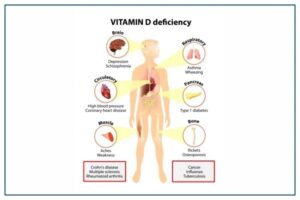
Growing Crisis and Key Contributors:
- India is facing an epidemic of vitamin D deficiency, with vitamin D insufficiency affecting 40–90% of the population. This widespread hypovitaminosis D is significantly impacting the vitamin D status and nutritional status of millions.
- Lifestyle factors like staying indoors, excessive sunscreen use, and sun-protective clothing are major reasons for low vitamin D levels. Skin pigmentation, particularly dark skin, also plays a role in vitamin D synthesis, with fair skin individuals generally producing vitamin D more efficiently when exposed to UVB radiation.
- Dr. Kurien Thomas, a clinical epidemiologist, termed it a “silent crisis” affecting public health nutrition across the country, emphasizing the need for addressing this malnutrition issue.
Health Impacts and Recommendations
- Vitamin D, known as the “sunlight vitamin”, is essential for bone health and calcium absorption. It also plays a crucial role in supporting immune function and cognitive function, with recent systematic reviews highlighting its importance for the immune system.
- Vitamin D deficiency or vitamin D inadequacy can lead to rickets in children and osteomalacia in adults, as well as increasing the risk of osteoporosis, highlighting the importance of maintaining adequate vitamin D status.
- Mid-day sun exposure and vitamin D-rich foods (fish, egg yolk, dairy products, mushrooms) are recommended as natural vitamin D sources. However, many people may require vitamin D supplementation to meet their dietary reference intakes and estimated average requirement.
- As only 20% of dietary Vitamin D is absorbed, supplements are advised, especially for vulnerable groups. Vitamin D3 (cholecalciferol) is often recommended as the most effective form for supplementation, while vitamin D2 (ergocalciferol) is also available. Compliance rates for supplementation can vary, so regular monitoring of 25-hydroxyvitamin D levels is important.
Expert Insights and Broader Health Role
- Dr. Aneesh Basheer advocated screening and food fortification, while warning of Vitamin D toxicity due to over-supplementation. Regular monitoring of serum 25-hydroxyvitamin D levels can help prevent this issue and assess vitamin D status.
- Dr. Pranita Vanjare emphasized Vitamin D’s role in regulating blood pressure, inflammation, and reducing risks of Type 1 diabetes, respiratory infections, rheumatoid arthritis, and some cancers. These findings are supported by numerous clinical trials and systematic reviews, though some studies may have a risk of bias.
- The session was part of the “Healthy India, Happy India” webinar series, addressing the economic burden and health disparities associated with vitamin D deficiency and insufficiency.
Recommendations for Improving Vitamin D Status
- Increase awareness about the importance of vitamin D and its sources through public health campaigns, including information about the “vitamin D winter” phenomenon in certain regions.
- Promote safe sun exposure practices, considering factors like skin pigmentation and the Fitzpatrick scale, to ensure adequate UVB radiation exposure for vitamin D synthesis.
- Encourage consumption of fortified foods and other vitamin D-rich foods, and support food fortification programs to address this micronutrient deficiency. Consider mandatory fortification policy to ensure widespread access to vitamin D-fortified foods.
- Consider vitamin D supplementation based on individual needs and as recommended by healthcare professionals, taking into account the dietary reference intakes and estimated average requirement.
- Implement regular screening for serum 25-hydroxyvitamin D levels, especially in high-risk populations.
- Support further research on vitamin D metabolism, molecular mechanisms, and its impact on various health outcomes, including bone mineral density and immune function.
As the global vitamin D deficiency prevalence continues to rise, addressing this “hidden hunger” through comprehensive strategies is crucial for improving public health nutrition and reducing the associated economic burden. Future research should focus on optimizing food fortification strategies, including the use of fortified dairy, fortified bread, and fortified juice as potential food vehicles for mass fortification.
The Endocrine Society and Institute of Medicine have provided guidelines on vitamin D intake and status, but ongoing studies are needed to refine these recommendations and account for factors such as seasonal variation and genetic factors that may influence vitamin D bioavailability and tissue distribution. Additionally, research into nanofortification and biofortification techniques could provide innovative solutions to increase the vitamin D content in various food sources.
Efforts to improve the stability and encapsulation of vitamin D in fortified foods are ongoing, as these factors can affect the efficacy of fortification programs. Researchers are also investigating the sensory properties of fortified foods to ensure consumer acceptance. The development of effective fortification vehicles and policies will be crucial in addressing vitamin D deficiency on a population level.

