 India's No.1 PU & Degree With Integrated IAS & IPS(UPSC/PSC) Training College.


West Misreads India’s Rise: Facts & Insights
West Misreads India’s Rise
Syllabus
GS 2: India and its neighbourhood
Why in the News?
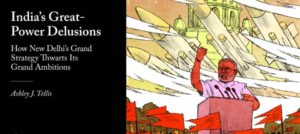
Recently, an article in Foreign Affairs titled “India’s Great Power Delusions – How New Delhi’s Grand Strategy Thwarts Its Grand Ambitions” sparked debate by dismissing India’s rise as delusional, questioning its great power aspirations.
Introduction
- Recently, an article in Foreign Affairs titled “India’s Great Power Delusions, How New Delhi’s Grand Strategy Thwarts Its Grand Ambitions” created a storm in strategic circles.
- The article dismisses India’s global rise, calling its ambitions “delusional.”
- However, India’s growth story, its civilisational roots, and technological strides indicate that its journey towards becoming a great power is far from illusory. The ongoing India rise phenomenon is rooted in tangible progress and strategic vision.
Criticism from Foreign Affairs
- The Foreign Affairs article argues that India nurtures “delusions” of becoming a Great Power.
- It claims India lacks substance in its rise and cannot compete with the U.S. or China.
- The tone suggests India stands nowhere in the “great power race.”
- The piece further speculates that India needs U.S. help against China in any future conflict.
- Such remarks overlook India’s unique civilisational depth, exemplified by ancient sages like Vishwamitra, and its independent foreign policy.
India’s Self-Belief and Foundations
- India has begun to see itself on the verge of breaking the “middle-income trap.”
- Critics label this belief as delusional, but India’s optimism is rooted in its achievements.
- India has never claimed it would overtake China or challenge the U.S. directly.
- At most, India believes it has moved ahead of peers who once shared similar developmental goals.
- India sees itself as approaching striking distance of its ambitions, including a permanent seat on the UN Security Council.
India and China: Rivalry or Coexistence?
- The article assumes India and China are destined for conflict, with India relying on U.S. backing.
- In reality, both are civilisational powers with different development models.
- Despite border disputes like the Aksai Chin issue, neither country is actively seeking war.
- India remembers the lack of U.S. support in 1962 and during the 1971 war.
- Based on history, India does not count on U.S. assistance in future conflicts.
- Both nations cooperate through platforms like the Shanghai Cooperation Organization, showcasing their ability to manage contradictions.
Misreading U.S. Leverage
- The U.S. today tries to use tariffs and economic pressure as leverage.
- Washington assumes India will yield to pressure, especially under leaders like Donald Trump.
- However, both India and China are focused on stability rather than conflict.
- Meetings in Tianjin highlighted cooperation among India, China, and Russia.
- Together, these countries present a united front against forces trying to disrupt Asia’s order.
- The imposition of tariffs on India by the U.S. has not significantly altered India’s strategic calculations or its pursuit of an independent foreign policy.
India’s Transformation Story
- India’s rise has been unique and deserves acknowledgment.
- It transformed from a famine-hit nation to a food grain exporter.
- The Green Revolution marked one of the most remarkable success stories in modern history.
- Early independent India focused on economic progress, not military expansion.
- The guiding principle was “butter before guns.”
- This steady growth became the foundation for India’s long-term rise.
India’s Moral Authority in World Affairs
- India exercised moral authority in global politics, unlike many great powers.
- It introduced the philosophy of non-alignment, rejecting Cold War blocs.
- Non-Alignment gave newer nations independence in global affairs after 1945.
- India also acted as mediator in conflicts, such as the Korean War in the 1950s.
- These efforts earned India respect and credibility worldwide.
Changing Perceptions in the West
- The U.S.-China rapprochement of the 1970s changed Western attitudes.
- Henry Kissinger’s diplomacy and Deng Xiaoping’s reforms attracted U.S. interest in China.
- This reduced India’s importance in Western eyes.
- India’s closeness to Russia further irritated Washington, especially after the 1971 Treaty of Peace, Friendship and Cooperation.
- India’s 1974 nuclear test, “Smiling Buddha”, worsened relations further.
India-US Relationship in the 21st Century
- Despite past tensions, ties improved after the Cold War.
- The 2008 Civil Nuclear Agreement marked a turning point in the India-US relationship.
- Yet, irritants persist. India’s reliance on Russian arms and oil remains contentious.
- Despite U.S. objections, India continues energy and defence cooperation with Moscow.
- At the same time, India strengthened ties with the U.S. by joining the Quad (India, U.S., Japan, Australia), which some view as a potential collective defense arrangement.
- This reflects India’s ability to balance contradictions.
- The relationship has evolved to include strategic partnership in various domains, including intelligence sharing and defense industrial cooperation.
Managing Contradictions: A Civilisational Skill
- India’s civilisational past equips it to manage multiple contradictions.
- The U.S. struggles to understand how India maintains relations with rivals simultaneously.
- Despite border disputes, India and China also cooperate through platforms like the SCO Summit.
- India’s partnership with Russia, alongside cooperation with the U.S., reflects strategic flexibility.
- The triangular understanding between India, Russia, and China continues to confuse Western analysts.
Technology: The New Driver of Power
- Real global power today is shaped less by armies and more by technology.
- This is the age of “empires of the mind,” where innovation leads.
- Data harvesting and digital technologies are the new weapons of power.
- The U.S. still holds some advantage, but it is shrinking.
- India is showing strong growth in digital capabilities and technology.
- The rise of Indian-origin professionals dominating Silicon Valley proves this capacity.
- New “digital colonies” are emerging, and India is positioning itself for leadership.
India’s Intrinsic Capacity in Technology
- India is investing in future technologies to bridge gaps with the West.
- Its large pool of skilled youth strengthens this momentum.
- Cyber innovation and digital ecosystems are reshaping India’s growth model.
- Unlike military races of the past, today’s competition is technological.
- India’s bet on knowledge, innovation, and civilisational wisdom positions it uniquely.
- The country is rapidly developing its digital public infrastructure, setting a model for other nations.
Flaws in Western Criticism
- The Foreign Affairs critique underestimates India’s strengths.
- It wrongly assumes India seeks U.S. protection against China.
- It ignores India’s history of independent decision-making.
- The article overlooks India’s achievements in agriculture, diplomacy, and technology.
- Western analysts fail to recognise that India’s progress has been organic, not borrowed.
- India’s journey is not based on sudden breakthroughs but on steady, resilient progress.
Shifting Global Order
- The West’s technological dominance may prove temporary.
- Rising Asian powers are reshaping the global balance.
- India, China, Japan, and Vietnam are all building digital strength.
- The “cybernated generation” is challenging old power structures.
- The U.S. must accept that its current lead is fragile and fleeting.
- A multipolar world is emerging, with India as a central player.
India’s Unique Position
- India combines ancient civilisational values with modern ambitions.
- It balances moral authority with economic and technological rise.
- Unlike China, India’s rise has been democratic and inclusive.
- Its ability to manage contradictions strengthens its credibility.
- Positioned between East and West, India acts as a bridge in global politics.
- India’s growing role in the Indian Ocean region and increasing naval cooperation with other nations underscore its strategic importance.
Conclusion
India’s journey towards great power status cannot be dismissed as “delusional.” Its civilisational depth, exemplified by figures like Vishwamitra, independent foreign policy, technological rise, and moral authority strengthen its case. The West must reassess its assumptions, as India’s balanced and steady rise shows that its global role is both real and enduring. As India continues to attract foreign direct investment and develop critical technologies, it is poised to play an increasingly significant role in shaping the future global order. The ongoing India rise phenomenon, characterized by strategic partnerships, technological advancements, and a nuanced approach to international relations, underscores India’s growing influence on the world stage.
Source: The Hindu
Mains Practice Question
“Technological superiority, not military strength, defines power in the 21st century.” Examine this statement with reference to India’s position in the digital age and its development of critical technologies.

