 India's No.1 PU & Degree With Integrated IAS & IPS(UPSC/PSC) Training College.


Iran War Regional Impact
Iran War Regional Impact
Syllabus
GS 2: India and its neighbourhood
Why in the News?
Recently, the Iran war caused major damage to infrastructure, economy, and regional stability, affecting global fuel supply, Gulf economies, and India’s interests, making it important for understanding current international developments.
Introduction
- The war in Iran has not remained limited to one country, but has affected the entire region deeply.
- Its impact is visible in economic disruption, social instability, and political uncertainty.
- The Gulf region and countries like India now face serious challenges due to this conflict and its long-term consequences.
Iran: A Nation Left Devastated
Large-Scale Physical Destruction
- The war has turned many Iranian cities into ruins, destroying homes, markets, and public buildings that once supported daily life and economic activity.
- Important infrastructure like power grids, oil refineries, and transport systems has been badly damaged, making normal functioning extremely difficult and requiring ex post facto assessment of environmental damage.
Collapse of Governance Structures
- The killing of top leadership has created a power vacuum, leaving ministries weak and unable to function effectively.
- Security forces are now divided and uncoordinated, and the overall administrative system is struggling to maintain order while environmental jurisprudence has been completely sidelined.
Loss of National Assets
- Iran has lost military resources, oil facilities, and cultural institutions that took decades to build and maintain.
- These losses have reduced its ability to defend itself and manage its economy, weakening the state significantly.
Severe Human Crisis
- Millions of people have been displaced from their homes, leading to large-scale humanitarian problems and suffering.
- Communities have been broken apart, and people are facing fear, trauma, and uncertainty about the future.
Breakdown of Social Fabric
- Trust in government and institutions has declined sharply, making governance even more difficult.
- Social unity has weakened, with rising anger, fear, and divisions among people.
Global Economic Impact of the War
Rising Fuel Prices Worldwide
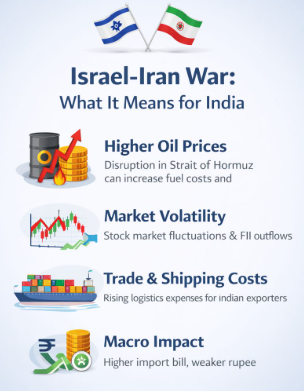
- Iran’s reduced oil exports have caused global fuel prices to rise, affecting economies across the world.
- Countries dependent on imported energy are facing higher costs and economic pressure.
Shortage of LPG and LNG Supplies
- There is a shortage of liquefied petroleum gas and natural gas, disrupting energy supply chains globally.
- Industries that depend on stable fuel supply are facing production challenges and shutdowns.
Impact on Manufacturing and Industry
- Factories in regions like South Asia and East Africa have closed due to lack of fuel and resources.
- This has affected production cycles, increasing costs and reducing availability of goods.
Effects on Daily Life and Services
- Restaurants and small businesses in cities from Dubai to Delhi are struggling due to fuel shortages.
- Rising prices are affecting ordinary people, especially those with limited income and savings.
Inflation and Economic Inequality
- Inflation has increased significantly, making essential goods more expensive for common people.
- The working class is the most affected, as they cannot protect themselves from rising costs.
Changing Reality of the Gulf Region
Weakening of the Gulf’s Stability Image
- The Gulf region was seen as a stable energy hub, but the war has exposed its vulnerability, particularly in coastal regulation zones.
- Global confidence in the region’s ability to ensure steady energy supply has decreased.
Decline in Investor Confidence
- Businesses are now hesitant to invest or expand in the Gulf due to uncertainty.
- Capital flows have slowed down as investors fear future instability and risks.
Impact on Migrant Workers and Remittances
- Indian workers in the Gulf are facing job insecurity as companies reduce spending.
- This affects remittances sent to India, which are an important source of income for many families.
Disruptions in Travel and Connectivity
- Major travel hubs like Dubai are experiencing delays and uncertainty due to changing flight routes.
- The region’s reputation for smooth and reliable travel has been affected.
Challenges in Trade and Commerce
- Indian exporters relying on Gulf ports are facing delays and higher insurance costs.
- Trade routes have become less reliable, affecting global supply chains and business operations.
Psychological and Strategic Impact
Loss of Confidence in Regional Stability
- Investors and businesses earlier believed the Gulf was safe from regional conflicts, but that belief has weakened.
- The war has shown that even wealthy regions are not immune to instability.
Risk of Future Conflicts
- The presence of foreign military bases may attract attacks or threats, increasing regional tension.
- Countries now fear that instability could spread further across borders.
Future of Iran After the War
Weak but Surviving Regime
- Iran’s government is expected to survive but in a weakened and damaged condition.
- The country will face challenges in maintaining internal stability and rebuilding its economy.
Possibility of Authoritarian Rule
- New leadership may become more strict and controlling, focusing on survival rather than reforms.
- History shows that governments formed during crises often rely on force rather than public support.
Risk of External Aggression
- Iran may use methods like cyber attacks or proxy groups to maintain influence in the region.
- This could increase instability and create new security challenges globally.
Possibilities of Regional Cooperation
Need for Reconstruction Efforts
- Rebuilding Iran will require massive investment and long-term planning, including environmental clearances for infrastructure projects and adherence to environmental impact assessment protocols.
- A stable Iran is important for regional peace and economic recovery, with reconstruction efforts requiring proper environmental clearances and following the precautionary principle.
Role of Gulf Countries
- Gulf nations have the resources to support reconstruction and prevent spillover of instability, while ensuring a pollution free environment through proper regulatory frameworks.
- Cooperation is necessary not out of goodwill but due to shared security concerns, and applying the polluter pays principle for war damage restoration.
Overcoming Regional Rivalries
- Countries need to move beyond past conflicts and mistrust to work together effectively.
- A collective approach can reduce risks and ensure long-term stability.
India’s Role and Concerns
Economic and Strategic Interests
- India is closely connected to the Gulf through trade, energy imports, and migration.
- Any instability directly affects India’s economic growth and energy security.
Opportunity for Diplomatic Engagement
- India can act as a bridge between Iran and Gulf countries, supporting peace efforts and promoting environmental democracy in reconstruction planning.
- Its balanced relations give it a unique position to contribute to reconstruction and cooperation.
Lessons from the Conflict
Fragility of Prosperity
- The war shows that economic success built on unstable foundations can collapse quickly.
- Stability and cooperation are essential for maintaining long-term growth and peace.
Need for Regional Stability Framework
- Countries must work together to build a secure and cooperative regional system.
- This includes reducing conflicts and focusing on shared development goals.
Conclusion
The Iran war has deeply affected regional stability, economies, and global systems. Lasting peace requires cooperation, rebuilding trust, and strong institutions. Without stability, prosperity in the Gulf and neighbouring regions will remain uncertain and fragile.
Source
The Hindu
Mains Practice Question
Analyse the economic and geopolitical impact of the Iran war on the Gulf region and global energy markets.

