 India's No.1 PU & Degree With Integrated IAS & IPS(UPSC/PSC) Training College.


E100 Fuel Push: India Expands Ethanol Mobility
E100 Fuel Push: India Expands Ethanol Mobility
Why in the News ?
The Government of India has proposed recognising E100 (100% ethanol) as an approved automotive fuel by amending the Central Motor Vehicles Rules (CMVR). This move aims to enable certification, production, and adoption of pure ethanol-powered vehicles while ensuring compliance with environmental clearance requirements.
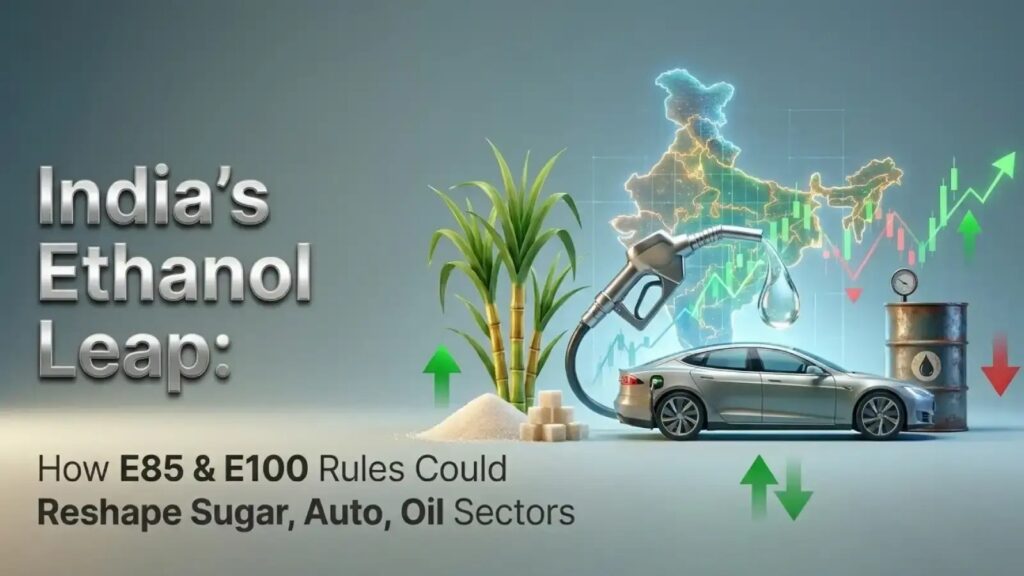
Policy Shift Towards E100 Adoption:
- The Ministry of Road Transport and Highways (MoRTH) issued a draft notification to include E100 as an approved fuel under Rule 115(18) of CMVR.
- It expands the scope from existing ethanol-blended fuels (like E20, E85) to pure ethanol usage.
- Vehicles previously approved for E85 (85% ethanol) can now be upgraded and certified for E100 through an ex post facto certification process.
- The reform supports India’s broader biofuel policy and energy transition goals aligned with the precautionary principle for sustainable development.
- It signals a shift from blending strategy to full ethanol mobility ecosystem.
Vehicle Certification and Implementation Mechanism
- The amendment enables homologation, i.e., official certification of vehicles for technical, safety, and environmental compliance including environmental impact assessment requirements.
- Agencies like the Automotive Research Association of India will conduct testing and approvals ensuring adherence to environmental clearances and EIA notification standards.
- Automobile manufacturers can now design and launch dedicated E100 vehicles.
- The certification ensures vehicles meet emission norms and fuel compatibility standards following environmental jurisprudence principles.
- This creates a regulatory pathway for mass production and consumer adoption of ethanol-only vehicles while avoiding retrospective environmental clearances through proper ex-ante compliance.
About Ethanol Fuel & Biofuel Policy :● Ethanol is a renewable biofuel derived mainly from sugarcane, maize, and biomass. ● E20: 20% ethanol blending target achieved ahead of schedule (2025 target). ● E85 & E100: Higher ethanol blends enabling flex-fuel and dedicated ethanol engines. ● National Policy on Biofuels (2018, amended 2022) promotes ethanol blending and domestic production in alignment with the Forest Conservation Act and coastal regulation zone norms. ● Benefits include: ○ Reduced crude oil imports (~85% dependency in India) ○ Lower greenhouse gas emissions contributing to a pollution free environment ○ Increased farmer income via sugarcane demand ○ Implementation of the polluter pays principle in fuel policy ● Challenges include engine compatibility, fuel efficiency, and infrastructure readiness requiring proper environmental impact assessment. |

