 India's No.1 PU & Degree With Integrated IAS & IPS(UPSC/PSC) Training College.


TRANSFORMING INDIA’S NUCLEAR POWER LANDSCAPE
TRANSFORMING INDIA’S NUCLEAR POWER LANDSCAPE
Why in the News?
- In the Union Budget 2025–26, Finance Minister Nirmala Sitharaman announced a major expansion of India’s nuclear power capacity from 8,180 MW to 100 GW by 2047.
- The announcement highlighted nuclear energy as a key pillar of India’s clean energy transition toward a pollution free environment and long-term energy security.
- It was accompanied by signals of significant legislative reforms to open up and modernize the nuclear sector.
- Subsequently, the Sustainable Harnessing and Advancement of Nuclear Energy for Transforming India (SHANTI) Bill was introduced and swiftly passed in December 2025.
- The Bill aims to enable private sector participation and accelerate nuclear energy development in India.

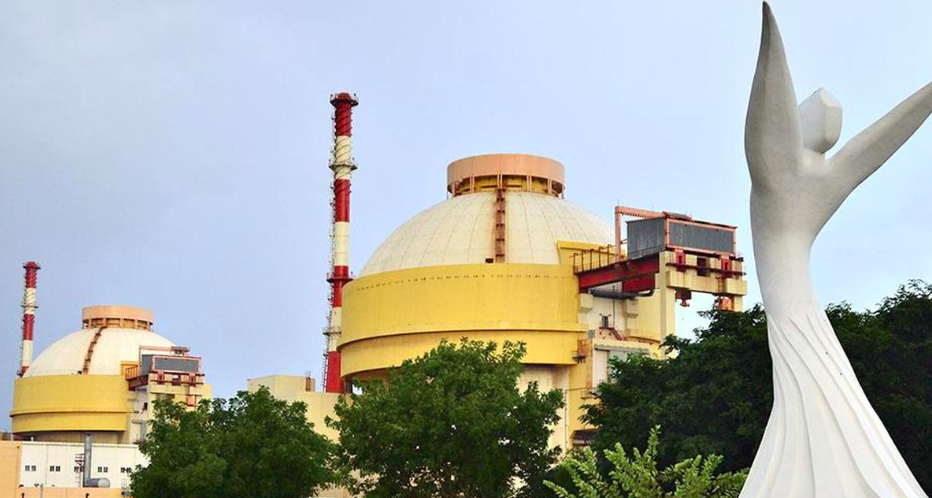
Key Features and Significance of the SHANTI Act (2025)
- Marks a dramatic shift from the earlier regime where nuclear energy was exclusively controlled by the Department of Atomic Energy (DAE).
- Opens the nuclear sector to private participation, allowing companies to build, own, and operate nuclear power plants.
- Grants statutory status to the Atomic Energy Regulatory Board (AERB), strengthening the regulatory framework and environmental jurisprudence in the nuclear sector.
- Introduces a revised liability regime incorporating the polluter pays principle to attract private as well as foreign investment in nuclear energy.
- Repeals and replaces the Atomic Energy Act, 1962 and the Civil Liability for Nuclear Damage Act (CLNDA), 2010.
- Aims to fundamentally transform India’s nuclear energy landscape and accelerate capacity expansion.
Implementation Challenges and Requirements
- Achieving the ambitious target of 100 GW by 2047 requires robust on-ground implementation and streamlined environmental clearances.
- Necessitates timely formulation and notification of detailed rules and regulations, including EIA notification procedures for nuclear projects.
- Calls for alignment of institutional and regulatory mechanisms with the reform-oriented spirit of the SHANTI Act while ensuring environmental democracy.
- Effective execution will be critical to translate legislative intent into tangible outcomes.
Drivers of Nuclear Energy Reforms in India
- Two overarching national goals are driving the reforms: achieving Viksit Bharat by 2047 and attaining net-zero emissions by 2070.
- Economic development leads to a transition in energy use—from traditional fuels (firewood, fossil fuels, coal) to electricity-based consumption.
- The net-zero commitment necessitates a shift away from fossil fuel-based power towards renewable and low-carbon sources.
Energy Consumption Gap and Development Needs
- India’s per capita electricity generation (1,418 kWh in 2024) remains significantly lower than China (7,097 kWh), the United States (12,701 kWh), and the OECD average (~8,000 kWh).
- This highlights the substantial increase in electricity generation required to achieve Viksit Bharat.
- Total per capita energy consumption stands at 7,893 kWh, indicating that only about one-fifth of energy use currently comes from electricity.
Current Energy Mix and Capacity Status (2025)
- Total installed electricity capacity reached 476 GW, with nearly 50% from non-fossil fuel sources.
- Renewable energy capacity stands at 227 GW, including solar, wind, hydropower, micro-hydel, and bioenergy.
- Nuclear power contributes 8.8 GW, while thermal (mainly coal-based) dominates with 240 GW.
- India targets 500 GW of renewable capacity by 2030.
Generation Trends and Structural Challenges
- Total electricity generation in 2024–25 was 1,824 TWh.
- Thermal power contributed ~75% of generation despite ~50% capacity share.
- Renewables, with ~50% capacity, contributed only ~22% due to intermittency (time, weather, geography constraints).
- Nuclear power provided ~3% of generation with just 1.8% capacity, reflecting its role in stable baseload supply.
Constraints in Renewable Expansion
- Renewable energy faces intermittency challenges, requiring large-scale energy storage solutions.
- Growth is slowing, with ~40 GW of projects stalled due to lack of power-purchase agreements.
- This underscores the importance of nuclear energy as a reliable, low-carbon baseload alternative.
India’s Nuclear Power Journey and Future Options
Rising Energy Demand and Role of Nuclear Power
- India may need to expand its electricity generation capacity to over 2,000 GW to achieve Viksit Bharat by 2047.
- Renewable sources like solar and wind are highly land-intensive (nearly 10 times more than thermal plants), often requiring compliance with the Forest Conservation Act for land acquisition.
- With coal incompatible with net-zero goals, nuclear power emerges as the most viable low-carbon baseload option.
Evolution of India’s Nuclear Programme
- India’s first nuclear reactor began operations in 1969 at Tarapur.
- The Nuclear Power Corporation of India Limited (NPCIL) currently operates 24 reactors with a total capacity of about 8,780 MW.
- Reactor types include:
○ Boiling Water Reactors (BWR) at Tarapur
○ Russian VVER (Pressurised Water Reactors) at Kudankulam
○ Indigenous Pressurised Heavy Water Reactors (PHWRs)
- Indigenous PHWR designs have evolved from 220 MW to 540 MW and 700 MW capacities.
Cost and Investment Requirements
- India’s 700 MW PHWRs cost about $2 million per MW, among the lowest globally.
- Expanding nuclear capacity by ~90 GW over two decades would require investments exceeding $200 billion (~₹18 lakh crore).
- Such scale of funding necessitates private sector participation, both domestic and foreign.
Pending Projects and Expansion Challenges
- Approval for 10 PHWRs (700 MW each) in fleet mode was granted in 2017, but implementation is yet to begin due to pending environmental clearance procedures.
- Major proposed projects include:
○ Jaitapur (Maharashtra) with French EDF-designed reactors (1,650 MW each), located in the Coastal Regulation Zone
○ Mithi Virdi (Gujarat) and Kovvada (Andhra Pradesh) with US-based designs
- These imported designs are costlier (over $5 million per MW) and remain untested in India, requiring comprehensive Environmental Impact Assessment.
Opportunities in Small Modular Reactors (SMRs)
- The government has allocated ₹2.2 lakh crore for developing indigenous Small Modular Reactors (SMRs) of 5 MW, 55 MW, and 200 MW capacity by 2033.
- SMRs can cater to industrial captive power demand, currently dominated by fossil fuels (~90 GW capacity).
- Industries such as steel, cement, petrochemicals, paper, and data centres are potential adopters.
Scaling Up Efficiently
- The 220 MW PHWR model remains a reliable and proven option (15 reactors operational).
- With better project management, modular construction, and economies of scale, construction timelines can be reduced to ~40 months.
- A mix of large reactors and SMRs, backed by policy support and private investment, is key to achieving nuclear expansion targets.
Three-Front Strategy for Achieving 100 GW Nuclear Capacity
-
Indigenisation and Cost Reduction of Large Reactors
- Imported reactor designs (EDF and Westinghouse) need to be indigenised to reduce high costs.
- Building a domestic manufacturing and supply chain ecosystem is crucial, as demonstrated by China.
- Indigenisation can significantly lower costs and enable faster, large-scale deployment of reactors.
-
Strengthening R&D and Advanced Nuclear Technologies
- The Department of Atomic Energy (DAE) should collaborate with leading institutions to accelerate R&D in Small Modular Reactors (SMRs).
- Focus areas include advanced designs such as molten-salt reactors.
- Research into thorium utilisation using HALEU fuel can provide an alternative to the breeder reactor route.
- This is critical for early and efficient exploitation of India’s vast thorium reserves.
-
Scaling Indigenous PHWRs and Industrial Applications
- The indigenised 220 MW PHWR model can be modularised for wider deployment.
- It can serve as a cost-effective replacement for fossil fuel-based captive power plants.
- Several Indian private sector companies already possess capabilities in design, fabrication, and construction.
Key Policy and Implementation Enablers
- A viable financing model is essential due to high upfront costs and long operational life (~60 years) of nuclear plants.
- Existing exclusion zone norms must be rationalised, especially for single-unit captive reactors, while adhering to the precautionary principle.
- Clear regulatory separation between strategic/defence and civilian nuclear activities must be established under the SHANTI framework, avoiding any ex post facto regulatory complications.
- Transparent policies are needed on:
○ Tariff determination
○ Nuclear fuel ownership
○ Waste management
○ Insurance and liability
○ Dispute resolution mechanisms
○ Establishment of an autonomous and credible regulator
Mains question
Discuss the role of nuclear energy in achieving India’s net-zero targets and Viksit Bharat by 2047, highlighting the significance of the SHANTI Act and key challenges in scaling nuclear capacity.

