 India's No.1 PU & Degree With Integrated IAS & IPS(UPSC/PSC) Training College.


US–CHINA RECALIBRATION: FIVE WAYS INDIA MUST RESPOND
US–CHINA RECALIBRATION: FIVE WAYS INDIA MUST RESPOND
Syllabus:
GS 2:
- Health- Issues related to disability
GS 4:
- Human values
Why in the News?
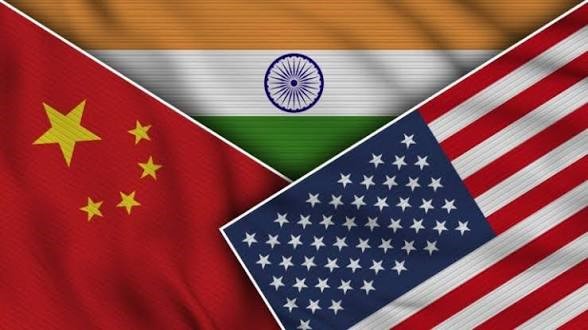
Shifts in US–China relations under Donald Trump’s renewed presidency indicate a transition from ideological rivalry to economic competition and transactional engagement. This recalibration, combined with China’s rising capabilities, is reshaping the global strategic order, posing new challenges for India’s foreign policy.
INDIA’S STRATEGIC AUTONOMY● Definition: Strategic autonomy refers to India’s ability to pursue independent foreign policy decisions without alignment to any major power bloc. ● Historical Roots: Rooted in the Non-Aligned Movement, it has evolved into a policy of multi-alignment. ● Balancing Strategy: India engages with multiple partners, including the US, Russia, and regional powers, to safeguard national interests. ● Contemporary Relevance: In a multipolar world, strategic autonomy ensures flexibility, resilience, and policy independence. ● Policy Challenge: Maintaining autonomy while managing dependencies remains a key challenge in India’s foreign policy. |
CHANGING NATURE OF US–CHINA RELATIONS
- From Rivalry to Competition: The United States increasingly views China as an economic competitor rather than a systemic ideological rival, reducing confrontation in diplomatic discourse while sustaining strategic competition.
- Transactional Engagement: The relationship is becoming transactional, with both powers seeking stability to address domestic priorities and avoid costly escalations.
- Shift in Strategic Focus: The US has prioritised the Western Hemisphere over the Indo-Pacific, reducing Asia’s centrality in its global strategy.
- China’s Strategic Patience: China aims to maintain stability to advance technological self-reliance and economic recovery, consolidating long-term advantages.
- Competitive Equilibrium: Despite reduced tensions in tone, the underlying competition continues, with structural advantages increasingly favouring China.
GLOBAL CONTEXT: ENERGY AND GEOPOLITICAL SHIFTS
- Iran War Impact: The conflict has highlighted the declining predictability of US foreign policy and increased global uncertainty.
- China’s Strategic Positioning: China’s emphasis on ceasefire, diplomacy, and international law has enhanced its image as a responsible global actor.
- Energy Transition: The global shift from fossil fuels to renewable energy is accelerating, reducing the relevance of traditional energy geopolitics.
- China’s Advantage: China dominates renewable energy supply chains, electric vehicles, and battery technologies, positioning itself as a leader in the emerging “electrostate” order.
- US Structural Challenge: Continued reliance on fossil fuel geopolitics limits the US’s strategic leverage in a rapidly transforming energy landscape.
IMPLICATIONS FOR INDIA’S STRATEGIC SPACE
- Reduced US Dependence: The utility of the US as a balancing force against China has diminished due to its strategic distractions and transactional approach.
- Risk of Strategic Marginalisation: India’s relevance in both Washington and Beijing has declined, increasing vulnerability in global decision-making.
- Possibility of Great Power Deals: A more flexible US–China relationship raises concerns about bilateral arrangements that may sideline India’s interests.
- China’s Strategic Confidence: Beijing perceives India’s outreach as driven by uncertainty in US relations, reducing its incentive to compromise.
- Constrained Policy Options: India faces shrinking strategic space amid shifting global alignments and power asymmetries.
TECHNOLOGICAL AND ECONOMIC CHALLENGES
- AI Bipolarity: The global technology ecosystem is moving toward US–China dominance in artificial intelligence, limiting India’s strategic autonomy.
- Dependency Risks: Over-reliance on either the US technological ecosystem or Chinese supply chains poses long-term vulnerabilities.
- Critical Supply Chains: Dependence on China for critical inputs and manufacturing components remains a strategic concern.
- Green Technology Gap: China’s leadership in renewable energy technologies challenges India’s aspirations in clean energy transition.
- Need for Self-Reliance: Building indigenous capabilities in AI, semiconductors, and green technologies is essential for strategic independence.
REGIONAL AND SECURITY IMPLICATIONS
- US–Pakistan Thaw: Renewed engagement between the US and Pakistan may provide Islamabad with strategic leverage, complicating India’s security environment.
- China–Pakistan Nexus: The enduring partnership continues to pose strategic challenges for India, particularly in regional security dynamics.
- Border Tensions: India must maintain vigilance along the Line of Actual Control (LAC) to counter potential Chinese assertiveness.
- Military Preparedness: Strengthening border infrastructure, cyber resilience, and joint military capabilities is critical.
- Asymmetric Deterrence: India needs to develop innovative deterrence strategies to counter China’s growing capabilities.
FIVE KEY STRATEGIC RESPONSES FOR INDIA
- Recalibrate US Expectations: India should deepen cooperation with the US in defence, technology, and maritime security, while avoiding overdependence in crisis scenarios.
- Engage China Realistically: India must pursue a two-track approach, combining firm border management with cautious engagement in economic and diplomatic domains.
- Build Economic Resilience: Reducing reliance on China while avoiding excessive dependence on the US requires diversified supply chains and domestic capacity building.
- Invest in Technology Sovereignty: Developing a sovereign AI ecosystem and green energy infrastructure is essential to maintain long-term competitiveness.
- Strengthen Regional Diplomacy: Revitalising Neighbourhood First and Act East policies is critical to maintaining influence in India’s immediate and extended neighbourhood.
CONCLUSION
The recalibration of US–China relations reflects deeper structural shifts in the global order, with significant implications for India’s strategic positioning. As external balancing becomes less reliable, India must prioritise self-reliance, strategic autonomy, and capability building. By adopting a balanced approach that combines engagement, deterrence, and domestic strengthening, India can navigate the complexities of an evolving multipolar world while safeguarding its national interests.
SOURCE:
IE
MAINS PRACTICE QUESTION
“The evolving US–China relationship is reshaping India’s strategic environment.” Discuss the implications and suggest a suitable strategy for India in this context.

