 India's No.1 PU & Degree With Integrated IAS & IPS(UPSC/PSC) Training College.


THE IRAN BLINDSPOT
THE IRAN BLINDSPOT
Syllabus:
GS-3: ● International relations ● India and its neighbourhood
Why in the News?
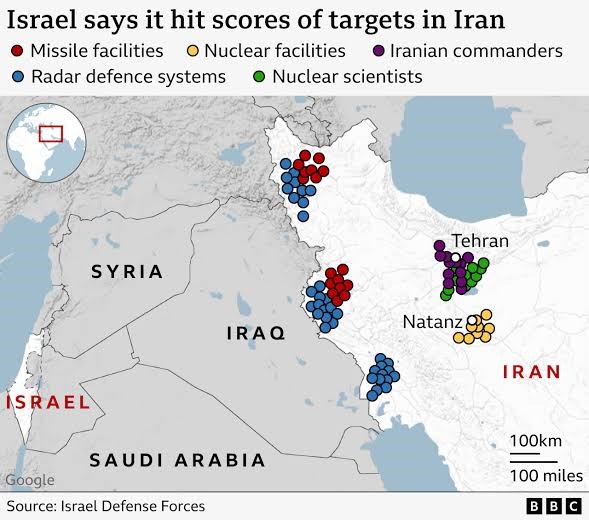
Israel’s devastating attack on Iran’s nuclear facilities on June 13, 2025, orchestrated by Netanyahu and backed by Trump, may delay but ultimately accelerate Iran’s nuclear ambitions. Their short-term politics, lack of long-term strategy, and flawed diplomacy risk creating greater instability in West Asia and worsening global nuclear proliferation. This event, reminiscent of past Israeli strikes, has reignited debates about the effectiveness of military action versus diplomacy in addressing the perceived existential threat posed by Iran’s nuclear program, including its potential development of a nuclear warhead.
NETANYAHU’S SHORT-TERM POLITICAL GAINS
- Personal distractions — Netanyahu faces corruption charges and political setbacks; attacking Iran serves as a short-term distraction from domestic crises and legal troubles.
- Two-state sabotage — He has persistently undermined peace and the two-state solution for Palestine, exacerbating regional instability rather than promoting long-term security for Israel.
- JCPOA opposition — In 2015, Netanyahu sabotaged the JCPOA agreement, which offered Iran sanctions relief in exchange for nuclear restrictions, forging alliances with Republicans but proposing no viable alternative to contain Iran’s nuclear program. This opposition to the deal has continued for nearly 30 years.
- Military limitations — Israel’s attack failed to neutralise Iran’s capabilities; thousands of centrifuges and highly enriched uranium stockpiles remain protected at Natanz and Fordow. The strike also did not impact Iran’s heavy water production facilities, crucial for certain types of nuclear reactors.
- No clear objective — Netanyahu lacks a coherent long-term strategy; whether pursuing regime change, provoking U.S. intervention, or securing bunker busters to target deep underground nuclear facilities, objectives remain unclear.
TRUMP’S LACK OF STRATEGIC VISION
- No long-term plan — Trump operates purely on personal whims: profit, revenge, ego; lacking focus on America’s strategic interests in West Asia or global security.
- JCPOA withdrawal — Trump unilaterally exited the nuclear deal during his first term, destabilizing the containment of Iran’s nuclear program for fleeting domestic political gains and eliminating the sanctions relief that had incentivized Iran’s compliance.
- Nobel ambitions — Trump’s renewed nuclear talks aim for personal glory, not substantive peace; driven by his obsession with winning a Nobel Peace Prize.
- False mediations — His boasts of mediating India-Pakistan ceasefire or Iran-Israel peace are fabrications, undermining America’s credibility in global diplomacy.
- Short-sighted policy — Trump’s impulsive actions risk further destabilisation of West Asia, while failing to build a sustainable, enforceable nuclear threshold containment regime.
IMPACT ON IRAN’S NUCLEAR STRATEGY
- Acceleration of plans — Israel’s attack has convinced Iran to seek a credible nuclear deterrent, accelerating uranium enrichment and potential development of a nuclear warhead. This has likely increased the urgency of work among Iran’s nuclear scientists.
- Public disavowals — Previously, Iran pursued ambiguity — denying intent for weapons while maintaining breakout capability; post-attack, deterrence has become a strategic imperative.
- Loss of allies — With Hezbollah, Hamas, Assad weakened, Iran’s proxy warfare capabilities have declined, increasing reliance on nuclear capability for national security.
- Proliferation pathways — Iran can access global nuclear markets, as proven by A.Q. Khan and North Korea; technical hurdles remain surmountable with sufficient motivation.
- JCPOA necessity — Restoring the JCPOA agreement, including sanctions relief, remains the best path to curb Iran’s nuclear ambitions; military actions only harden Tehran’s resolve for nuclear development.
CONSEQUENCES FOR WEST ASIA STABILITY
- Heightened arms race — Israel’s strike risks triggering a broader regional arms race, prompting other Middle Eastern powers to seek nuclear capabilities.
- Iran’s retaliation — Escalatory actions raise prospects of Iranian retaliatory attacks across West Asia, endangering shipping routes, oil markets, and civilian infrastructure.
- Global instability — U.S.-Israeli actions further destabilize West Asia, exacerbating humanitarian crises and fueling anti-Western sentiments across the Islamic world.
- Weakened diplomacy — Discrediting multilateral accords like the JCPOA erodes diplomatic norms, encouraging reliance on unilateral military actions over constructive diplomacy.
- Empowering extremists — Heightened tensions provide recruiting tools for terrorist groups, undermining regional security and Western interests in West Asia.
THE LIMITS OF MILITARY OPTIONS
- Deep underground sites — Iran’s core facilities at Fordow are impervious to Israel’s conventional attacks; only U.S. bunker busters could destroy them.
- Incomplete neutralisation — Israel’s recent strike failed to neutralize Iran’s nuclear program; centrifuge capacity and heavy water production facilities remain intact for rapid program regeneration.
- Risk of escalation — Military strikes could provoke Iran into direct conflict, with severe economic and humanitarian costs for West Asia and global markets.
- No regime change — Israel’s limited capabilities make regime change in Tehran unlikely; instead, attacks will further entrench hardliners within the Iranian leadership.
- Diplomacy superior — Long-term stability requires diplomatic engagement and arms control, not sporadic military actions that harden Iranian resolve for nuclear development.
ISRAEL-U.S. RELATIONS DYNAMICS
- Bunker buster leverage — Netanyahu may be pressuring the U.S. to supply bunker busters or conduct joint strikes on Iranian nuclear facilities.
- Manipulating alliances — The attack serves Netanyahu’s goal of drawing deeper U.S. involvement, risking escalation without resolving the nuclear threat.
- Partisan exploitation — Netanyahu’s alignment with U.S. Republicans threatens to politicise U.S.-Israel relations, undermining bipartisan support for Israel.
- Global perception — Repeated unilateral actions erode international trust in both Israel and the U.S., weakening their positions in future nuclear talks.
- Misreading Iran — Underestimating Iran’s resolve may backfire; Tehran’s leadership and nuclear scientists are determined to secure national deterrence, regardless of military pressure.
CONCLUSION
The impulsive, short-term policies of Netanyahu and Trump are likely to accelerate Iran’s nuclear ambitions rather than deter them. Military actions will fail to achieve permanent security gains. Only renewed diplomacy, with global consensus and respect for negotiated accords like the JCPOA, can prevent Iran’s eventual nuclearisation and preserve regional stability. The current approach, focused on military solutions and the invasion of Iran’s sovereignty, fails to address the root causes of tensions and may push the region closer to a nuclear threshold. A comprehensive threat assessment is needed to develop a strategy that balances security concerns with the realities of international diplomacy and the complexities of nuclear restrictions, including the potential development of a nuclear warhead and the role of heavy water production in Iran’s nuclear program.
SOURCE:IE
UPSC MAINS PRACTICE QUESTION
Discuss the implications of the June 2025 Israeli strike on Iran’s nuclear infrastructure for long-term regional stability in West Asia. Critically analyse the role of military action versus diplomacy in managing nuclear proliferation and achieving total victory over the perceived nuclear threat.


