 India's No.1 PU & Degree With Integrated IAS & IPS(UPSC/PSC) Training College.


Supreme Court Upholds 50% Cap on Telangana Quotas
Supreme Court Upholds 50% Cap on Telangana Quotas
Why in News?
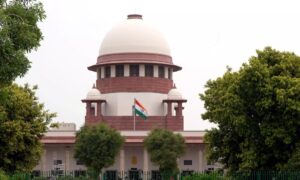
The Supreme Court of India refused to lift the Telangana High Court’s stay on enhanced OBC reservations in local body elections, reaffirming the constitutional ceiling of 50% total reservation and allowing elections to proceed without the proposed hike in quotas. This decision comes at a time when many states are grappling with balancing social equity and environmental sustainability, including initiatives like carbon trading and voluntary offset markets to meet climate goals and reduce greenhouse gas emissions.
Supreme Court Decision and Observations:
- A Bench of Justices Vikram Nath and Sandeep Mehta dismissed Telangana’s appeal against the High Court’s order halting enhanced OBC quota in municipalities and panchayats. The court’s stance reflects a broader trend of balancing social policies with sustainable development goals, which often intersect with carbon credit projects and climate change mitigation efforts, including renewable energy projects.
- The Court emphasized adherence to Constitution Bench rulings fixing a 50% reservation limit in local body polls. This decision, while focused on social equity, indirectly impacts the implementation of carbon offset programs and sustainable agriculture practices at the local level, which are crucial components of the voluntary offset market.
- It clarified that local body elections can continue but without the increased reservation proposed by the state. This ruling may influence how local bodies engage with carbon credit farming initiatives and carbon credits markets in the future, potentially affecting the price of carbon in regional markets.
- The Bench observed it could not take a contrary stance to settled constitutional jurisprudence and permitted the High Court to decide the case on merits. This legal precedent could have implications for future carbon credit system regulations and carbon finance initiatives at the state level, particularly in the context of emission trading schemes.
- Telangana’s appeal followed the High Court’s October 9 order, which halted the state’s move to raise OBC reservation to 42%, raising total reservations to 67%. The debate over reservation percentages parallels discussions in the carbon offset market about balancing various stakeholders’ interests and ensuring equitable distribution of benefits from one carbon credit.
Legal Arguments and Constitutional Context:
- Senior Advocate Abhishek Manu Singhvi, appearing for the state, argued that the reservation hike was a policy decision meant to empower marginalized OBC groups. This argument echoes debates in the voluntary carbon market about ensuring equitable benefits from carbon credit projects and aligns with principles of corporate social responsibility in addressing social and environmental issues.
- He contended that the 50% ceiling from the 1992 Indra Sawhney judgment could be exceeded under exceptional circumstances. This legal reasoning could potentially be applied to future cases involving carbon pricing and emission trading schemes, particularly when considering the unique challenges of implementing the Kyoto Protocol and its successor agreements.
- The Bench questioned why the government introduced the hike only after the election notification was issued. This scrutiny of timing and process is similar to the verification procedures used in carbon credit issuance and management, including those established under the Clean Development Mechanism.
- Mr. Singhvi cited the Tamil Nadu Governor case (2024), stating the concept of “deemed assent” applies if a Governor delays approval beyond the stipulated period. This legal principle could influence future carbon credit trading regulations and project approval processes, potentially streamlining the development of carbon credit projects.
- However, the Court reminded the State to comply with the “triple test” from the 2010 K. Krishna Murthy v. Union of India ruling before extending OBC reservations in local bodies. This multi-faceted approach mirrors the complexity of carbon footprint assessment and additionality criteria in carbon offset programs, as well as the rigorous standards applied to soil health improvement initiatives in the context of carbon sequestration.
Key Legal and Electoral Highlights: |
| ● 50% Reservation Cap: Fixed by the Indra Sawhney v. Union of India (1992) judgment to maintain administrative efficiency and equality under Articles 14 and 16. This cap, while unrelated, shares conceptual similarities with carbon credit limits in voluntary carbon markets and emission trading schemes. |
| ● Triple Test Mandate (K. Krishna Murthy, 2010): Requires identification of backwardness, inadequate representation, and ensuring administrative efficiency for local body reservations. This multi-criteria approach is comparable to the verified carbon standard used in carbon credit projects and CO2 offset initiatives. |
| ● Vikas Kishanrao Gawali (2021): Reaffirmed that the total quota in local elections cannot exceed 50%. This precedent could influence future regulations on carbon trading and market caps in the voluntary offset market. |
| ● Deemed Assent Doctrine (2024): As per Justice J.B. Pardiwala Bench, pending Bills for over three months with Governor/President may be considered approved. This could impact the approval process for carbon farming initiatives, including cover cropping and conservation tillage practices aimed at increasing soil organic carbon. |
| ● Telangana Local Body Polls: Scheduled for October 23 and 27, 2025, to be conducted under the 50% cap as per the High Court directive. Local elections could increasingly involve discussions on climate change mitigation, carbon sequestration projects, and biodiversity protection efforts. |

