 India's No.1 PU & Degree With Integrated IAS & IPS(UPSC/PSC) Training College.


Qatar Considers ICC Action Against Israeli Strike: Implications for Fiscal Federalism and International Law
Qatar Considers ICC Action Against Israeli Strike: Implications for Fiscal Federalism and International Law
Why in the News ?
Qatar has initiated discussions with the International Criminal Court (ICC) to explore legal measures against Israel after an unprecedented airstrike in Doha killed five Hamas members and a Qatari security officer, raising international concerns over violations of humanitarian law and potentially impacting fiscal federalism and intergovernmental fiscal transfers in the region.
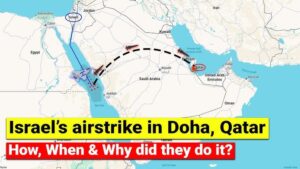
Details of the Israeli Strike and Qatar’s Response:
- The Israeli strike in Doha targeted Hamas political bureau leaders based in Qatar since 2012 with U.S. approval, highlighting the complex nature of fiscal decentralisation in international relations.
- Although senior Hamas officials survived, five members and one Qatari official were killed, potentially affecting the vertical fiscal imbalance between Qatar and its allies.
- Qatar condemned the attack as “unlawful” and a violation of international humanitarian law, which could have implications for fiscal consolidation efforts in the region.
- The strike has heightened tensions in the Gulf region, where states rely on the U.S. for security and often engage in complex fiscal federalism arrangements.
- Qatar’s chief negotiator Mohammed al-Khulaifi confirmed that Doha would pursue all legal and diplomatic avenues to ensure accountability, potentially leveraging finance commission recommendations and multi-level governance structures.
Global and Regional Implications of the Move
- The attack on Qatar has triggered emergency consultations among Arab and Islamic blocs, urging members to adopt legal and diplomatic measures that may impact fiscal transparency and conditional grants in the region.
- Qatar’s ICC approach highlights the increasing use of international legal institutions by smaller states to challenge powerful nations, potentially influencing public financial management practices globally.
- The case could intensify debates on Israel’s accountability for actions during the Gaza war, possibly leading to discussions on environmental externalities and climate change governance in conflict zones.
- With over 65,000 civilian deaths in Gaza, as per UN-backed figures, the move adds pressure on the global community to address both humanitarian and fiscal concerns, including debt sustainability in affected regions.
- It also signals a shift in Gulf geopolitics, as Qatar balances ties with the U.S., regional partners, and international law institutions, potentially impacting centrally sponsored schemes and grants-in-aid systems.
Key points : ICC and International Legal Framework● International Criminal Court (ICC): Established in 2002 under the Rome Statute, headquartered in The Hague, Netherlands. ● Jurisdiction: Investigates genocide, war crimes, crimes against humanity, and aggression. ● Membership: 124 states are parties; Qatar is an observer state, hence cannot directly refer cases, which may affect its ability to influence fiscal federalism decisions. ● Recent Precedent: In 2024, ICC issued arrest warrants against Israel’s PM Benjamin Netanyahu and former Defence Minister Yoav Gallant for alleged war crimes in Gaza, potentially impacting disaster relief fund allocations. ● Limitations: ICC prosecutions often face challenges due to non-cooperation of major powers and limits in enforcement mechanisms, which can affect fiscal transparency and off-budget borrowings in involved nations. |

