India's No.1 PU & Degree With Integrated IAS & IPS(UPSC/PSC) Training College.


North Atlantic Treaty Signed, Marking Cold War Era
North Atlantic Treaty Signed, Marking Cold War Era
Why in the News ?
April 4 marks the anniversary of the North Atlantic Treaty (1949), a landmark agreement that created NATO, shaping Cold War geopolitics. It institutionalised collective defence, influencing present-day global security frameworks and military alliances, especially amid ongoing geopolitical tensions.
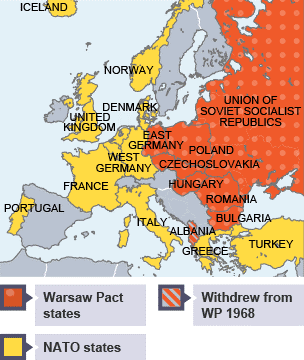
Key Features and Objectives of the Treaty:
- Signed on April 4, 1949, in Washington by 12 Western nations, laying the foundation of NATO.
- Established the principle of collective defence — “attack on one is attack on all” (Article 5).
- Aimed to ensure security, protect sovereignty, and prevent aggression in post-World War II Europe.
- Included commitments to consultation, strengthening democratic institutions, and reducing internal economic conflicts.
- Initially valid for 10 years, with provisions for extension, reflecting long-term strategic cooperation.
Global Reactions and Cold War Context
- United States President Harry S Truman described it as a “shield against aggression”, denying claims of expansionism.
- Dean Acheson highlighted its role as both a deterrent to aggression and a guarantee of peace.
- The Soviet Union strongly opposed the treaty, calling it an instrument of Western aggression.
- Led to ideological polarization, culminating in the formation of the Warsaw Pact (1955) by Soviet allies.
- European responses were mixed: Britain supported strongly, while leaders like Charles de Gaulle adopted a cautious stance.
About NATO and Cold War Significance:● NATO (North Atlantic Treaty Organization) is a military alliance formed to implement the treaty with an integrated command structure. ● Founding members included: USA, UK, France, Canada, Italy, Belgium, Netherlands, Luxembourg, Norway, Denmark, Iceland, Portugal. ● Core principle: collective security under Article 5 of the treaty. ● Played a central role in the Cold War, countering Soviet influence in Europe. ● Continues to be relevant in modern geopolitics, including conflicts involving Russia and Ukraine. |