 India's No.1 PU & Degree With Integrated IAS & IPS(UPSC/PSC) Training College.


Supreme Court Questions Expanding Review Of Religious Practices
Supreme Court Questions Expanding Review Of Religious Practices
Why in News ?
The Supreme Court, while hearing the Sabarimala review reference, expressed concern over growing judicial intervention in religious matters and debated the balance between religious autonomy, constitutional morality, and protection of fundamental rights. This debate on judicial review scope parallels ongoing discussions in environmental jurisprudence regarding state intervention.
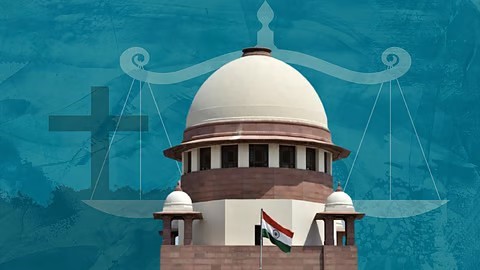
Supreme Court’s Concerns On Religious Judicial Review:
- The Supreme Court observed that religion remains a core part of India’s civilisational identity and excessive court intervention may disturb this social balance.
- Justice BV Nagarathna stated that faith and religion are deeply intertwined with Indian society and courts must be cautious while reviewing religious practices.
- The bench questioned whether constitutional courts should examine every internal religious dispute, warning that this could trigger endless litigation.
- Justice MM Sundresh expressed concern that if all religious practices are challenged, every religion may face internal fragmentation.
- The court highlighted the need to determine:
○ Who can question a religious practice
○ Whether reforms should emerge internally
○ Extent of State and judicial intervention
Debate Over Excommunication And Religious Rights
- Senior Advocate Raju Ramachandran, appearing in matters linked to the Dawoodi Bohra community, questioned the power of religious heads to excommunicate members.
- He argued that excommunication violates the fundamental rights of individuals and cannot be protected solely as a religious practice.
- The court examined whether such powers are safeguarded under Article 26(b), which grants religious denominations autonomy in managing religious affairs.
- Ramachandran contended that religious freedom cannot override constitutional values and practices violating dignity or equality must be scrutinised.
- He emphasised that India is a civilisation governed by a Constitution, and practices contrary to constitutional morality cannot be accepted unquestioningly.
About Constitutional Provisions And Sabarimala Case:● Article 25 guarantees freedom of conscience and the right to freely profess, practice and propagate religion. ● Article 26 grants religious denominations the right to manage their own affairs in matters of religion. ● Article 25 is subject to: ○ Public order ○ Morality ○ Health ○ Other Fundamental Rights ● The present hearings arise from review petitions against the 2018 Sabarimala judgment, where the Supreme Court allowed entry of women of all ages into the Sabarimala Temple. ● The case also examines the Essential Religious Practices Doctrine, which determines whether a practice is fundamental to a religion and therefore constitutionally protected. |

