 India's No.1 PU & Degree With Integrated IAS & IPS(UPSC/PSC) Training College.


Neoliberalism and Global Youth Crisis Explained
NEOLIBERALISM AND THE GROWING CRISIS OF GLOBAL YOUTH
WHY IN THE NEWS ?
- Rising Youth Unrest: Protests across countries such as France, Spain, Albania and India have highlighted growing youth dissatisfaction over unemployment, rising living costs and declining economic opportunities.
- Economic Debate: The debate focuses on how neoliberal economic policies, reduced welfare expenditure, stagnant wages and rising education costs may contribute to youth unemployment and inequality.
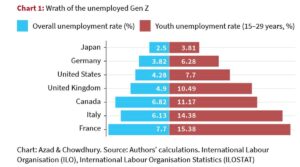
NEOLIBERALISM AND THE CRISIS OF YOUTH EMPLOYMENT
- Economic Pressures: The article argues that neoliberal policies prioritising market competition, private investment and reduced public expenditure have weakened welfare systems and increased economic insecurity among young people.
- Rising Unemployment: Youth unemployment in G7 economies remains a major concern, with younger workers often facing greater difficulties entering the labour market than the overall workforce.
- Demand Deficiency: From a heterodox economic perspective, unemployment results partly from insufficient demand for goods and services, discouraging businesses from investing and creating jobs.
- Investment Shortfall: When capitalists reduce investment due to weak consumption demand, production and employment opportunities decline, contributing to involuntary unemployment.
- Education Burden: Rising education costs can increase financial pressure on young people, while obtaining degrees does not guarantee secure employment or adequate wages.
- Technological Displacement: Automation and Artificial Intelligence (AI) may further reduce demand for certain types of labour, particularly if new employment opportunities fail to emerge at a comparable pace.
NEOLIBERALISM, WAGE INEQUALITY AND POLICY IMPLICATIONS
- Historical Transition: The post-Second World War period, particularly 1945–1973, witnessed strong economic growth alongside expanded welfare systems and greater bargaining power for organised labour in many developed economies.
- Policy Shift: From the late 1970s, leaders such as Ronald Reagan and Margaret Thatcher promoted market-oriented policies, deregulation, privatisation and reduced state intervention.
- Wage Inequality: The article argues that weakening trade unions and reducing workers’ bargaining power contributed to a declining labour share of national income.
- Underconsumption Crisis: Lower wages can reduce household consumption, weaken business sales and discourage investment, creating a cycle of slow growth and unemployment.
- Policy Response: Public investment, accessible education, employment-oriented industrial policies and stronger social protection can help address demand shortages and improve opportunities for young people.
ABOUT KEYNESIAN ECONOMICS AND NEOLIBERALISM:● Keynesian Economics: Economist John Maynard Keynes advocated government intervention and fiscal expansion to address deficient aggregate demand and reduce unemployment. ● Neoliberalism: An economic approach emphasising markets, private enterprise, competition, deregulation and a reduced role for the state in many economic activities. ● Fiscal Policy: Governments can influence aggregate demand through taxation, public expenditure and investment in infrastructure and social services. ● Multiplier Effect: An initial increase in public expenditure can generate additional income, consumption and production throughout the economy. ● Inclusive Growth: Sustainable development requires attention to employment generation, affordable education, equitable opportunities and social security alongside economic growth. |

