India's No.1 PU & Degree With Integrated IAS & IPS(UPSC/PSC) Training College.


Nation Honors Jyotiba Phule’s Legacy Of Social Reform
Nation Honors Jyotiba Phule’s Legacy Of Social Reform
Why in the News ?
India commemorates the birth anniversary of Mahatma Jyotiba Phule (1827), with leaders paying tributes and highlighting his pioneering role in women’s education, caste reform, and social justice, reaffirming his enduring relevance in modern inclusive development discourse and social inclusion initiatives.
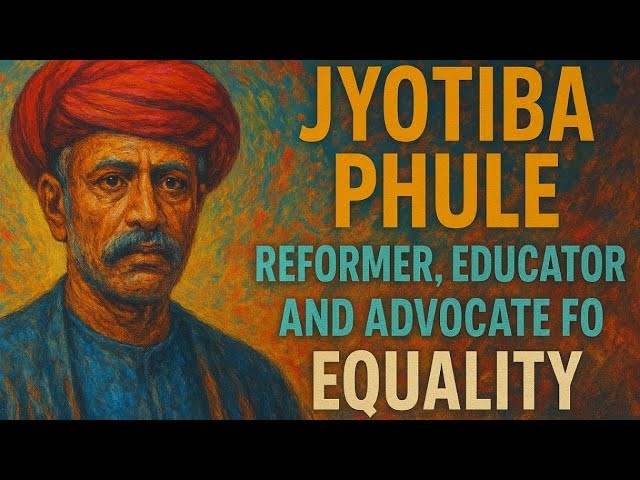
Contributions of Mahatma Jyotiba Phule:
- Mahatma Jyotiba Phule was a pioneering social reformer, educationist, and anti-caste activist in 19th-century India, championing academic freedom and institutional autonomy in education.
- He strongly advocated women’s education and teacher education, establishing one of the first schools for girls in India along with Savitribai Phule, setting new academic standards for inclusive learning.
- Considered education as a powerful tool for social transformation and empowerment, emphasizing learning outcomes and capacity building among marginalized communities.
- Worked tirelessly to abolish caste discrimination, untouchability, and social inequalities, promoting social inclusion through a multidisciplinary approach to reform.
- Founded the Satyashodhak Samaj (1873) to promote truth, equality, and justice among oppressed communities, integrating traditional knowledge systems with progressive ideals.
- Emphasised rationalism and social reform, challenging orthodox traditions and practices while advocating for public disclosure of discriminatory practices.
- His efforts laid the foundation for modern social justice movements in India, establishing quality benchmarks for educational and social reform.
Contemporary Recognition and Significance
- National leaders including the President, Prime Minister, and Home Minister Amit Shah paid tributes on his birth anniversary, emphasizing democratic participation in social reform.
- Recognised as a champion of women’s empowerment and inclusive education policies, his work established performance metrics for measuring social progress.
- His legacy continues to inspire policies on social justice, gender equality, and affirmative action, promoting quality assurance in educational institutions.
- Highlights India’s commitment to egalitarian values and constitutional principles, balancing local autonomy with national development goals.
- His ideas resonate with current efforts to promote education for all and upliftment of marginalised groups, ensuring democratic accountability in reform initiatives.
- Serves as a reminder of the importance of social reform movements in nation-building, maintaining uniform standards of equality and justice.
- Reinforces the role of education as a catalyst for inclusive growth and societal change, promoting capacity building across all sections of society.
About Social Reform Movements in India :● Jyotiba Phule (1827–1890): Key figure in anti-caste and social reform movements, advocating for institutional autonomy in education. ● Satyashodhak Samaj (1873): Organisation aimed at uplifting lower castes and promoting equality, establishing quality benchmarks for social justice. ● Savitribai Phule: India’s first female teacher and pioneer of women’s education, championing teacher education and learning outcomes. ● Reform Focus: Abolition of caste system, promotion of education, gender equality, and social inclusion through capacity building. ● Related Reformers: Raja Ram Mohan Roy, Ishwar Chandra Vidyasagar, B.R. Ambedkar, all promoting academic freedom and knowledge systems. ● Constitutional Link: Ideals reflected in Fundamental Rights (Articles 14–17) ensuring equality and addressing constitutional concerns. ● Importance: Crucial for understanding Indian society, social justice, and reform movements in modern history, establishing performance metrics for social progress. |