 India's No.1 PU & Degree With Integrated IAS & IPS(UPSC/PSC) Training College.


MSMEs: Powering India’s self-reliance and global economic rise
MSMEs: Powering India’s self-reliance and global economic rise
Why in the News?
India’s MSME sector has emerged as a cornerstone of economic transformation, contributing significantly to GDP, employment, exports, and self-reliance. Its role in powering Atmanirbhar Bharat, enhancing global competitiveness, and expanding manufacturing makes it vital to India’s journey toward becoming a $5 trillion economy and a global industrial and innovation hub. The sector’s focus on customized India solutions has further strengthened its position in the national economy.
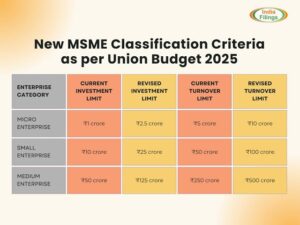
WHAT ARE MSMEs?
- Definition: MSMEs refer to Micro, Small, and Medium Enterprises, which are involved in the production, processing, and preservation of goods and commodities.
- Classification Criteria: Classified based on investment in:
- Plant and machinery (for manufacturing enterprises), or
- Equipment (for service enterprises).
- Also classified based on annual turnover thresholds.
MSME REGULATION IN INDIA
- Ministry Formation: In 2007, the Ministry of Small Scale Industries merged with the Ministry of Agro and Rural Industries to form the Ministry of Micro, Small, and Medium Enterprises.
- Roles of the Ministry: Formulates policies for MSME growth. Implements and monitors schemes for development. Facilitates support programs across the country.
The ministry is also responsible for designing a comprehensive framework for MSME development and growth.
CRITICAL ROLE IN NATIONAL ECONOMY
- Massive presence: India houses 6.3 crore MSMEs, contributing nearly 30% to GDP, and employing about 120 million, making it a key driver of economic inclusivity. The MSME classification encompasses a wide range of enterprises, from small workshops to medium-sized factories, all contributing to the nation’s manufacturing output.
- Employment generator: MSMEs are the second-largest employer after agriculture, absorbing youth and promoting entrepreneurship in both urban and rural India. They play a crucial role in employment generation, especially for skilled and semi-skilled workers, and are at the forefront of entrepreneurship development initiatives.
- Export backbone: MSMEs contribute 40–45% of India’s exports, being vital to textiles, engineering goods, chemicals, and agri-products, crucial for foreign exchange. Their participation in international markets has been growing, supported by various export promotion initiatives and their ability to cater to urban markets with specialized products.
- Diversified sectors: MSMEs have moved beyond handicrafts to IT services, pharmaceuticals, renewable energy, and start-ups, enabling innovation across sectors. This diversification has led to the development of new business models and product diversification strategies, including renewable energy adoption in manufacturing processes.
- Formalisation efforts: Integration with Udyam portal, ONDC, and ZED Certification 2.0 promotes transparency, digitalisation, and improved quality standards. These efforts are part of a broader digital transformation agenda for MSMEs, enhancing their gdp contribution through increased efficiency and productivity.
ENABLING ATMANIRBHAR BHARAT VISION
- Strategic importance: MSMEs are central to national missions like Make in India, Startup India, Digital India, and Skill India, deepening domestic capabilities. They are at the forefront of technology upgradation and smart manufacturing initiatives, often engaging in research and development to stay competitive.
- Local supply chains: MSMEs strengthen value chains by producing critical components domestically, reducing import dependency and boosting economic sovereignty. This has led to better supply chain integration and improved inventory management practices.
- Technology adoption: Agile and adaptive, MSMEs integrate technological innovation to enhance productivity and remain globally competitive. Many are leveraging artificial intelligence and cloud computing to optimize their operations and improve customer satisfaction.
- Women empowerment: They provide entrepreneurial space to women and youth, fostering inclusive growth and reducing gender disparities. This aligns with broader goals of promoting youth entrepreneurship and regional development.
- Start-up synergy: Many MSMEs are start-up enablers or collaborators, especially in tech and agri-innovation, creating a robust innovation ecosystem. Incubation centers are playing a crucial role in nurturing this synergy and fostering msme development.
CONTRIBUTION TO GLOBAL RECOGNITION
- Global standing: MSMEs support India’s rise as the 4th-largest economy globally, enabling sustainable exports and manufacturing leadership. Their contribution to GDP is significant and growing, with many enterprises focusing on market expansion strategies.
- Export diversification: They expand India’s export footprint across new regions and sectors, helping achieve the $1 trillion export target by 2030. MSMEs are increasingly participating in trade fairs and exhibitions to showcase their products in international markets.
- Supply resilience: During global disruptions, MSMEs ensured production continuity, showing resilience in supply chains for global clients. This has enhanced their role in global supply chains and improved their ability to handle customer orders efficiently.
- Trade competitiveness: MSMEs adopt international standards and certifications, strengthening India’s trade compliance and reducing non-tariff barriers. Many are pursuing ISO certification and other quality certification processes to improve their quality control processes and global competitiveness.
- Investment magnet: Their growth potential makes India a hub for FDI, especially in textiles, electronics, auto-components, and clean-tech. Special Economic Zones have been instrumental in attracting such investments, with many MSMEs benefiting from government procurement initiatives.
DIGITAL INTEGRATION AND FINANCIAL INCLUSION
- Udyam success: The Udyam Registration portal has formalised crores of MSMEs, enhancing their creditworthiness and data visibility. This has improved their access to working capital financing and other financial services.
- E-commerce access: Participation in ONDC enables MSMEs to reach national markets, bypassing monopolistic platforms and reducing digital exclusion. Many MSMEs are now leveraging e-commerce platforms to expand their customer base and streamline their operations.
- Credit enhancement: Schemes like CGTMSE and Emergency Credit Line provide vital credit to address working capital issues post-pandemic. MUDRA loans have also been instrumental in providing financial support to micro-enterprises.
- Fintech collaboration: MSMEs benefit from digital lending platforms, easing access to low-interest, collateral-free loans. Fintech solutions are revolutionizing credit scoring and risk assessment for MSME lending, including innovative trade finance options.
- Digital skilling: New skilling programs are equipping MSMEs with tools to digitise operations, adopt Industry 4.0, and increase efficiency. These programs often focus on digital payments, cybersecurity measures, and demand forecasting techniques.
CHALLENGES TO SECTORAL GROWTH
- Credit bottlenecks: Many MSMEs still face credit denial, owing to lack of formal records or perceived high risk by traditional banks. Delayed payments from customers often exacerbate their working capital issues.
- Infrastructure gaps: Limited access to logistics, power, and transport facilities hampers productivity, especially for rural MSMEs. High energy costs and inadequate distribution networks remain significant challenges.
- Skilling mismatch: Despite programs, many MSMEs face skill shortages, especially in tech-intensive sectors, reducing competitiveness. This highlights the need for more targeted skill development programs.
- Compliance burden: Multiple laws and licensing regimes result in complex compliance costs, especially for micro-enterprises. Navigating labor laws and environmental impact regulations can be particularly challenging.
- Global exposure: Limited global market access knowledge makes it harder for MSMEs to scale exports or attract foreign buyers. Many struggle with trade facilitation processes and understanding international market dynamics.
WAY FORWARD FOR STRONGER MSMEs
- Cluster development: Promote MSME clusters with common facilities, logistics hubs, and digital infrastructure to improve economies of scale. Common facility centers can help reduce operational costs for individual enterprises.
- Ease of business: Simplify compliance norms and create single-window systems for registration, credit, and licensing processes. This should include streamlining regulatory compliance procedures and offering tax incentives for growth.
- Digital India bridge: Provide robust digital literacy and e-commerce onboarding to bridge the tech adoption gap. This is crucial for the overall digital transformation of the MSME sector.
- Credit flow reform: Encourage banks to develop MSME-specific credit products with low interest, relaxed collateral, and quick disbursal. Expanding the credit guarantee fund can help mitigate risks for lenders.
- Global tie-ups: Create bilateral trade pacts with MSME-specific chapters for capacity building, certifications, and export market access. This can facilitate technology transfer and enhance international market opportunities.
- Skill enhancement: Implement comprehensive skill training programs tailored to MSME needs, focusing on emerging technologies and industry-specific skills.
- Advisory support: Establish a network of advisory services to guide MSMEs on business strategy, financial management, and technology adoption.
CONCLUSION
India’s MSME sector is more than an economic contributor—it’s a social equaliser, innovation driver, and global ambassador of self-reliant India. By resolving key bottlenecks, deepening formalisation, expanding global footprints, and integrating with digital ecosystems, MSMEs will remain central to India’s journey towards economic transformation, global leadership, and inclusive prosperity for decades to come. Continued policy support, infrastructure development, and a focus on sustainable and green manufacturing practices will be crucial for realizing the full potential of this vital sector. The MSME Samadhaan portal and other digital initiatives are expected to play a significant role in addressing challenges and fostering growth in the coming years.
UPSC MAINS PRACTICE QUESTION
Discuss the role of MSMEs in India’s journey towards a $5 trillion economy. What are the major challenges they face, and how can policy interventions support their growth?

