 India's No.1 PU & Degree With Integrated IAS & IPS(UPSC/PSC) Training College.


Khangchendzonga National Park Earns IUCN ‘Good’ Rating
Khangchendzonga National Park Earns IUCN ‘Good’ Rating, Showcasing Sustainable Forest Management
Why in the News ?
The International Union for Conservation of Nature (IUCN) has rated Khangchendzonga National Park as “Good” in its latest global review of natural World Heritage Sites. It is the only Indian site to receive a positive status, unlike the Western Ghats and Sundarbans, which face ecological concerns. This recognition highlights the park’s role in sustainable forest management and its potential contribution to greenhouse gas emissions reduction through carbon sequestration.
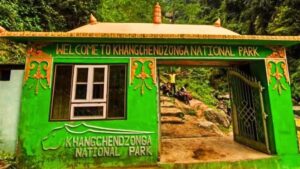
Khangchendzonga’s Global Recognition and Ecological Richness:
- Khangchendzonga National Park, also known as the Khangchendzonga Biosphere Reserve, is India’s first “mixed” UNESCO World Heritage Site (2016) for both natural and cultural significance. Its management practices could serve as a model for integrating conservation with carbon offset projects.
- It spans 1,784 sq. km, ranging from subtropical forests to the 8,586-metre peak of Mount Khangchendzonga, the world’s third-highest mountain. This diverse ecosystem plays a crucial role in climate regulation and could be significant in the context of clean energy transitions.
- The park contains 280 glaciers and 70+ glacial lakes, supporting rare wildlife like snow leopards, red pandas, clouded leopards, Himalayan tahr, and 550 bird species, including the impeyan pheasant and satyr tragopan. This biodiversity underscores the importance of environmental impact assessments in conservation efforts.
- Its diverse altitude range and climatic zones make it a hotspot for Himalayan biodiversity and a climate change buffer. The park’s ecosystems contribute to carbon sequestration, aligning with objectives of voluntary carbon markets and emissions trading systems.
- The IUCN’s “Good” rating signifies effective conservation, low human pressure, and sustainable management of ecosystems. This recognition could inform best practices for carbon offset mechanisms and sustainable forest management globally.
Cultural Heritage and Community-Based Conservation
- For the Lepcha community, the park is Mayel Lyang, a divine paradise given by gods, blending spirituality with ecology. This cultural connection supports sustainable practices that could contribute to nationally determined contributions for climate action.
- Tibetan Buddhists consider it a sacred beyul (hidden valley), home to ancient monasteries like Tholung, symbolising spiritual coexistence with nature. This cultural reverence enhances conservation efforts and could inform approaches to carbon market cooperation.
- The 2018 expansion into the Khangchendzonga Biosphere Reserve linked core and buffer zones, promoting sustainable farming and eco-friendly livelihoods. These practices align with goals of clean development mechanisms and carbon offset projects.
- Local rangers and villagers collaborate for anti-poaching and wildlife monitoring, ensuring community ownership in protection efforts. This participatory approach could be valuable in implementing emissions trading systems and other environmental policies.
- Cross-border coordination with Nepal’s Kanchenjunga Conservation Area enhances transboundary conservation of migratory species. Such international cooperation models could inform carbon market linkage and broader environmental governance strategies.
About IUCN, UNESCO, and Conservation Significance: |
| ● IUCN (International Union for Conservation of Nature) – global authority on biodiversity and protected areas, assessing World Heritage Site status. |
| ● UNESCO World Heritage Site (2016): Khangchendzonga is India’s first mixed site, recognized for nature and culture integration. |
| ● Biosphere Reserve Model (UNESCO MAB Programme): Combines core, buffer, and transition zones to harmonize conservation with human activity. |
| ● The park’s “Good” rating reflects effective disaster response, seen during the 2023 glacial lake outburst flood managed through hazard mapping. |
| ● Serves as a model for sustainable conservation, proving that community participation and respect for nature ensure ecological resilience. This approach could inform the development of voluntary carbon markets and other environmental initiatives. |

