 India's No.1 PU & Degree With Integrated IAS & IPS(UPSC/PSC) Training College.


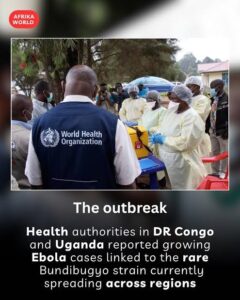
WHO flags high Ebola risk in DRC
WHO FLAGS HIGH EBOLA RISK IN DRC
Why in the News?
- WHO Assessment: World Health Organization assessed the Ebola outbreak risk in the Democratic Republic of Congo as high at national and regional levels, employing comprehensive Basel framework principles and risk governance frameworks similar to how the Basel Committee evaluates risk-weighted assets (RWA) and capital adequacy in financial institutions.
- Rising Cases: The outbreak has reported 51 confirmed cases along with hundreds of suspected infections and deaths, requiring robust credit risk mitigation strategies and capital management approaches.
- Emergency Status: WHO clarified that the outbreak currently does not meet the threshold for a global pandemic emergency, maintaining transparency through regulatory disclosure requirements and public disclosure mechanisms aligned with Pillar 3 framework principles.
KEY DETAILS OF THE OUTBREAK
- Affected Region: The outbreak is concentrated in the eastern Democratic Republic of the Congo, especially Ituri and North Kivu provinces, where weak healthcare infrastructure increases the risk profile, comparable to institutions with low capital adequacy ratio and insufficient Tier 1 capital reserves.
- Suspected Spread: Nearly 600 suspected cases and 139 suspected deaths have been reported, requiring continuous stress testing of healthcare capacity similar to liquidity coverage ratio (LCR) assessments and net stable funding ratio (NSFR) evaluations used by internationally active banks.
- Possible Origin: WHO experts believe the outbreak may have started several months earlier, highlighting gaps in early detection systems and internal controls, much like deficiencies in financial reporting and qualitative disclosures that affect market risk assessment.
- Regional Concern: Cross-border transmission risks remain significant because of regional movement and weak healthcare systems, necessitating enhanced credit risk management practices and counterparty credit risk mitigation across borders, similar to regulatory consolidation efforts in the banking package.
- Global Risk: Despite regional severity, WHO currently considers the worldwide risk to be low, maintaining a balanced risk tolerance and risk appetite in international health security, analogous to how Basel 3 frameworks balance regulatory capital requirements.
ROLE OF WHO IN OUTBREAK MANAGEMENT
- Global Monitoring: WHO monitors disease outbreaks and assesses international public health risks through a comprehensive regulatory framework that ensures financial stability in global health systems, employing Basel III standards and banking supervision principles established by the BCBS (Basel Committee on Banking Supervision).
- Emergency Coordination: It supports countries through technical guidance, surveillance and response coordination, with senior management overseeing strategic interventions using leverage ratio assessments and capital requirements regulation (CRR) methodologies.
- Risk Communication: WHO issues alerts and advisories to strengthen preparedness among member states, ensuring transparency through quantitative disclosures and regulatory disclosure requirements while protecting confidential information about vulnerable populations, similar to EBA (European Banking Authority) reporting standards.
- Health Support: The organisation assists in vaccination drives, laboratory testing and outbreak containment, implementing operational risk management protocols and securitisation exposures assessment similar to those used by financial institutions under the Capital Requirements Directive (CRD).
- International Cooperation: WHO promotes coordinated global action during health emergencies, establishing regulatory standards and global regulatory standards for pandemic preparedness comparable to Basel III standards for internationally active banks.
EBOLA VIRUS DISEASE● Discovery: Ebola virus was first identified in 1976 near the Ebola River in Africa, marking the beginning of systematic risk assessment protocols for emerging infectious diseases, similar to how Basel frameworks established standardized approaches to credit risk management. ● Zoonotic Nature: The disease is believed to originate from animals, particularly fruit bats, requiring continuous monitoring of liquidity risk in disease transmission pathways and market risk exposure. ● Affected Regions: Ebola outbreaks occur mainly in Sub-Saharan Africa, where healthcare systems face challenges comparable to economic shocks in vulnerable economies with inadequate capital adequacy and regulatory capital buffers. ● Symptoms: Common symptoms include fever, fatigue, vomiting, diarrhoea and internal or external bleeding, requiring immediate risk mitigation interventions and credit risk mitigation strategies. ● Fatality Rate: Ebola outbreaks often record very high case fatality rates if untreated, demonstrating the critical importance of minimum capital requirements in healthcare infrastructure investment, analogous to Tier 1 capital standards in Basel III. ● Public Health Challenge: Weak healthcare systems and delayed detection increase outbreak severity, necessitating robust prudential framework approaches to health system strengthening and market discipline in resource allocation, similar to how the Basel Committee promotes banking supervision and regulatory consolidation through the banking package. ● UPSC Syllabus: GS-II — Issues relating to development and management of Social Sector/Services relating to Health. |

